 Andrew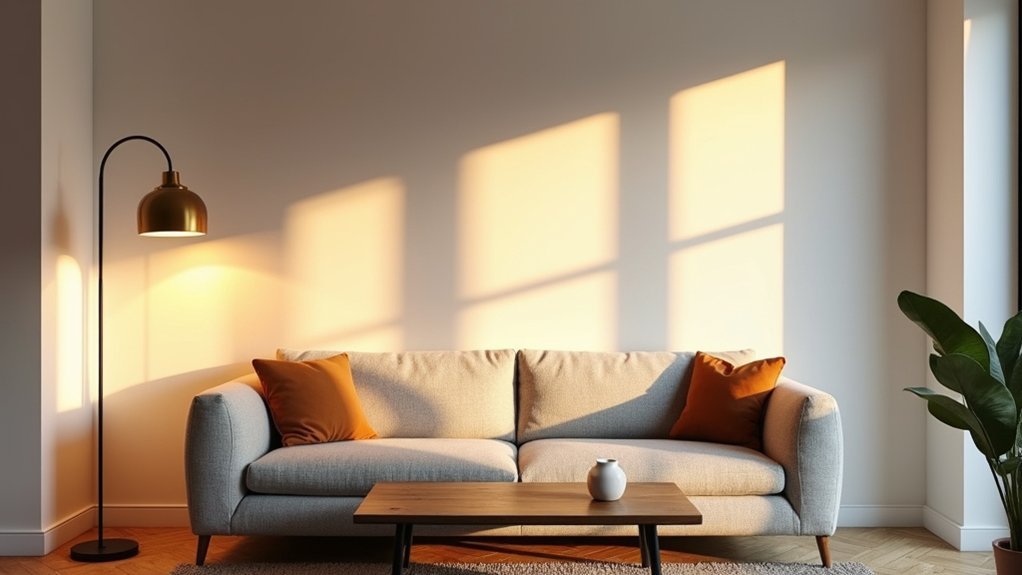
A sculptural pendant throws a clean pool of light across your countertop, turning a routine moment into a designed one. When you choose statement lighting that fits the room, you instantly define zones and sharpen proportions. You’ll get the best result by sizing it correctly, hanging it at the right height, and layering it with ambient and task light for a polished, on-trend look. Next, you’ll want to place it where it changes everything—starting with spots you usually ignore…
Choose Statement Lighting That Fits the Room
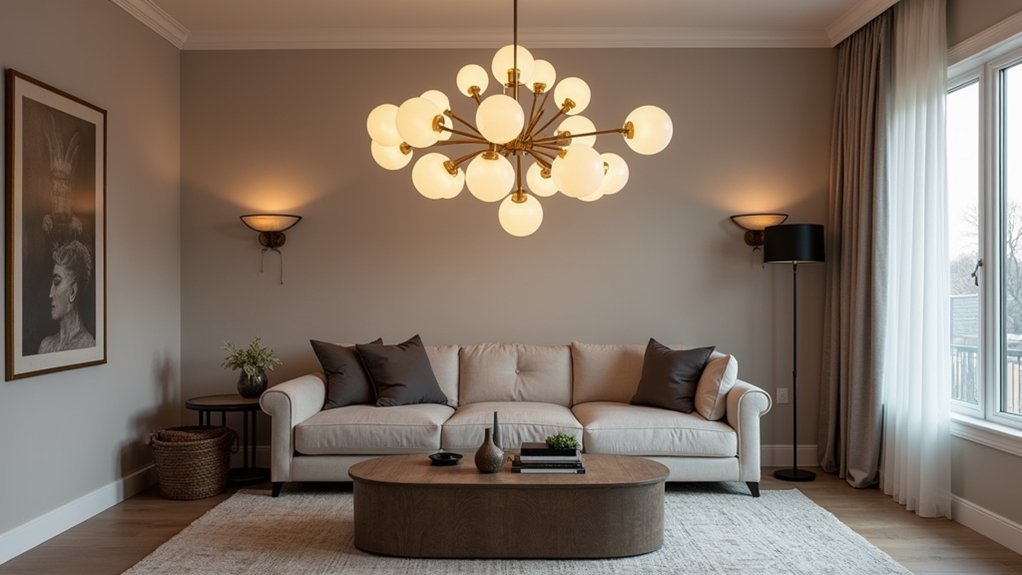
One smart rule guides statement lighting: match the fixture’s scale, style, and light output to what the room actually does. In an entry, you need crisp, welcoming illumination; in a dining zone, you want warm, flattering light that sells the table as the hero.
Let Color schemes lead: brass and opal glass elevate creams and greiges, while matte black sharpens high-contrast palettes.
Track Material textures, too—rattan softens minimal rooms, ribbed glass adds sparkle to flat finishes, and ceramic shades complement plaster walls.
Choose dimmable LEDs so you can shift from task to mood without changing hardware.
Finally, align the fixture’s design language with nearby metals, wood tones, and cabinetry lines for a cohesive, high-end look.
Pick the Right Statement Light Size and Height
How do you get that “designer-installed” impact instead of a fixture that feels lost or overpowering? Start with scale: for dining tables, choose a statement light about 1/2 to 2/3 the table’s width.
In living rooms, match the fixture diameter to seating depth so it reads intentional, not random. Then dial in height. Hang pendants 30–36 inches above the tabletop, and keep bottom edges at least 7 feet above walking paths.
For bedsides, align the shade’s lower edge near shoulder height when seated. Trend-wise, oversized forms look best when you slim down fixture materials—airy metal, rattan, or glass—so the mass feels light.
Finally, confirm bulb shape complements the silhouette: globes soften, tubes sharpen.
Use Statement Lighting to Create a Focal Point
You can use statement lighting to anchor the room and instantly tell the eye where to land, whether it’s over a dining table, island, or seating zone. Position and aim it to highlight key features—textured walls, art, millwork, or architectural details—so your investment reads as intentional, not incidental.
Then balance scale and style by matching the fixture’s visual weight to the room’s proportions and finishes, keeping the look current without overpowering the space.
Anchor The Room
Where does your eye land the moment you walk in—on the sofa, the art, or the light overhead? To anchor the room, you want the answer to be the statement light. Choose Decorative fixtures with presence: an oversized drum, a sculptural globe cluster, or a slim linear pendant that visually “pins” the layout beneath it.
Scale matters—match diameter to seating width, and hang it low enough to feel intentional but high enough to keep sightlines clean. Use ceiling accents to reinforce the anchor: a contrasting medallion, a painted ceiling field, or a warm metallic canopy that frames the piece.
When the fixture’s finish echoes nearby hardware, the whole space reads curated, cohesive, and current.
Highlight Key Features
Once the room feels anchored, a statement fixture can spotlight the features that sell the space—an art wall, a textured fireplace surround, or millwork worth noticing. Center a sculptural pendant over the zone you want buyers’ eyes to land on, then aim supporting light to reinforce it.
If you’ve invested in an Accent wall, wash it with a directional chandelier or a linear suspension that throws clean, even illumination and keeps color true. For architectural ceilings, choose a bold canopy, layered shades, or an oversized globe so the hardware reads as a ceiling focal from the entry.
Keep dimming in mind: you’ll shift from crisp showing light to evening glow without losing the highlight. Finish with warm metals or matte black for current, high-contrast appeal.
Balance Scale And Style
Because scale reads before style, the right statement light should match the room’s volume while still delivering a clear focal point. In open plans, go larger or cluster multiples so the fixture doesn’t visually “float.”
In compact rooms, choose a bold silhouette with a tight drop to keep sightlines clean and pricing efficient.
Balance comes from proportion: aim for a diameter that fills the visual center without crowding circulation, and hang it low enough to command attention yet high enough for comfort.
Lock in Color harmony by echoing one existing hue—hardware, textiles, or art—so the piece looks intentional.
Then add Material contrast: pair warm brass with matte black, ribbed glass with smooth stone, or woven shades against polished surfaces.
You’ll get a focal point that feels curated, not oversized.
Layer Statement Lighting With Ambient and Task Light
How do you make a bold pendant or sculptural chandelier feel intentional instead of overpowering? You layer it with reliable ambient light and precise task lighting so the statement piece becomes the focal point, not the only source.
Start with ceiling or wall ambient fixtures that deliver even coverage, then add task lights at work zones: under-cabinet strips in kitchens, adjustable sconces by beds, and a focused desk lamp in offices.
Choose complementary bulb types—high-CRI LEDs for true color, warm white for comfort, neutral white for productivity.
Lock in flexibility with dimming options on each layer, so you can drop the statement light to a glow while keeping tasks bright.
This approach reads designer, livable, and resale-friendly.
Match Statement Lighting to Your Style and Finishes
When you choose statement lighting, match the fixture’s metals and undertones to your hardware, faucets, and furnishings so the whole space reads intentional.
You can mix finishes, but keep a clear hierarchy—one dominant metal and one accent tone—to stay on-trend without looking busy.
If you’re blending modern and classic, pair clean-lined silhouettes with timeless materials (like aged brass or polished nickel) to strike a balanced, high-end look.
Coordinate Metals And Tones
Even if your statement light steals the spotlight, it still needs to play well with the metals and tones already in the room. Start by inventorying your dominant metal finishes—cabinet pulls, faucets, furniture legs, mirror frames—then choose a fixture that echoes one finish or intentionally spotlights a secondary one for a curated, designer mix.
Next, lock in tonal coordination: match warm metals (brass, gold, bronze) with creamy whites, oak, terracotta, or camel; pair cool metals (chrome, nickel, stainless) with crisp whites, slate, navy, or black. If your palette leans earthy, pick seeded glass or linen shades; if it’s high-contrast, go for smoked glass or matte black.
Aim for two metals max per sightline so it reads intentional, not busy.
Balance Modern And Classic Finishes
Because your fixture reads like jewelry at room scale, it should bridge your home’s era rather than fight it—pair a clean-lined silhouette with a traditional finish (aged brass, oil-rubbed bronze) to soften modern spaces, or choose a classic form (lantern, drum, schoolhouse) in a contemporary treatment (matte black, polished nickel, opal glass) to sharpen interim rooms.
Then, lock in color contrast deliberately: echo one existing metal, and let the light act as the “third finish” that elevates the palette.
Prioritize material harmony by repeating textures—ribbed glass with fluted cabinetry, blackened steel with window muntins, or warm brass with oak.
When you mix eras, keep the scale and shade consistent, and choose bulbs that match the mood (2700K warm, 3000K crisp).
You’ll get designer polish without a full remodel.
Place Statement Lighting in “Forgotten” Everyday Spots
Although most people reserve statement lighting for dining rooms and entryways, you’ll get a bigger style payoff by installing it in the “forgotten” zones you use every day—hallways, laundry rooms, pantries, stair landings, and even walk-in closets.
Treat these passage spaces like mini destinations: choose ceiling fixtures with sculptural silhouettes or oversized scale, then anchor them with warm, high-CRI LEDs so colors look true and finishes feel premium.
In narrow halls, swap basic domes for semi-flush globes; in stair landings, hang a small chandelier that draws the eye upward.
Add wall sconces beside closet rods or above laundry counters to eliminate shadows and elevate utility.
Stick to one metal family to keep the look intentional, not chaotic.
Frequently Asked Questions
How Do I Clean and Maintain Delicate Statement Light Fixtures Safely?
Turn power off, let it cool, and follow Cleaning protocols: microfiber dust weekly, use diluted soap on a damp cloth, avoid sprays, and dry immediately. Tighten hardware, check wiring, and use gentle bulbs to protect Fixture durability.
What Bulb Type and Color Temperature Works Best for Statement Lighting?
You’ll get the best statement-lighting impact with dimmable LED bulbs—warm 2700K–3000K for inviting glow, 3500K–4000K for crisp drama. Choose Decorative bulb options like globe or Edison. Match Color temperature choices to finishes, art.
Can Statement Lighting Be Installed Without Rewiring or Hiring an Electrician?
Yes, you can install statement lighting without rewiring or an electrician by choosing plug-in pendants, swag kits, or battery sconces. Follow installation tips: use ceiling hooks, cord covers, dimmers. Design trends favor modular, renter-friendly fixtures.
How Can I Reduce Glare and Flicker From Statement Lights?
Cut to the chase: you’ll reduce glare and flicker by choosing quality LEDs with high CRI, pairing compatible dimming options, and optimizing fixture placement. Add diffusers or shades, avoid bare bulbs, and use flicker-free drivers.
Are Statement Lighting Fixtures Energy-Efficient and Compatible With Smart Home Systems?
Yes—many statement fixtures deliver strong energy efficiency with LED modules and dimmable drivers, and you’ll get smart compatibility via Zigbee, Z-Wave, Wi‑Fi, or smart bulbs. Check wattage, lumens, and app/voice support before buying.