 Andrew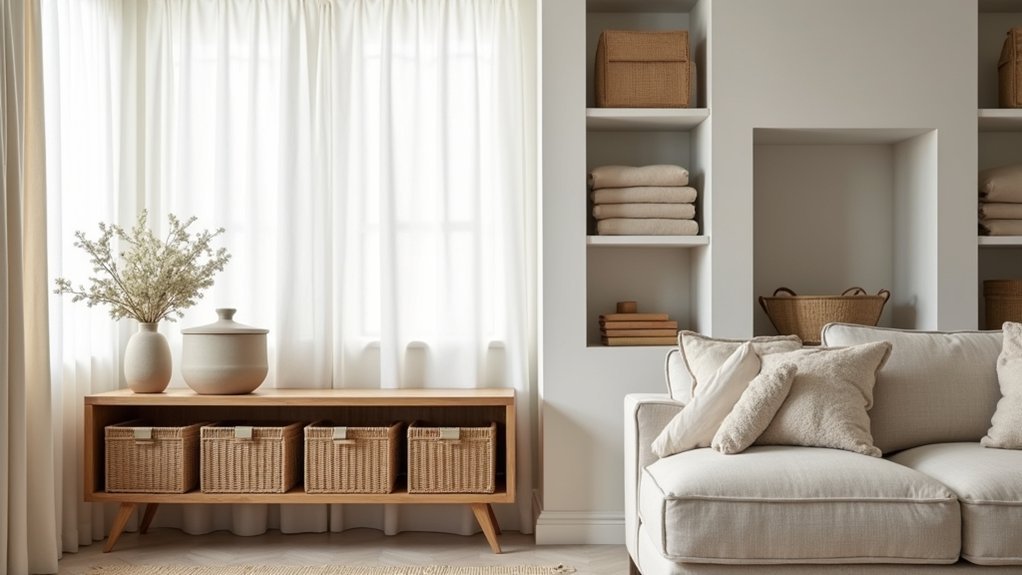
You don’t need more space—you need smarter storage that looks intentional. Start by mapping each room’s clutter zones, then assign decorative pieces that match your style: woven baskets for warmth, lacquer boxes for polish, trays to corral daily essentials. Keep materials and colors consistent, and mix open display with hidden catch-alls so surfaces stay calm. The real difference comes from how you place and maintain these pieces—and that’s where most homes slip.
Start With a Decorative Storage Plan by Room
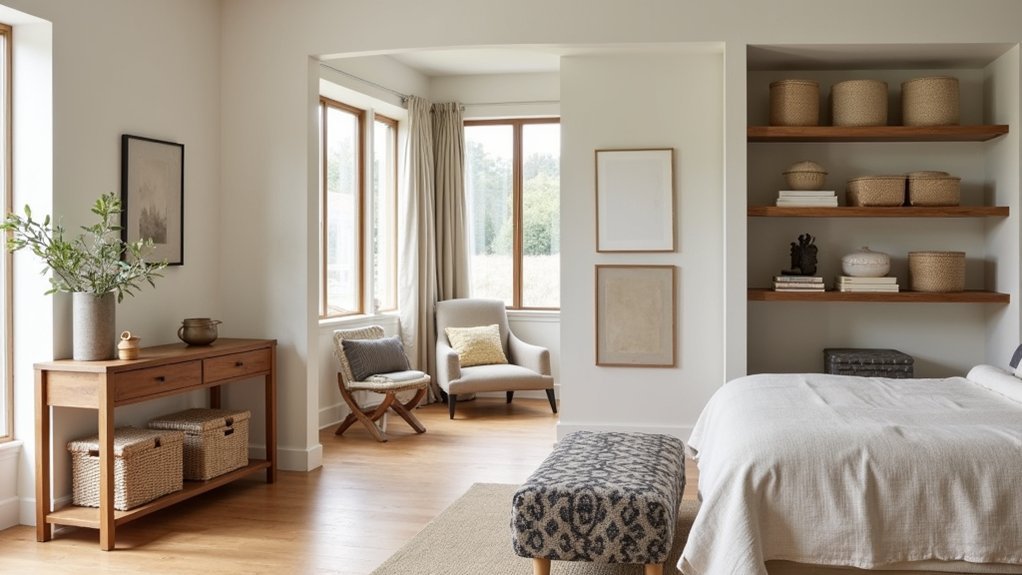
Where do you actually need storage—entry, living room, kitchen, bedroom, or bath? Map demand first, not products.
In the entry, plan a drop zone for shoes, keys, and mail, with a closed bin for visual calm.
In the living room, allocate zones for media, throws, and kids’ items; keep high-rotation pieces within arm’s reach.
In the kitchen, target pantry overflow and countertop clutter; reserve drawers for tools you use daily.
In the bedroom, separate worn-once clothing from laundry, and dedicate bedside space to essentials.
In the bath, plan for towels, backups, and cleaning supplies.
Use Color coordination to unify zones, and Material contrast to distinguish functions without labels.
Measure clearances, then commit.
Choose Decorative Storage That Fits Your Style
Even if you’ve nailed the storage zones, the pieces you bring in should match your interior style so they look intentional, not like afterthoughts. Start by defining your baseline: modern, traditional, coastal, industrial, or eclectic.
Then commit to Color coordination—repeat two to three hues already in your textiles or art, and keep finishes consistent across the room.
Use Material contrast to add depth without visual noise: pair woven seagrass with lacquer, matte ceramics with polished metal, or warm oak with blackened steel.
Scale matters too; choose fewer, larger containers for calm, and reserve small lidded pieces for curated vignettes.
Finally, vet the details: hardware, stitching, and edge finishes should echo your lighting and furniture so every storage piece reads like décor.
Use Decorative Storage for Everyday Clutter Zones
Once your storage pieces look like they belong, put them to work in the spots that collect daily fallout—entries, coffee tables, nightstands, and kitchen counters. Treat each zone like a micro-drop station: one container, one purpose, no overflow.
Place Decorative baskets by the door for sunglasses, keys, and dog leads; choose a structured weave so it doesn’t slump and reads intentional.
On coffee tables, use a low tray to corral remotes and coasters, keeping sightlines clean.
At the nightstand, dedicate one lidded box for chargers and hand cream.
In the kitchen, add stylish drawer dividers for utensils, wraps, and takeaway menus so you stop “shuffling” clutter.
Edit weekly, and you’ll keep the system profitable in time saved.
Mix Open Shelves and Hidden Decorative Storage
Because open shelving puts everything on display, you need a deliberate mix of visible styling and concealed capacity to keep the look curated, not cluttered. Treat shelves like a retail vignette: lead with a few hero pieces, then backfill with storage that disappears in plain sight.
Pair open stacks of cookbooks or ceramics with closed elements on lower shelves—lidded boxes, canisters, or stylish containers that match your palette and finish. Use decorative baskets to corral loose items (chargers, remotes, napkins) while adding texture and softening hard lines.
Keep sightlines clean by grouping in threes, aligning heights, and repeating materials like rattan, matte black metal, or oak. If you’ve got awkward gaps, slide in shallow bins for extra concealment without breaking the display rhythm.
Keep Decorative Storage Organised Long-Term
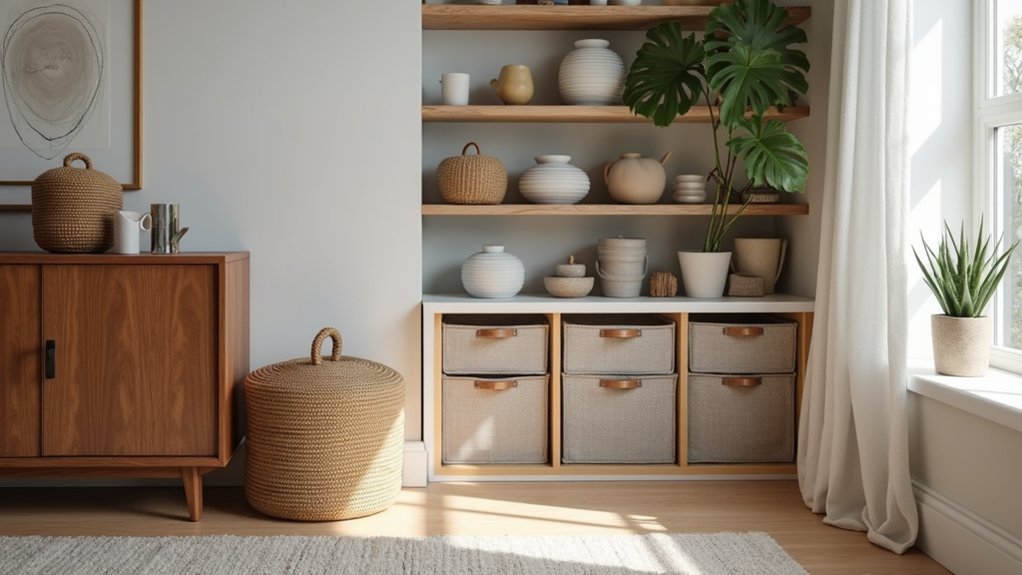
A smart mix of open shelves and hidden pieces only stays polished if you maintain it like a system, not a one-time styling win. Set a five-minute weekly reset: clear surfaces, return items to “home zones,” and wipe fronts so dust doesn’t broadcast clutter.
Use simple labels inside drawers and baskets, even in luxe materials, to prevent decision fatigue. Cap each container at 80% full so you can actually browse and put things back fast.
Rotate display objects quarterly to leverage Decorative storage versatility without overcrowding. Audit what’s visible: if it’s not beautiful or used often, store it.
Finally, bake Creative storage integration into habits—drop keys into a tray, file mail immediately, and keep a donation bag nearby for continuous edits.
Frequently Asked Questions
How Do I Choose Child-Safe Decorative Storage for Toddlers?
Choose toddler storage that locks, anchors, and rounds: prioritize child proof safety, stable wide bases, and soft edges. Pick colorful storage solutions with non-toxic finishes, pinch-free hinges, and breathable bins, matching your room’s style.
What Are Budget-Friendly Decorative Storage Ideas for Renters?
Choose renter-friendly pieces you can move: use Vintage crates as stackable side tables and under-bed bins, add wall mounted shelves with removable strips, and shop thrift stores, discount outlets, and resale apps.
Which Materials Resist Moisture Best for Decorative Bathroom Storage?
You’ll get the best moisture protection from stainless steel, powder-coated aluminum, teak, bamboo with sealed edges, acrylic, and glass. Choose Moisture resistant materials and prioritize Water proof finishes like marine varnish or epoxy coatings.
How Do I Prevent Pests in Wicker Baskets and Fabric Storage Bins?
To prevent pests, you’ll vacuum baskets, wash liners, and keep bins dry and sealed. Add cedar or lavender sachets, rotate contents monthly, and inspect seams. Pest prevention and storage hygiene improve when you avoid food, crumbs, and dampness.
What Decorative Storage Options Work Best for Very Small Apartments?
You’ll get the most impact from room dividers with built-in cubbies and wall mounted shelves—think space-age Tetris. Choose stackable ottomans, under-bed drawers, and over-door racks; you’ll maximize vertical storage and keep circulation clear.