 Andrew
A hallway can feel like a cold pass-through or a calm welcome, and you control which one it becomes. Start by warming the light with 2700K–3000K bulbs and adding layered fixtures so corners don’t go flat. Choose soft, forgiving paint tones, then add a slim console, hooks, and a mirror to earn back function and brightness. Finish with a runner and a few personal pieces—because the next choices decide whether it feels styled or lived-in…
Start With Hallway Lighting That Feels Warm
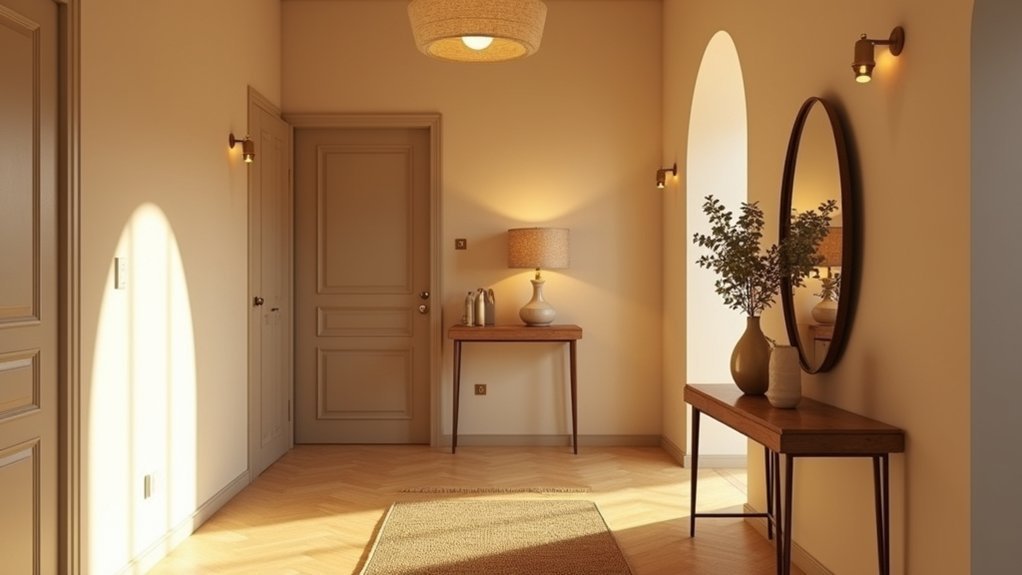
Because hallways rarely get much natural light, the quickest way to make yours feel welcoming is to start with warm, layered lighting. Aim for 2700K–3000K bulbs to avoid harsh glare, then combine a ceiling fixture with wall sconces or a slim picture light to remove shadows along the run.
If you’ve got a narrow space, choose flush or semi-flush mounts so you don’t steal headroom, and use frosted shades to diffuse hotspots.
Add smart lighting for real-life convenience: motion-activated scenes for late nights, dim-to-warm settings for evenings, and scheduled on/off for curb-appeal timing.
Finish with a small lamp on a console, so you can dial in a cozy ambiance without overlighting.
Pick Hallway Colors That Soften the Space
Once you’ve warmed up the lighting, your paint choices should do the same work by taking the edge off a tight or dim hallway. Lean on color psychology: creamy whites, warm greige, soft clay, and muted blush reflect light while keeping the space calm and welcoming.
If your corridor feels long, paint the far wall a shade deeper to visually pull it closer; keep side walls lighter to open the run. Choose low-contrast trim so lines don’t chop the space up.
Don’t overlook paint finishes: eggshell or satin on walls adds gentle bounce and wipes clean, while a flatter finish can hide bumps in older plaster. Test swatches at both ends of the hall before you commit to a gallon.
Add Hallway Décor That’s Useful and Pretty
While paint sets the mood, the right décor makes your hallway work harder day to day—without looking cluttered. Start with storage solutions that earn their footprint: a slim console with drawers, wall hooks with a matching shelf, or a closed shoe cabinet that keeps lines clean. Add a small tray for keys and mail so surfaces don’t become drop zones.
Then layer in decorative accents that also solve problems. Hang a mirror to bounce light and give you a last-check spot before you leave. Choose a statement sconce or pendant that feels intentional and upgrades the space instantly.
If you’ve got blank wall length, add a narrow picture ledge for rotating art and family photos without lots of nail holes. Keep finishes consistent so everything reads calm, not busy.
Layer Rugs, Runners, and Textures for Warmth
Even if your hallway is narrow, you can make it feel warmer and quieter underfoot by layering a runner and a few tactile finishes. Choose a low-pile runner for easy vacuuming, then add a smaller flatweave at the entry to trap grit and reduce wear in high-traffic zones. Use a non-slip pad under every piece to prevent bunching and protect floors.
Build comfort with textured textiles: a boucle bench cushion, a woven basket liner, or a knit throw on a wall hook nearby. Keep the palette tight so the mix reads intentional, not busy.
For a market-smart upgrade, look for performance fibers and washable weaves that mimic wool. These layered accessories add depth, dampen echo, and make the pass-through feel lived-in daily.
Finish Your Hallway With Art and Personal Touches
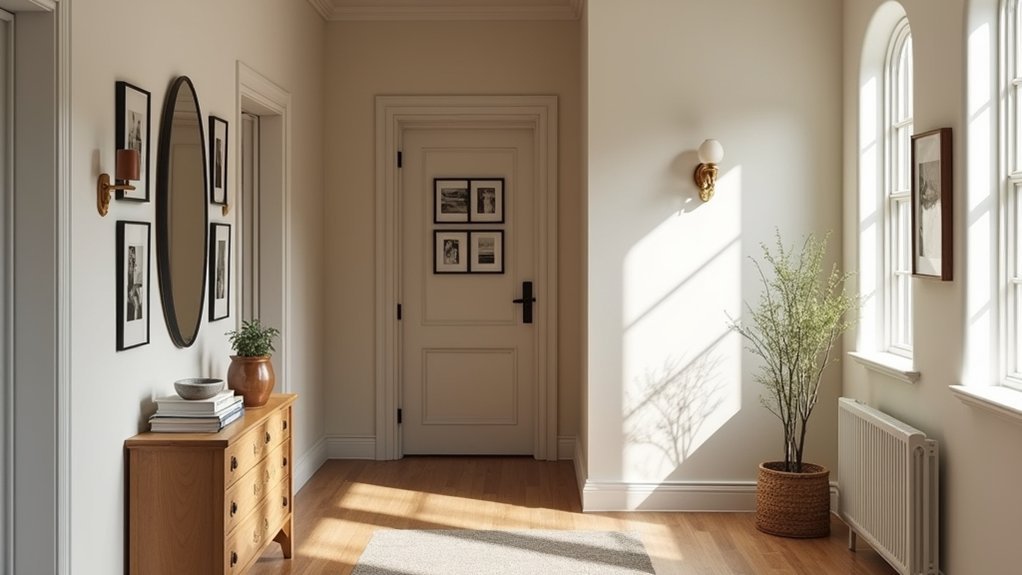
After you’ve layered in softness underfoot, you can make the hallway feel truly finished with art and a few personal touchpoints that guide the eye as you move through.
Start with one strong focal piece at eye level to set the tone, then build a tight gallery around it for a curated, not cluttered, look. Keep frames consistent to signal intention and help your hallway feel wider.
Mix Artistic accents—like a bold print, sculptural sconce, or textured wall hanging—with Personal mementos such as framed photos, travel sketches, or a small heirloom on a slim ledge.
Choose pieces that echo your palette so the space reads cohesive.
Finally, add a mirror to bounce light and a catchall tray to keep daily essentials styled, not scattered.
Frequently Asked Questions
How Do I Make a Narrow Hallway Feel Wider Without Remodeling?
Make your narrow hallway feel wider by using a light color palette, adding mirrors, and keeping décor minimal. Layer lighting accents with sconces and LEDs, choose slim furniture, hang art in a horizontal line, and clear floors.
What’s the Best Way to Reduce Echo and Noise in a Long Hallway?
Time-travel to quieter days: you’ll cut hallway echo fastest by adding Acoustic panels at first-reflection points and laying soundproofing rugs with thick pads. You’ll also seal door gaps and soften walls with fabric art.
Which Low-Maintenance Plants Work Well in Hallways With Little Natural Light?
Choose Indoor greenery like snake plant, ZZ plant, pothos, and cast-iron plant—they’re top Low light plants for hallways. You’ll water sparingly, tolerate missed care, and still get a polished, buyer-appealing look.
How Can I Add Warmth to a Hallway in a Rental Without Wall Damage?
You can add warmth without damage by layering peel-and-stick wall decals and plush area rugs. Like a pop-up shop that doubled foot traffic with lighting, you’ll use warm bulbs, mirrors, and movable consoles to soften.
What Are the Best Storage Solutions for Shoes and Coats in Small Hallways?
Choose slim shoe cabinets, stackable racks, and an entry bench with hidden cubbies; add over-door hooks and a narrow coat rail. You’ll maximize Decorative storage and Creative organization, keeping traffic clear and clutter controlled.