 Andrew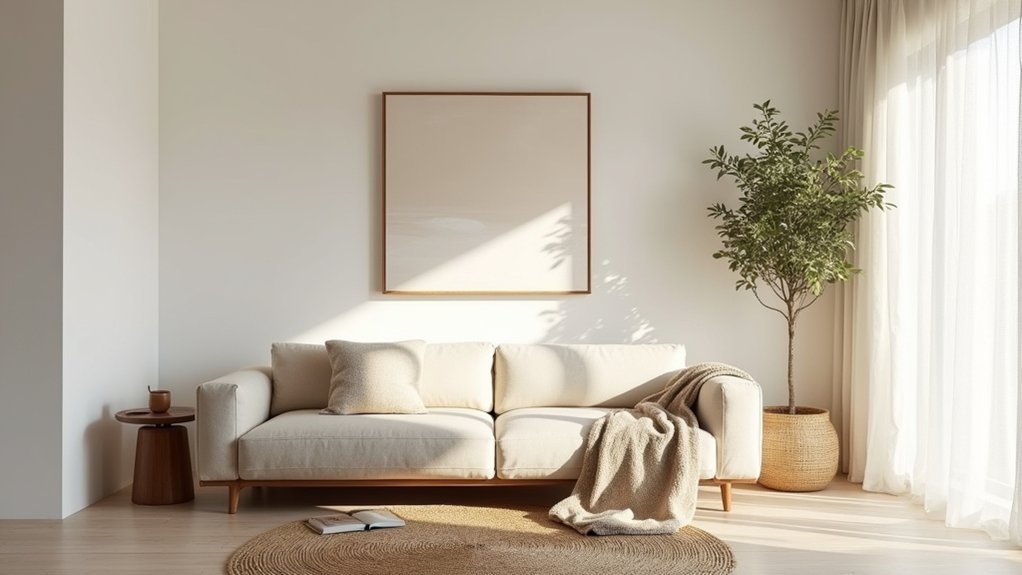
Like a calm Scandinavian flat with the comfort of a well-worn farmhouse, you can build “warm minimalism” by keeping forms clean while dialing up texture, tone, and light. You’ll edit clutter on purpose, choose a grounded palette of soft earth neutrals, and rely on matte woods, linen, and woven pieces that feel good in your hands. You’ll add lighting in layers and display only what matters—until you hit the tricky part: making storage hide real life without feeling sterile…
Define “Warm Minimalism” for Your Home
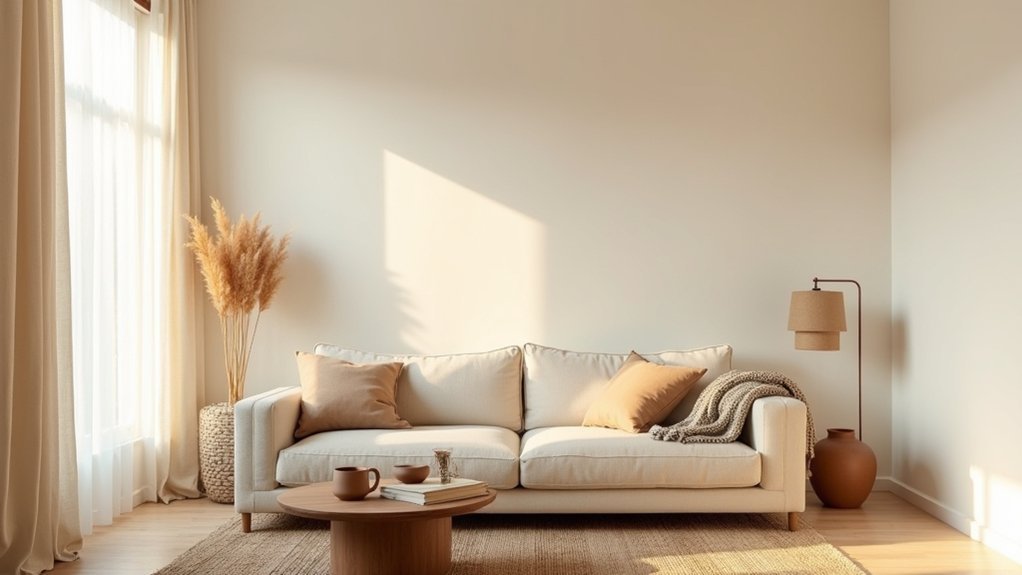
Although minimalism often gets labeled as stark or cold, warm minimalism gives you the same clean, uncluttered foundation while adding comfort through intentional texture, natural materials, and a softer palette.
You define it by prioritizing function, then specifying sensory warmth: matte woods, linen, wool, leather, and gently layered neutrals like oat, clay, and warm white. You keep silhouettes simple, but you choose finishes that diffuse light and reduce glare.
You anchor rooms with a few high-quality, tactile pieces that invite touch and daily use, not display-only styling. Artistic expression shows up through one statement artwork or handmade ceramic that adds depth without visual noise.
Cultural influences guide your material choices—think woven textiles, regional craft, or reclaimed wood—so your space feels personal, not generic.
Edit Your Minimalist Interior With Intention
Edit your minimalist interior with intention by defining what you actually need every day—storage, seating, lighting, and clear pathways. Then remove anything that doesn’t earn its footprint.
Curate a tight set of meaningful essentials that perform well, look cohesive, and support your routines. Keep it sharp with regular editing: schedule quick monthly resets, reassess underused items, and upgrade only when a piece solves a specific problem.
Define Your Daily Needs
Start with three essentials: what you do every day, what you need within arm’s reach, and what routinely gets in your way. Audit each room through your Personal routines and daily habits, not aspirational photos. Track one weekday and one weekend day: where you drop keys, charge devices, prep meals, read, work, and decompress. Then map “high-frequency zones” and “friction points” so your layout supports real traffic and tasks.
Set clear service requirements: surface area for prep, seating count you actually use, closed storage for visual calm, and lighting levels for work versus rest. Relocate or remove anything that blocks movement, collects duplicates, or forces extra steps. When every item earns its place by function, your minimalism stays practical, tidy, and comfortable.
Curate Meaningful Essentials
Once you’ve mapped your high‑frequency zones, curate a tight set of essentials that delivers daily utility and personal meaning—then let everything else compete for its spot.
Choose pieces that earn their footprint: a sofa you actually lounge on, a table sized to how you dine, storage that hides visual noise. Prioritize Functional furniture with clean lines, durable fabrics, and flexible use, like nesting tables or an ottoman that stores throws.
Then add warmth through Personalized decor that signals identity without crowding surfaces: one framed photo series, a handmade ceramic bowl, a single textile you love. Limit duplicates, standardize finishes, and keep a consistent palette so each item reads intentional.
If a piece doesn’t support your routines or story, it’s not essential.
Refine Through Regular Editing
After you’ve curated the essentials, you’ll keep a minimalist interior looking intentional by scheduling regular edits that match how you actually live. Set a recurring 20-minute review monthly and a deeper seasonal reset.
Walk each zone with a basket: relocate, donate, repair, or store. If an item hasn’t been used in 90 days, justify it or let it go.
Rebalance surfaces: limit decor to one focal moment per room, like minimalist artwork sized to the wall, not the shelf.
Audit artificial lighting, too—replace mismatched bulbs, align color temperature, and remove extra fixtures that add glare.
Refresh warmth with one tactile upgrade: a throw, a rug, or layered linens.
Document your “ideal” setup with photos so you can reset fast.
Pick a Warm Minimalist Color Palette
Start with a neutral base—soft white, cream, or greige—so your space reads clean and premium.
Then layer in warm undertones and grounded earth tones (sand, clay, terracotta) to keep minimalism from feeling stark.
Finish with tactile texture—linen, wool, warm wood, and matte ceramics—so the palette stays simple but still feels rich.
Neutral Base, Warm Undertones
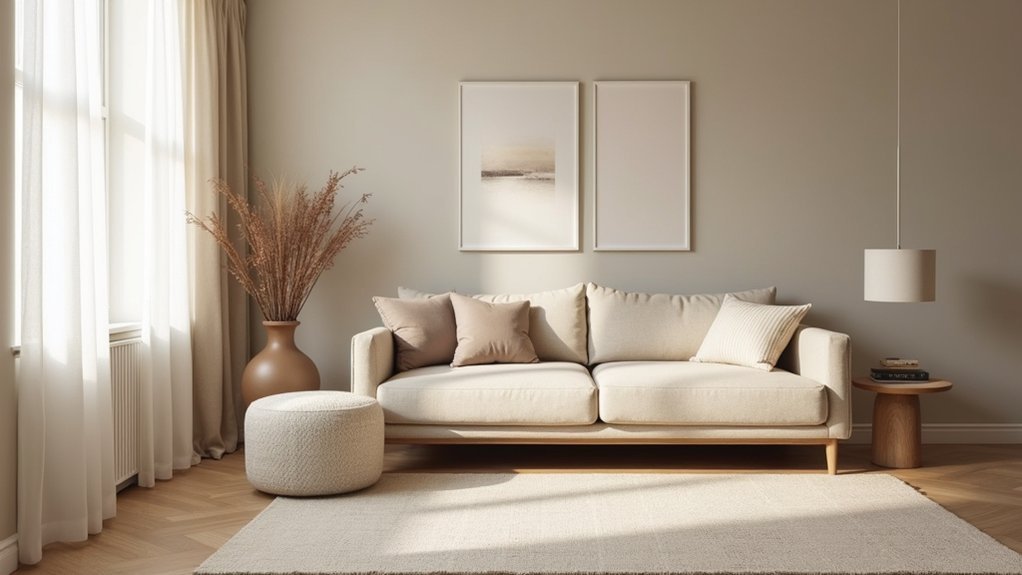
Although minimalist spaces lean on neutrals, you’ll get a more inviting look when you choose a warm-leaning base—think creamy off-white, soft beige, greige, or light taupe—instead of stark white or icy gray. Anchor walls and large rugs in that base so the room reads calm.
Then, specify trims and ceilings one step lighter to keep it clean, not flat.
Manage color contrast with disciplined accents: choose one dark note (matte black, espresso, or charcoal) and repeat it in hardware, lighting, and frames for cohesion.
Your furniture arrangement should reinforce the palette—float a sofa off the wall, align legs and finishes, and keep gaps consistent so the warm undertone feels intentional.
Test paint in morning and evening light before you commit.
Earth Tones And Texture
When you layer earth tones with tactile materials, a warm minimalist room feels curated instead of bare.
Start with a restrained palette: clay, sand, camel, taupe, and deep olive, then anchor it with matte black or warm brass for contrast. Keep saturation low so the space reads calm, but vary value—light walls, mid-tone upholstery, and a darker accent—so it doesn’t flatten.
Next, replace busy patterns with textured surfaces that do the visual work: limewash paint, honed stone, ribbed glass, bouclé, linen, and woven jute. Choose two hero textures and repeat them across zones to create cohesion.
Finish with one natural-wood tone and one ceramic finish to lock in warmth while staying minimal.
Choose Minimalist Interior Materials With Texture
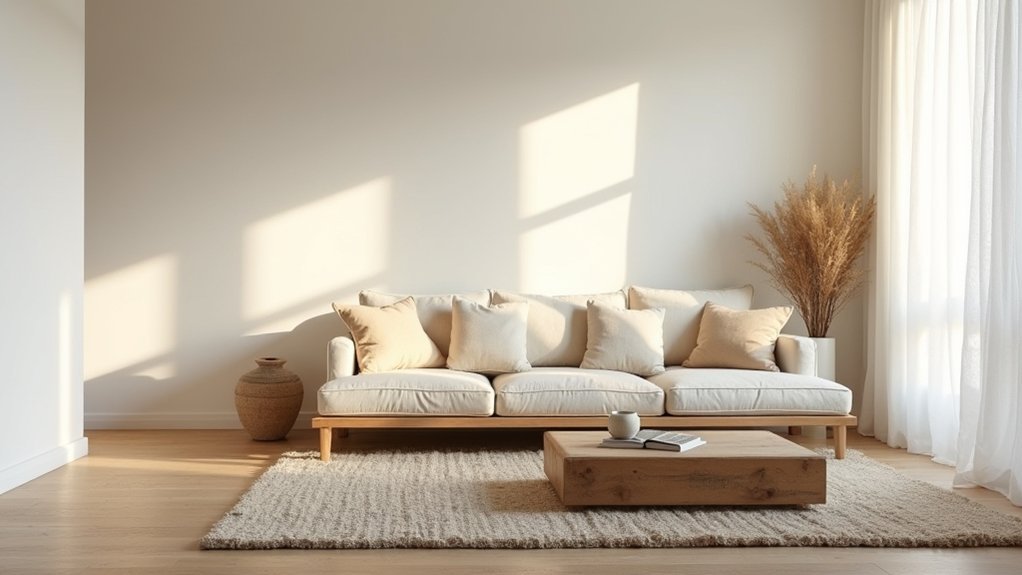
Prioritize Material durability where you touch things most: sealed wood on tables, performance fabric on seating, and scratch-resistant stone or quartz on counters.
Add tactility through one standout element—fluted cabinetry, a ribbed rug, or brushed metal hardware—so the room stays minimal yet grounded.
Layer Warm Lighting in a Minimalist Interior
To keep a minimalist room from feeling cold, you’ll want warm light layered at different heights instead of relying on a single overhead fixture. Start with dimmable ceiling lighting at 2700K–3000K to set the baseline.
Add a floor lamp near seating to create an ambient glow without clutter. Then place a compact table lamp on a console or nightstand for eye-level warmth.
Use under-cabinet or shelf LEDs to highlight texture and reduce harsh shadows, keeping strips hidden for a clean look. Your fixture selection should prioritize simple forms, warm-toned shades, and high CRI (90+) so neutrals and woods read rich, not flat.
Put everything on smart dimmers or timers so the room stays inviting from day to night.
Balance Clean Lines With Cozy Curves
Although minimalist rooms lean on sharp geometry, you’ll get a more livable look by pairing those clean lines with a few well-chosen curves. Anchor the space with rectilinear staples—sofa, credenza, shelving—then soften the silhouette with a round coffee table, an arched floor mirror, or a curved-back accent chair.
Keep the palette tight, but introduce subtle contrasting patterns through a single pillow set or a low-pile rug so the curves read intentional, not fussy. Use asymmetric arrangements to prevent a showroom feel: offset the mirror, stagger side tables, or cluster two rounded vessels at different heights.
Prioritize scale and clearance; curves work best when they don’t interrupt circulation or block sightlines.
Use Natural Elements to Warm Minimalist Interiors
Warm a minimalist space without adding visual noise by layering tactile natural finishes. You’ll get instant depth when you pair light or mid-tone wood with stone accents and linen upholstery or drapery.
Seal the look with greenery—one statement plant and a few sculptural branches—so the room feels intentional, calm, and lived-in.
Layer Wood, Stone, Linen
When your minimalist space starts to feel flat, layering natural materials adds depth without adding clutter. Start with wood: choose a white-oak bench, walnut side table, or slim floating shelf with visible grain for warmth.
Add stone selectively—a travertine tray, soapstone coaster set, or honed marble lamp base—to introduce cool contrast and visual weight.
Then soften edges with linen: a tailored slipcover, textured curtain, or neutral throw that drapes cleanly and absorbs sound.
Balance Rustic accents with Modern craftsmanship by pairing raw, matte finishes with crisp lines and tight joinery.
Keep your palette tonal, repeat each material twice, and limit decor to functional pieces so every surface earns its place.
This creates calm, touchable minimalism.
Add Greenery And Branches
How do you soften a minimalist room without adding visual noise? You add living, sculptural elements that read as intentional, not clutter. Choose indoor plants with clean silhouettes—snake plant, ZZ, rubber tree—and place one per zone to anchor sightlines. Use matte ceramic planters in a single color to keep the palette disciplined while boosting texture and oxygen.
Then introduce branch arrangements for vertical drama: foraged stems, eucalyptus, or dried olive in a tall cylinder vase. Keep the number tight—one statement vessel per surface—and repeat the same branch type to maintain cohesion. Position greenery where light hits, and let negative space frame it.
You’ll get warmth, movement, and a lived-in feel without sacrificing minimalist restraint.
Display Meaningful Objects Without Visual Clutter
Even if you love your travel mementos and family photos, you’ll get a cleaner minimalist look by curating them like a collection, not a storage shelf. Limit each surface to one focal grouping, then edit ruthlessly: keep items that earn attention through sentiment or design. Use an artful arrangement—odd numbers, varied heights, and a tight color palette—to create visual storytelling without noise.
Choose one display zone per room (a console, a single shelf, or a tray) and leave breathing space around it. Contain small objects in lidded boxes or matched vessels so edges don’t scatter. Swap pieces seasonally instead of expanding the lineup.
Finally, align frames, repeat materials, and hide cords so every object reads intentional, premium, and lived-in.
Add Soft Textiles to a Minimalist Interior
Although minimalist rooms lean on clean lines and open space, you’ll keep them from feeling cold by layering a few high-quality soft textiles that add warmth without adding visual noise.
Start with one anchor: a wool or cotton area rug in a solid or subtle weave to soften acoustics and define the seating zone.
Add a structured throw on the sofa—cashmere, alpaca, or a heavyweight knit—folded cleanly for intentional cozy layering.
Swap crisp-only bedding for percale sheets plus a linen quilt, then top with a single duvet in a matte, neutral tone.
Choose pillow covers with texture, not busy patterns: bouclé, brushed cotton, or washed linen.
Keep a tight palette and repeat materials so the room reads calm, tactile, and premium.
Build Minimalist Storage That Hides Real Life
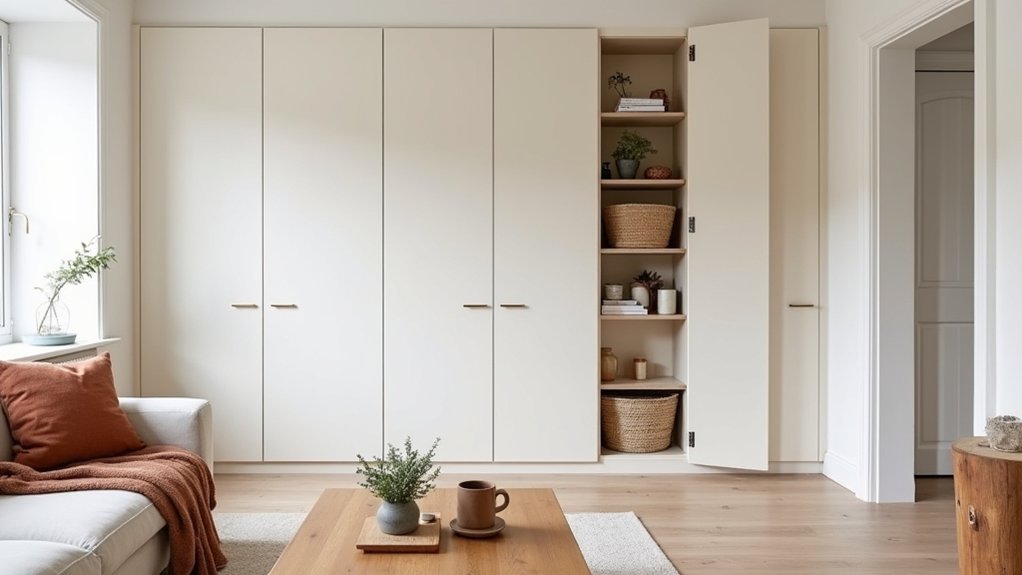
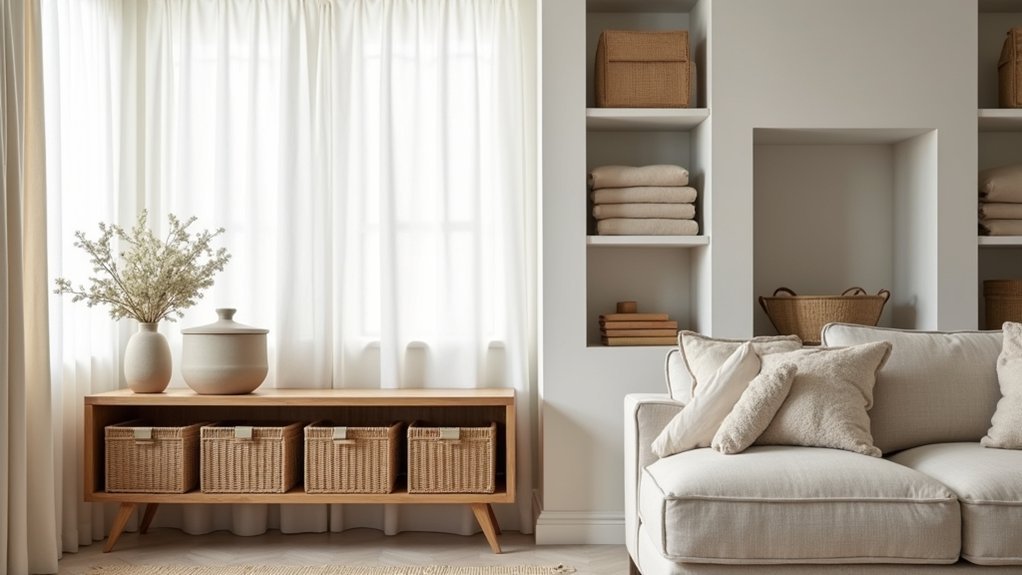
Soft textiles bring warmth, but clutter can still break the minimalist effect in seconds—so you need storage that keeps daily life out of sight. Build Hidden storage into every “quiet” surface: a bench with lift-top trays, a bed with full-extension drawers, and a media console with push-latch doors for remotes and cords.
Prioritize clutter concealment at eye level. Use closed cabinetry in entryways for shoes, bags, and mail, then add a slim catchall drawer for keys so counters stay clear.
In living areas, choose nesting tables with interior bins and ottomans with divided compartments to separate tech, toys, and throws. Specify matte, handle-free fronts in your wall color to visually disappear, and label interiors so you can reset fast daily.
Frequently Asked Questions
How Do I Keep a Minimalist Home Kid- and Pet-Friendly?
Choose wipeable surfaces and rounded furniture so spills vanish and paws don’t snag. Keep closed storage at kid-height. Use nursery decor that’s wall-mounted. Invest in pet friendly textiles—stain-resistant rugs, washable throws, durable covers.
What Budget-Friendly Swaps Make Minimalism Feel Warmer?
Swap in warm neutrals for your color palette, add texture layering with thrifted wool throws, linen curtains, and jute rugs, and replace cool bulbs with soft LEDs. You’ll boost warmth without adding clutter or cost.
How Can I Transition to Warm Minimalism Without a Full Renovation?
You can shift to warm minimalism fast by tightening your color palette, editing clutter, and layering natural textures. Upgrade lighting design with warm bulbs, dimmers, and mixed lamps. Swap art, rugs, and linens for cohesive warmth.
Which Minimalist Furniture Sizes Work Best in Small Apartments?
Like a tailored suit, you’ll choose compact, low-profile pieces: a 72-inch sofa, 36–42 inch round table, 60-inch media console, and 18-inch depth storage. Favor scandinavian style, multifunctional furniture to maximize flow, value.
How Do I Maintain a Warm Minimalist Look With Open-Plan Layouts?
You maintain a warm minimalist open-plan by using a cohesive color palette, zoning with rugs and low-profile furniture, and layering lighting techniques—ambient, task, accent. Add natural textures, curated art, and concealed storage to reduce visual noise.