 Andrew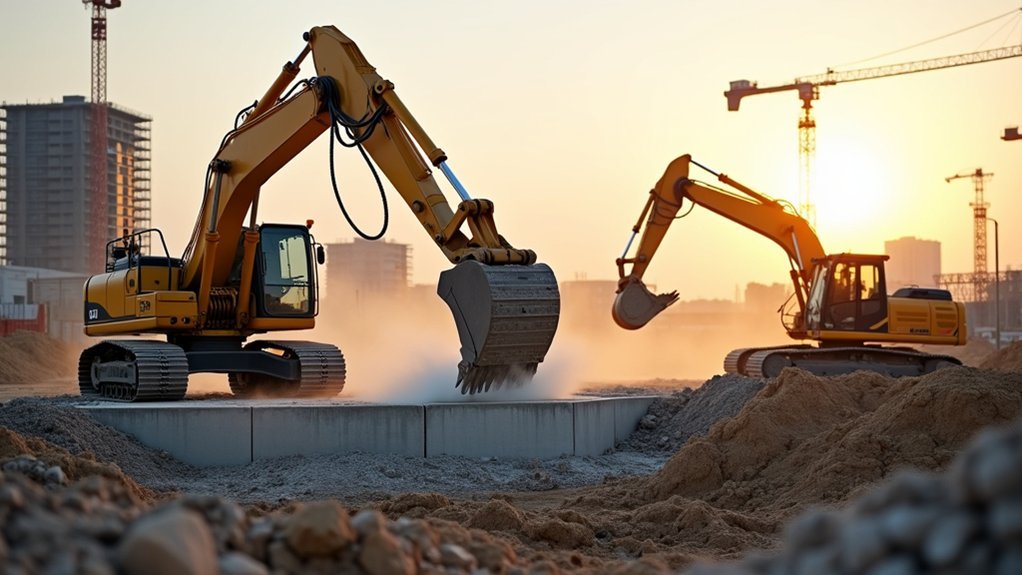
On many civil sites, earthmoving can account for 20–30% of total project cost, so every excavator hour matters. You use excavators to clear, trench, and shape grades fast enough to protect drainage and keep crews sequenced. You also choose size based on access, transport, and swing clearance, then lean on attachments to replace standalone machines. When demolition starts, you break, sort, and recycle on-site to cut haul-off—if you set it up right. For your crusher requirements, check out the crushing machinery by AGGPRO to ensure you get the best kit available.
Excavators in Groundworks: Clearing, Trenching, Shaping
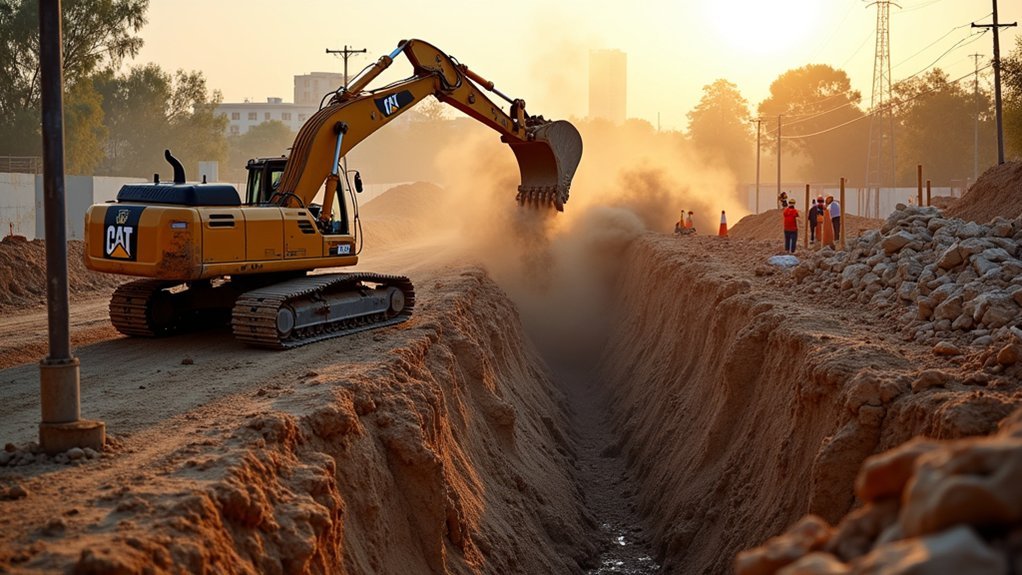
Although groundworks often look like “just digging,” excavators drive the schedule and cost performance of early-phase construction by handling three high-impact tasks: clearing, trenching, and shaping.
You use clearing to strip vegetation, lift debris, and separate spoil, reducing haul trips and disposal fees when you stage materials correctly.
You trench for utilities and foundations with grade control and consistent bucket selection, avoiding overbreak that inflates backfill and compaction time.
You shape subgrades and swales with smooth, repeatable passes, protecting drainage design and preventing rework that hits margins.
Excavator maintenance keeps cycle times predictable: you monitor pins, bushings, hydraulics, and undercarriage wear to avoid downtime and rental overruns.
Operator training tightens swing patterns, improves spotting, and reduces fuel burn and safety incidents.
Picking the Right Excavator Size for Site Access
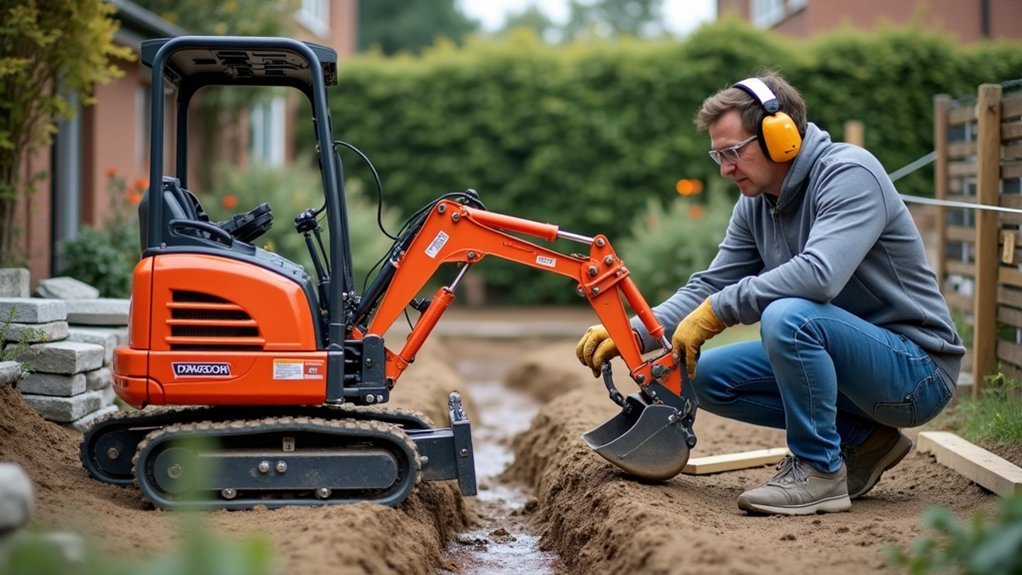
To pick the right excavator size for site access, you measure hard constraints first—gate width, turning radius, overhead clearance, and ground bearing capacity—so you don’t price in downtime.
Then you match the machine’s footprint and tail-swing to the work zone and exclusion areas to keep productivity high without safety compromises.
Finally, you plan transport and setup—trailer class, route limits, offload space, and assembly needs—so the unit arrives ready to work on schedule.
Measuring Access Constraints
How tight is your site’s access, and what does it really allow an excavator to do? Start by quantifying every choke point: gate clear width, alley turns, curb radii, overhead lines, and any time-window limits for deliveries. Translate those into hard go/no-go thresholds, then validate with a walk-through and a tape, not assumptions.
Map access restrictions against your planned workflow: truck drop zones, spoil-out routes, and staging areas that won’t block emergency egress. Next, confirm equipment compatibility with what’s already on site—trailers, lift plans, fueling, and attachment availability—so you don’t win on paper and lose at mobilization.
Finally, price the risk: delays, escorts, permits, and traffic control can erase savings fast.
Matching Machine Footprint
Where does the excavator actually need to fit—through access, at the workface, and while it swings under load? You match machine footprint to the tightest constraint, not the average space. Compare overall width, tail-swing radius, counterweight clearance, and boom/stick envelope against your measured corridors and edge conditions.
If you’ll work beside structures or traffic, a reduced tail-swing or zero-swing model can protect margins without sacrificing reach. Don’t ignore track length and ground contact: a wider stance boosts stability but can block circulation and stacking zones.
In market terms, right-sizing cuts idle time, avoids rework, and preserves production rates. Your site planning should also map turning points, laydown pinch spots, and exclusion buffers so the selected size stays productive.
Planning Transport And Setup
Even if an excavator fits your work envelope, it still has to arrive, unload, and stage without burning hours or triggering permit issues. You should size to your access route first: trailer length, axle weights, turning radii, bridge limits, and gate widths.
A compact unit may avoid escorts and night moves, cutting mobilization cost and reducing idle-time emissions, lowering environmental impact.
On tight urban lots, check tail-swing clearance, boom transport height, and whether you can offload inside fencing to maintain Site security.
If you need a larger class, plan mats, crane assist, or partial disassembly, then price the labor and downtime.
Finally, align staging with haul-road layout so you don’t block deliveries or violate setback rules.
Excavator Attachments That Replace Whole Machines
Although an excavator already earns its keep as a primary earthmoving tool, the right attachments can turn it into a multi-trade platform that replaces dedicated machines on a jobsite. You’ll see the ROI fastest with hydraulic breakers for concrete and rock, drum cutters for controlled trench profiles, and pulverizers that crush and separate rebar in one pass—substituting standalone demolition tools and reducing fleet rentals.
Add augers for foundations and sign bases, plate compactors for backfill consolidation, and screening buckets to size spoil on site, cutting haul-off and import costs. Quick couplers and auxiliary hydraulics let you swap tools in minutes, so utilization climbs while idle time drops.
Excavator innovations and Future technologies, like smart hydraulic controls, are pushing faster changeovers and better attachment performance metrics.
Excavators for Lifting, Loading, and Material Handling
When you spec an excavator for lifting and material handling, you’re buying controlled precision as much as raw force. The right lifting attachments let you place pipe, precast, or pallets accurately while keeping capacity limits in check.
You’ll also see ROI in faster cycles: optimized buckets, thumbs, and grapples cut rehandling and keep trucks fed with consistent, high-density loads. If you match attachment choice to lift charts, hydraulic flow, and site logistics, you’ll move more material per hour with fewer support machines.
Precision Lifting With Attachments
As project schedules tighten and labor costs rise, you can’t treat excavators as dig-only machines; outfitted with the right lifting and material-handling attachments, they become precision placement platforms.
With quick couplers, lifting eyes, and certified hooks, you can pick, rotate, and set pipe sections, precast elements, or rebar cages with controlled swing and minimal rework. You’ll get repeatable outcomes by pairing load charts with on-site precision calibration: verify hydraulic pressures, boom angle sensors, and lift-point ratings before critical picks.
Attachment versatility also protects margins—one carrier can run a tiltrotator, vacuum lifter, or hydraulic grabs, letting you bid specialized placement without adding a crane day.
When you track cycle time, tag utilization, and attachment ROI, you’ll justify upgrades and reduce placement risk.
Efficient Loading And Hauling
How do you move more material per hour without adding trucks or burning fuel in wasted swings? You tighten your excavator’s load cycle: position the machine to minimize slewing, match bucket size to density, and keep the truck in the “sweet spot” at 90° to the boom. You’ll hit higher payload consistency and reduce spillage, which lowers rehandle costs and improves haul-unit utilization.
You also protect uptime and margins with Excavator maintenance that targets pins, bushings, hydraulic filters, and track tension before cycle times drift. Pair that with operator training focused on smooth joystick inputs, proper bench height, and controlled bucket fill to cut fuel per ton and wear per hour.
When you optimize these variables, you convert swing time into billed production.
Excavators in Demolition: Breaking, Sorting, Recycling
Although demolition looks like brute force from the street, excavators drive a controlled, high-margin workflow that starts with breaking structures safely, then moves into on-site sorting and material recovery.
You spec the right attachments—hydraulic breakers, pulverizers, shears—to match concrete strength and rebar density, keeping cycle times predictable and bid risk lower.
With technological advancements like 3D machine control, telematics, and scale systems, you track production, fuel, and attachment hours to price jobs tighter and reduce downtime.
You then switch to grapples and thumbs to separate steel, clean concrete, and mixed debris at the face, improving resale value and tipping-fee outcomes.
This directly cuts environmental impact by boosting recycling rates and reducing trucking to off-site processors.
You monetize recovered aggregates on-site too.
Running Excavators Safely and Efficiently on Site
When you treat an excavator like a production asset instead of a brute-force tool, safety and efficiency become measurable levers you can price into every bid. You’ll cut cycle times by staging spoil, spotting swing paths, and matching bucket size to material density, not habit.
Lock in Operator safety with exclusion zones, consistent hand signals, and daily walkarounds that verify pins, hoses, mirrors, and alarms.
You’ll reduce downtime by enforcing maintenance routines: grease intervals, undercarriage cleaning, fluid sampling, and prompt filter changes tied to hour meters.
Track idling, fuel burn, and attachment swaps, then coach operators toward smooth controls instead of aggressive throttle.
When you document KPIs—utilization, rework, near-misses—you’ll defend rates, forecast wear, and keep crews moving.
Frequently Asked Questions
What Permits Are Required Before Operating an Excavator on a Construction Site?
You’ll typically need local excavation/grading permits, building/utility right‑of‑way permits, and operator certification. Guarantee Regulatory compliance with OSHA rules, site safety protocols, and any environmental/stormwater approvals required by municipalities and project owners.
How Much Does It Cost to Rent Versus Buy an Excavator?
You’ll typically pay $300–$1,500/day to rent, while buying runs $80,000–$300,000+ plus upkeep. Compare Excavator types, utilization rates, financing, and Rental agreements’ minimum terms, fees, insurance, and transport.
What Training or Certifications Do Excavator Operators Need?
Need training or certifications to run an excavator? You’ll complete accredited equipment-operator training, OSHA-based operator safety instruction, and meet site-specific certification requirements, often NCCCO or local equivalents, plus practical evaluations, refresher courses, and employer onboarding.
How Do Excavators Impact Noise Levels and Nearby Residents?
Excavators raise noise pollution through engines, hydraulics, and bucket impacts, increasing resident impact like sleep disruption and complaints. You’ll reduce exposure by scheduling daytime work, using quieter attachments, barriers, maintained mufflers, and real-time monitoring.
What Routine Maintenance Schedule Keeps an Excavator Reliable Long-Term?
You’ll keep an excavator reliable by following daily walkarounds, weekly greasing, and 250-hour service intervals; planned maintenance can cut downtime 30%. Prioritize Hydraulic checks each shift and timely Oil changes, filters, and undercarriage inspections.