 Andrew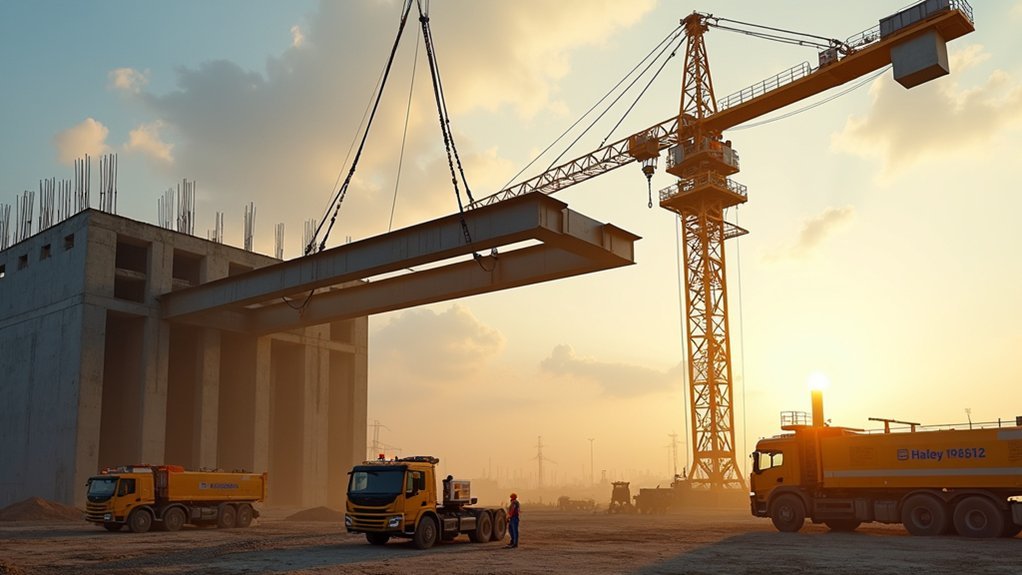
You probably don’t know that on many big sites, your crane choice can change the permit path, not just the lift plan. When you use a mobile crane, you can reposition fast, keep picks moving as access shifts, and avoid the delays tied to fixed foundations and long installs. You also get modern load-moment indicators, outrigger monitoring, and tighter control for critical lifts. The key is knowing what to verify before you commit…
Mobile Cranes vs. Fixed Cranes: What Wins on Big Sites
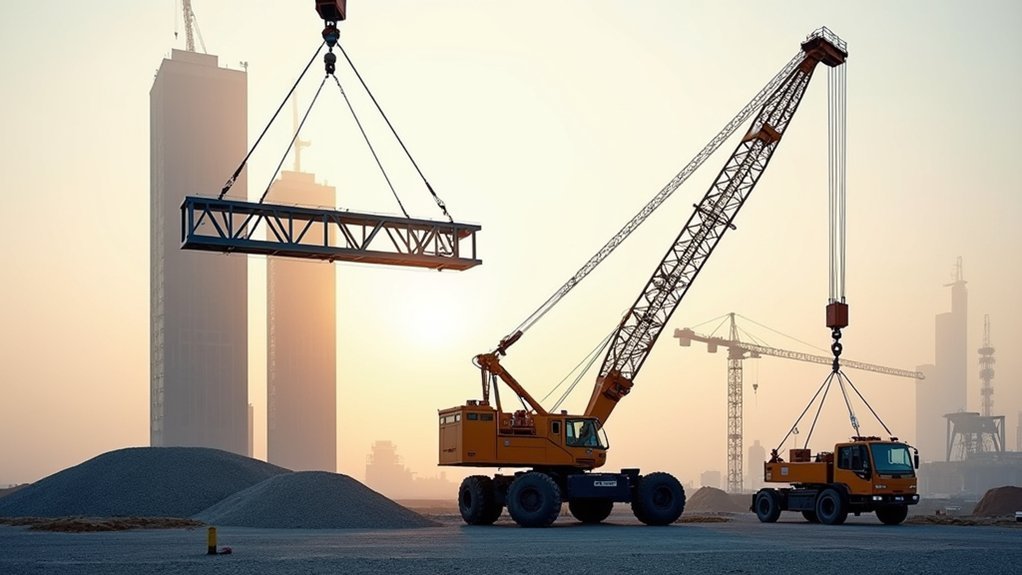
While big sites often assume fixed cranes dominate by default, mobile cranes can win when you need fast deployment, flexible positioning, and fewer permanent works. You’ll compare not just lift charts, but access roads, ground bearing pressure, outrigger mats, and the permitting timeline for foundations, ties, and erection.
If your scope shifts across multiple picks, a mobile unit reduces reconfiguration downtime and keeps traffic management simpler. You also control risk: you can align selections with ANSI/OSHA lift planning, document wind limits, and verify inspections before each shift.
Budget-wise, you’ll weigh rental duration, assembly crews, and demob costs against tower crane productivity. Mobile crane maintenance and crane operator training become differentiators, because compliance-ready logs and certified operators protect margins and win bids.
How Mobile Cranes Keep Heavy Lifting on Schedule
Because every delayed pick ripples into crews, concrete windows, and delivery slots, mobile cranes keep heavy lifting on schedule by compressing setup time and preserving flexibility when conditions change. You can roll in, level fast, and start lifting without waiting on permanent foundations or lengthy mobilization, so your critical-path activities stay intact.
When access tightens or trades shift, you reposition quickly and keep material flow steady. You also reduce downtime by planning Mobile maintenance around shift changes and tracking telematics for wear, fluids, and inspections.
Regulators won’t slow you down if your lift plans, operator credentials, and crane certification records are current and jobsite-ready. With documented daily checks and compliant rigging practices, you protect schedule certainty and avoid stop-work disruptions.
Mobile Cranes That Handle Today’s Heaviest Picks
When you’re planning today’s heaviest picks, you’ll often spec high-capacity all-terrain cranes to balance lift charts, mobility, and site constraints.
You can also leverage large telescopic boom innovations—stronger sections, longer reach, and faster setup—to reduce lifts and tighten schedules without sacrificing performance.
You’ll still need heavy-pick safety systems like rated capacity limiters, real-time outrigger monitoring, and wind/load alerts that support compliance with OSHA/ASME requirements and your lift plan.
High-Capacity All-Terrain Cranes
Even if your lift plan calls for multi-hundred-ton picks on uneven access roads, high-capacity all-terrain cranes let you mobilize fast, set up with minimal site build-out, and still stay inside tight load charts. You’ll overcome Mobility challenges with multi-axle steering, roadable configurations, and rapid outrigger deployment that cuts idle time and keeps crews productive.
You can meet jurisdictional permitting, axle-load limits, and operator certification requirements while maintaining predictable cycle times. These cranes support engineered lift plans, ground-bearing pressure verification, and documented inspections that align with OSHA and ANSI expectations.
You’ll also reduce Environmental impact by minimizing temporary haul-road construction, lowering disturbance footprints, and shortening on-site durations. When schedule risk and access constraints collide, you get heavy capacity without sacrificing compliance, logistics control, or total installed cost.
Large Telescopic Boom Innovations
While lattice booms still dominate some extreme lifts, today’s large telescopic boom innovations let you execute heavy picks faster with fewer support assets and tighter risk control.
You gain more reach without rebuilding jib sections because modern profiles and pinning systems speed Boom extension and reduce on-site congestion. You can mobilize in tighter corridors, then maintain capacity through optimized roping, high-strength steels, and lighter boom head designs.
With integrated outrigger geometry and load-chart tools, you can plan picks to meet jurisdictional road and axle limits while staying within manufacturer duty cycles. You’ll also shorten schedule impacts by minimizing assist cranes and erection time.
These Telescopic innovations help you bid competitively, keep uptime high, and deliver repeatable lift performance across changing radii.
Heavy Pick Safety Systems
How do you keep a 500-ton pick inside the plan when wind, ground conditions, and rigging variables change by the minute? You rely on heavy-pick safety systems that monitor live load moment, boom angle, and outrigger pressures, then alert you before limits are exceeded.
Integrated wind sensors, ground-bearing pressure calculators, and rated capacity limiters help you protect load stability without slowing production.
You’ll also use camera-assisted hook blocks, anti-two-block devices, and automatic slew/hoist cutouts to prevent unsafe motions. Digital lift plans sync with onboard controls, so configuration changes trigger capacity rechecks and documented compliance.
When you follow ASME B30 and OSHA requirements, you reduce downtime, keep inspections audit-ready, and protect operator safety. With modern telematics, you track alarms, events, and maintenance, proving performance to owners and insurers.
Why Mobile Cranes Work in Tight Access Areas
Because urban and infill projects rarely give you generous laydown space, mobile cranes earn their keep by delivering high lift capacity with a small on-site footprint and fast setup. You can stage on a single lane, manage urban congestion with shorter road-closure windows, and keep deliveries flowing.
With multiple steering modes and compact outrigger spreads, you’ll position closer to the pick, reduce swing radius, and avoid encroaching on adjacent properties. You also meet permitting and OSHA lift-plan expectations by using load charts matched to restricted configurations and documenting ground-bearing pressure, mats, and exclusion zones.
When you choose modern engines and right-size the crane, you cut idling time and fuel burn, lowering environmental impact and helping satisfy local emissions and noise ordinances, even during night work or sensitive sites.
Mobile Cranes for Steel, Precast, and HVAC Lifts
When you’re erecting steel or setting precast, a mobile crane gives you the reach and charted capacity you need to keep picks on schedule and within tolerance. You’ll match boom length, radius, and rigging to the lift plan, then execute under site logistics, wind limits, and OSHA/ASME requirements.
For HVAC rooftop unit lifts, you can position fast, protect occupied areas, and set units precisely with certified operators, documented inspections, and controlled lift zones.
Steel And Precast Erection
On steel and precast scopes, mobile cranes turn tight schedules into controlled, code-compliant picks for beams, columns, panels, and rooftop HVAC units. You’ll match crane class, boom length, and counterweight to engineered lift plans, keeping within load charts and swing-radius limits. With the right rigging, you reduce rework and protect finishes while maintaining production rates.
You improve material handling by staging members for direct-to-set picks, minimizing double handling and laydown congestion. You’ll tighten site logistics with coordinated delivery windows, lift zones, and exclusion perimeters, helping you meet OSHA and ANSI requirements.
You’ll also document daily inspections, operator qualifications, and critical-lift reviews so your erection sequence stays auditable and predictable. That discipline keeps crews safe, connectors productive, and the schedule defensible.
HVAC Rooftop Unit Lifts
Even if you’ve already dialed in your steel and precast picks, HVAC rooftop unit lifts add high-wind exposure, roof loading limits, and tight set tolerances that demand a dedicated lift plan. You’ll verify unit weight, rigging points, and pick radius, then confirm roof dunnage and load paths with the engineer of record.
You’ll coordinate crane setup with fall protection, controlled access zones, and OSHA lift-critical procedures, including qualified signalperson and documented pre-lift meeting.
Because RTUs tie directly to Energy efficiency targets, you can’t afford curb damage, coil impacts, or misalignment that drives rework and startup delays.
You’ll also manage environmental impact by minimizing idle time, preventing refrigerant release, and staging lifts to avoid repeated mobilizations.
How Mobile Cranes Improve Lift Safety and Control
Although lift plans vary by site and load, mobile cranes consistently raise the safety bar by pairing precise control systems with enforceable operating limits. You gain smoother starts, stops, and micro-movements through proportional hydraulics and variable boom speeds, reducing shock loads and swing.
Rated capacity limiters, load-moment indicators, and anti-two-block devices help you stay within manufacturer charts and OSHA expectations, even when conditions change.
You also tighten jobsite compliance because modern cabs support standardized safety protocols: clear alarm states, documented overrides, and intuitive displays that reduce misreads.
When you invest in operator training, you improve signal response, set-up discipline, and correct use of outrigger monitoring.
Add remote controls and camera aids, and you keep personnel out of pinch points while maintaining line-of-sight control.
Planning Heavy Lifts With Mobile Cranes and Rigging
Mobile crane safety features only pay off when you plan the lift around real load paths, rigging behavior, and site constraints. You start with verified weights, centers of gravity, and pick points, then map swing radius, boom angle, and travel path to keep within the load chart.
You calculate Load distribution across slings, shackles, spreader bars, and lifting lugs, accounting for sling angles and dynamic factors during rotation and set-down.
You select Rigging techniques that control tilt and prevent side loading, and you define communication, exclusion zones, and a lift director per applicable OSHA/ASME requirements.
You coordinate ground bearing pressure, outrigger mats, and crane positioning to maintain stability near excavations, utilities, and overhead lines.
You document the plan, run a pre-lift meeting, and execute a controlled test lift to confirm balance.
What to Check Before You Rent a Mobile Crane

Before you sign a rental agreement, confirm the crane’s rated capacity at your planned radius and boom configuration, then verify the provider’s documentation and support match your risk profile and schedule.
Ask for the load chart, counterweight plan, and any outrigger or matting requirements tied to your site conditions.
Review inspection records, recent repairs, and documented Maintenance protocols, including daily walkarounds and periodic certifications.
Ascertain the operator meets local licensing requirements and that the rental firm can supply signalpersons/riggers if your jurisdiction mandates them.
Check that the crane’s configuration matches access limits: transport dimensions, setup footprint, and ground-bearing pressure.
Validate insurance certificates, incident history, and emergency response procedures.
Finally, confirm parts availability and field service coverage to prevent schedule exposure during critical lifts.
Mobile Crane Costs: Uptime, Labor, and Logistics Savings
Three cost drivers decide whether a mobile crane rental protects your margin or eats it: uptime, labor efficiency, and logistics.
Track uptime with maintenance records, telematics, and a clear breakdown clause so weather, permits, or site delays don’t become billable dead time.
Your Cost analysis should tie hourly rates to real lift windows, not calendar days.
Labor efficiency improves when you match capacity, boom length, and attachments to the lift plan, so you don’t over-crane and add riggers or spotters.
Logistics savings come from faster mobilization, fewer escorts, and reduced assembly versus tower cranes, but only if your route surveys and DOT axle limits are confirmed.
Build operational efficiency by aligning operator certification, OSHA lift plans, and inspection intervals with your schedule.
Frequently Asked Questions
What Certifications or Licenses Do Mobile Crane Operators Need on Large Projects?
You’ll need an accredited crane operator certification (NCCCO or equivalent) meeting Certification standards, plus OSHA-compliant Operator training, site-specific orientation, and often a state/local license; large projects may also require medical, drug-screen, and rigging qualification documentation.
How Often Must Mobile Cranes Undergo Third-Party Inspections and Load Testing?
Like checking a parachute before a jump, you schedule third-party inspections annually and after major repairs/relocation; you verify inspection frequency per OSHA/ASME, and you perform load testing standards at commissioning, post-modification, and per manufacturer.
What Permits Are Required for Transporting Mobile Cranes Between Job Sites?
You’ll typically need oversize/overweight haul permits, axle/load permits, and sometimes trip, local road-use, or escort permits. Transport regulations drive Route planning; you must confirm bridge clearances, curfews, and DOT insurance filings.
How Does Weather Affect Mobile Crane Operations and Lifting Limits?
Sure, that “gentle” breeze can slash your lifting limits: Weather hazards force derates, shutdowns, and tighter wind restrictions. You’ll follow manufacturer load charts, OSHA/ASME guidance, and document site-specific thresholds for compliance.
Can Mobile Cranes Operate Near Overhead Power Lines, and What Clearance Is Required?
Yes, you can operate near overhead power lines, but you must maintain required overhead clearance for power line safety. Follow OSHA: keep 10 ft minimum up to 50 kV, increase distance above that.