 Andrew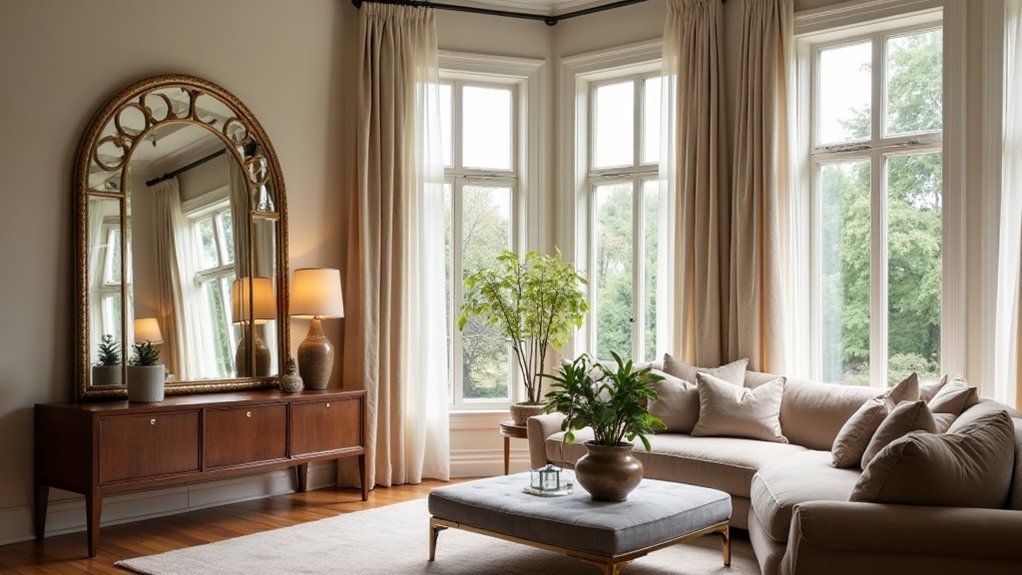
You probably don’t know that a mirror can double daylight only when it reflects the sky, not the room. If you place one opposite or near a window, you’ll bounce clean natural light deeper into the space and make the footprint feel larger. Scale and shape matter as much as frame style, and a few inches of height can change the whole effect. But one wrong reflection can undo it all—here’s how you avoid that.
Place Mirrors to Bounce Natural Light
If you want a brighter room without adding fixtures, place a mirror where it can catch daylight and throw it back into the space. Aim it toward a window or a glazed door, not at a dark corner, so you amplify what you already have.
Use strategic placement: hang it on the wall perpendicular to the window to spread light across the room, or opposite the window to double the glow.
Keep sightlines in mind—reflect a pleasant view, artwork, or greenery, not clutter. Choose decorative framing that fits your price point and style goals; a slim metal frame reads modern and upscale, while warm wood softens light and feels inviting.
Clean glass regularly to avoid dull reflections.
Use a Large Mirror to Add Depth
To add instant depth, you’ll get the biggest impact by placing a large mirror opposite a window to double the view and brighten the room.
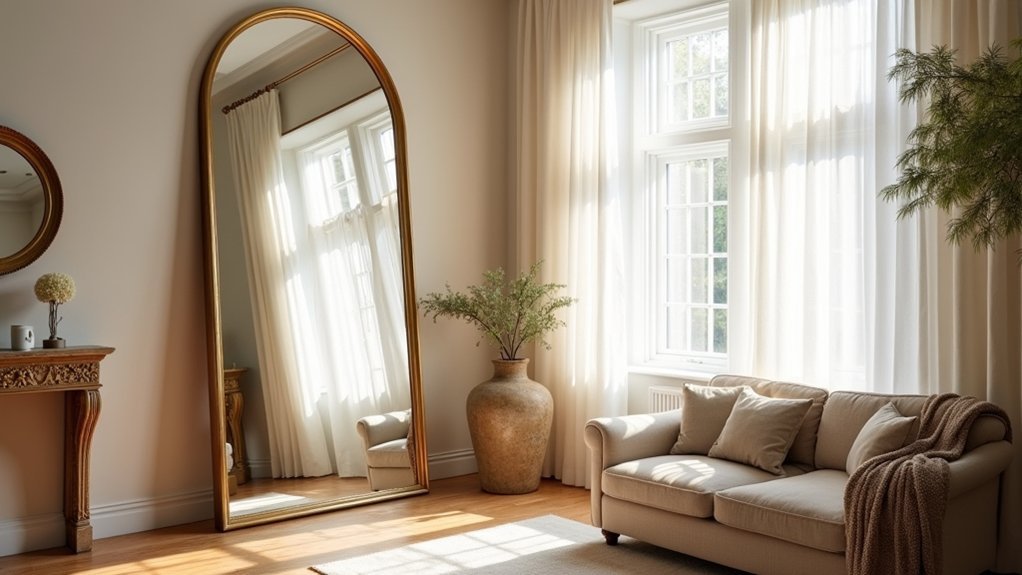
For a designer-forward look, lean an oversized mirror against the wall to create height without major installation.
Either way, you’ll extend sightlines visually, making tight spaces feel wider and more expensive.
Position Opposite Window
When you position a large mirror directly opposite a window, you capture natural light and bounce it deep into the room, instantly making the space feel brighter and larger. Choose a mirror with enough scale to reflect the full window shape, not just a sliver, or you’ll lose impact.
Center it on the window sightline from your main seating position to maximize the “second window” effect buyers love. If you’ve got doors to the outside, angle placement to catch Balcony reflections—greenery and sky read as premium, not clutter.
Keep the frame thin and tonal so light stays the hero. For extra polish, align the top edge with Ceiling accents like coves or beams to visually lift the room and sharpen symmetry.
Lean Mirror Against Wall
How do you add instant depth without a renovation? You lean a large mirror against the wall. This simple move reads like custom millwork, but it’s faster and budget-smart.
Pick a full-length or oversized piece with a sturdy frame; bigger scales better and makes the room feel more expansive. Angle it slightly so it catches ambient light, not glare, and keep the bottom edge on the floor for a grounded look.
Treat it as intentional styling, not an afterthought. A lean mirror works best behind a console, beside a dresser, or near an entry landing zone.
Use felt pads to protect flooring, add anti-tip hardware for safety, and maintain a clean perimeter so the casual placement looks curated, not cluttered.
Extend Sightlines Visually
Although you can’t knock down walls on a whim, you can extend sightlines instantly by placing a large mirror where it reflects the room’s longest view. Aim it toward a hallway, window, or open-plan run so the reflection doubles the visual runway and creates a clean optical illusion of added square footage.
Choose a mirror that’s at least two-thirds the width of the surface it sits on, and hang it with the center near eye level for natural spatial perception.
Keep the frame slim if you want a contemporary expansion effect; use a thicker frame to add architecture without shrinking the view.
Avoid reflecting clutter, televisions, or busy shelves—your mirror will amplify them. Instead, reflect light, artwork, or a calm focal point.
Pick Mirror Shapes That Fit Your Room
Pick a mirror shape that echoes your room’s architecture—clean rectangles for modern lines, arches for classic openings, and organic forms for eclectic spaces.
Keep scale and proportion in check so the mirror anchors the wall without overpowering the furniture below it.
When a space feels boxy or harsh, you can use curves to soften edges and make the layout feel more welcoming.
Match Shapes To Architecture
When you match a mirror’s shape to your room’s architecture, the whole space reads as intentional. Track the dominant lines first: arches, bays, transoms, beams, or sharp-edged openings.
Echo an arch with an arched mirror to reinforce heritage details; use a rectangle to align with clean door casings and modern window grids.
In tight hallways, choose a tall, narrow silhouette that follows the vertical trim, not random curves.
Let decorative frame choices reference what’s already built in—black steel for industrial mullions, warm wood for traditional paneling, slim brass for contemporary reveals.
Follow mirror placement etiquette: center it on a key axis, keep it parallel to millwork, and avoid cutting across molding lines or ceiling coves.
Balance Scale And Proportion
Because a mirror reads like wall art, you’ve got to size and shape it to the room’s visual “weight” so it doesn’t feel apologetically small or overpoweringly loud. Anchor big walls with a larger mirror, and let compact rooms breathe with a slimmer profile that still looks intentional.
Use the furniture beneath as your ruler: above a console, aim for roughly two-thirds the width; above a mantel, keep it slightly narrower than the opening. In tight vignettes, stack impact by choosing a taller mirror rather than a wider one to keep circulation clear.
Treat frames like volume controls—thick frames add presence, thin frames recede. When you align these moves, you get scale harmony and clean proportion balance, and the mirror looks designed, not randomly placed.
Use Curves To Soften
Even if your room leans modern and linear, a curved mirror introduces instant relief by breaking up hard edges and calming the visual rhythm. Choose round, oval, or arched profiles to counterboxy furniture, sharp tile lines, and straight millwork.
Curved edges visually “edit” a space, making it feel more welcoming without changing your layout.
Place a circular mirror above a console to soften a hallway’s sprint, or use an arched full-length mirror to relax a bedroom corner.
In dining areas, an oval mirror balances long tables and adds soft reflections that flatter evening light.
Keep the frame slim for contemporary rooms, or go thicker to add character.
Aim for one primary curve per wall to avoid visual noise.
Match Mirror Frames to Your Interior Style
Although the mirror itself reflects light and space, the frame is what ties it to your décor, so you’ll get the best results by matching frame materials, finishes, and profiles to your interior style.
Start by auditing your dominant metals, woods, and paint sheens, then choose frame styles that reinforce them. In modern spaces, lean on slim black, brushed nickel, or matte lacquer profiles for a crisp outline.
For traditional rooms, pick carved wood, antique gilt, or warm brass that echoes existing millwork and hardware.
In rustic or coastal schemes, prioritize natural material choices like weathered oak, rattan, or rope-wrapped frames to add texture without visual noise.
If your look is eclectic, mix finishes intentionally: repeat one tone elsewhere so it reads curated, not random.
Hang Mirrors at the Right Height
Once you’ve chosen a frame that matches your style, set the mirror at a height that supports how you actually use the room. Start by defining the primary viewing position: standing in an entry, seated at a vanity, or lounging in a living area. Then align the mirror’s center near eye level for that activity, so reflections feel natural and flattering.
In high-traffic zones, hang larger mirrors so they capture faces and upper bodies without forcing anyone to crouch or stretch. Over a console or mantel, leave enough breathing room above the surface to look intentional, not crowded.
In bathrooms, coordinate with sconce placement and sightlines to keep lighting even. The goal is simple: pick the appropriate height, and the room instantly reads more polished and premium.
Avoid Common Mirror Placement Mistakes
When you place a mirror without considering what it reflects, you risk amplifying clutter, harsh glare, or awkward sightlines. Walk the room first and check every angle from seated and standing views.
Avoid Reflecting unwanted views like trash bins, open closets, or busy hallways; you’ll make the space feel cheaper, not bigger. Don’t aim mirrors directly at unshaded windows or downlights, or you’ll double hotspots and eye strain.
Keep mirrors away from crowded vignette walls where they start causing visual clutter by multiplying frames, cords, and knickknacks. In dining areas, don’t reflect a TV or kitchen mess.
Finally, match scale to the wall and furniture; an undersized mirror reads like an afterthought.
Frequently Asked Questions
Can Mirrors Help Reduce Energy Costs by Brightening Rooms Naturally?
Yes, mirrors can lower energy costs by boosting Natural illumination, so you’ll rely less on Energy efficient lighting. Place them opposite windows, angle toward dark zones, and keep surfaces clean to maximize daylight.
How Do I Clean Mirrors Without Streaks or Damaging Special Coatings?
You’ll get streak-free mirrors by using distilled water plus a drop of dish soap; spray onto cloth, not glass, for mirror cleaning and coating preservation. A microfiber can capture 99% of bacteria, reducing residue. Avoid ammonia.
Are There Safety Codes for Hanging Mirrors in Rental or Commercial Spaces?
Yes—codes can apply. You’ll follow local building/fire rules, ADA where relevant, and your lease. Use tempered safety glass in risky areas. Prioritize compliant mirror placement, rated anchors, and written safety guidelines.
Do Antique or Tinted Mirrors Distort Color Perception in a Room?
Yes—antique or tinted mirrors can shift hues; studies show tinted glass can cut blue light up to 30%, causing color distortion. You’ll notice Antique effects like warmer skin tones and muted paint chips, so test samples first.
What’s the Best Way to Secure a Heavy Mirror Against Earthquakes or Vibrations?
Use Wall anchors into studs, hang on Secure hooks rated above the mirror’s weight, then add anti-tip brackets and safety wire. You’ll reduce sway by adding rubber bumpers, and you should recheck fasteners quarterly.