 Andrew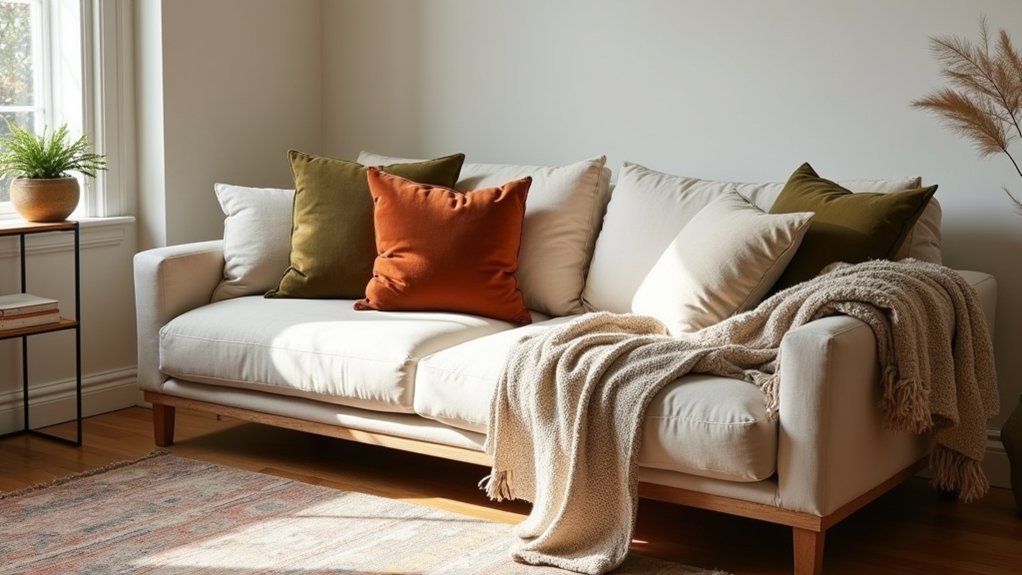
You can elevate a room fast when you treat cushions, throws, and textiles like a planned layer, not an afterthought. Start with your existing palette, then add cushions in sizes that suit your sofa, mixing one bold pattern with calmer solids to keep it clean. Bring in a throw with real texture—woven, ribbed, or boucle—for depth and comfort. But if you choose the wrong fabric or placement, the look falls flat…
Start With Your Room’s Color Palette
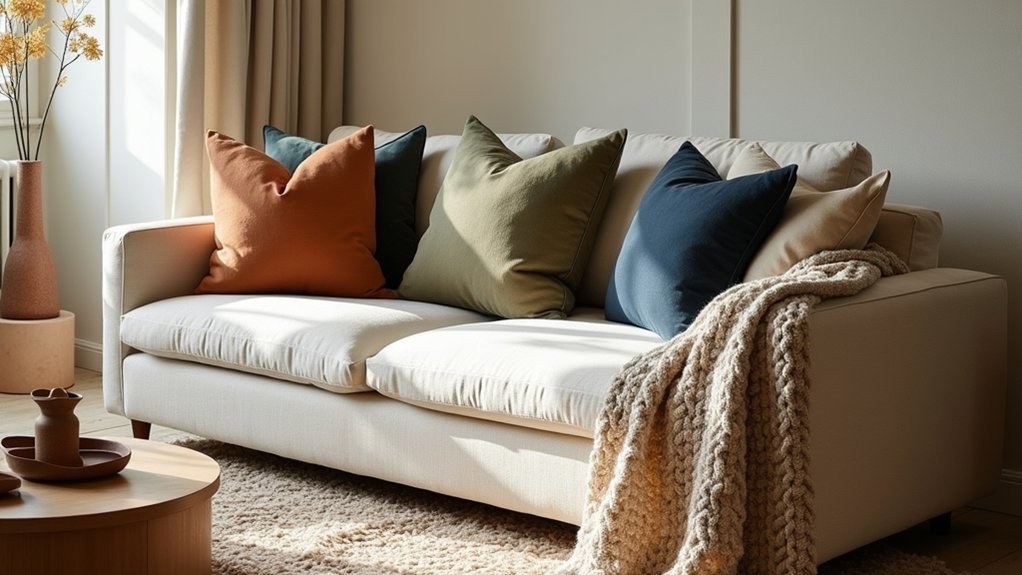
Before you buy a single cushion or throw, lock in your room’s existing color palette—because the fastest way to make textiles look “designer” is to make them look intentional. Identify your fixed anchors: wall paint, large rug, sofa upholstery, and any statement art.
Pull 2–3 dominant hues and 1 accent, then shop textiles that repeat those tones at different intensities for Color harmony.
Use a simple ratio: 60% base, 30% secondary, 10% pop. If your room feels flat, add contrast through warm vs. cool undertones, not random new colors.
For mood enhancement, choose saturation deliberately—muted tones calm, jewel tones energize. Save money by buying fewer pieces that coordinate tightly, and you’ll avoid costly “almost works” returns.
Choose Cushion Sizes That Fit the Sofa
Choose cushion sizes that match your sofa’s scale so the styling looks intentional, not cramped or lost. Start with larger cushions at the back, then layer medium and smaller sizes in front to create depth without adding bulk.
You’ll get a tailored, high-impact finish that makes even budget textiles read more premium.
Match Cushion Scale
If your cushions look too small or too oversized, even a well-styled sofa can feel slightly “off,” so scale should be your first checkpoint. Start by measuring seat depth and back height, then pick inserts that visually “own” that footprint without swallowing it.
For most standard sofas, 20–22 inch squares read substantial; on petite settees, 18–20 inches keeps cushion scale believable.
Keep textile proportion aligned with the sofa’s mass: deep, low-profile sectionals can handle larger squares, while tight-back or tuxedo sofas need cleaner, trimmer sizes.
Check arm width, too—bulky arms make small cushions look bargain-bin, while slim arms make oversized cushions feel cramped.
Aim for a tailored, intentional fit that looks custom, not accidental.
Layer Sizes For Depth
While a single, perfectly sized cushion looks tidy, layering two to three sizes builds instant depth and makes your sofa feel more considered. Start with two 22-inch cushions at the back; they anchor the arrangement and suit most full-size sofas.
Add 20-inch cushions in front to soften the outline without crowding the seat. Finish with a 14×20 lumbar or a 16-inch square as your “closer” to break up symmetry and support lounging.
Keep inserts one size larger than covers so every piece looks full, not deflated. Use consistent undertones across fabrics, then vary texture for budget-friendly impact.
These layering techniques let you refresh seasonally with small swaps, and your decorative accents will read curated, not cluttered.
Mix Cushion Patterns Without Visual Clutter
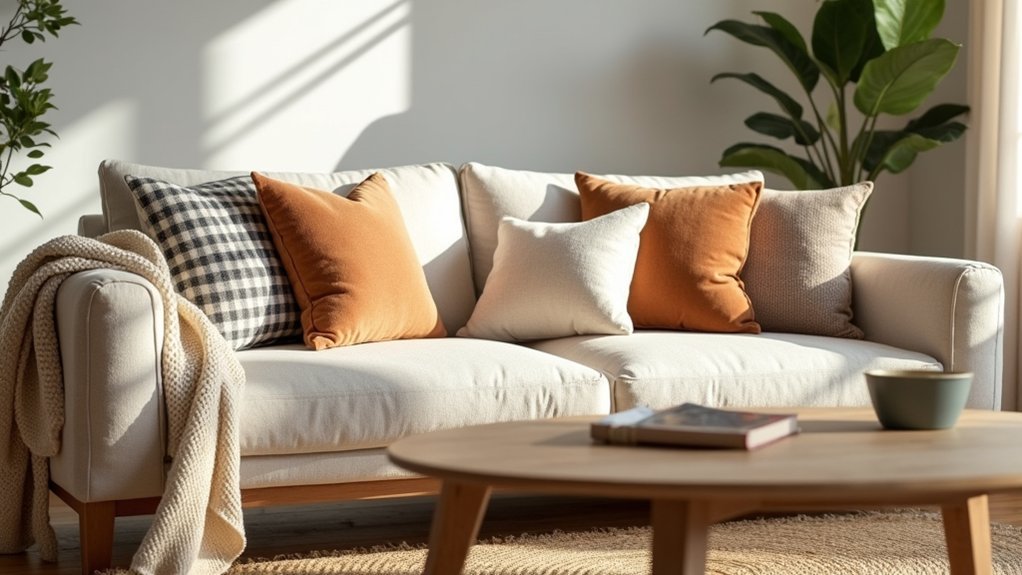
Because pattern mixing can tip from polished to chaotic fast, you’ll get a cleaner, more expensive-looking result by anchoring your cushions with one dominant motif and then layering in one secondary print plus a subtle texture in the same colour family.
Choose your hero pattern first (like a bold stripe or oversized floral), then pick a smaller-scale geometric or dot that repeats one key colour for smart pattern pairing. Keep the rest quiet with solids so the eye has somewhere to rest and you maintain visual harmony.
Limit your palette to three tones, and vary scale rather than adding more colours. If the sofa already has a pattern, treat it as the dominant motif and simplify every cushion choice around it.
Add Texture With Throws and Woven Textiles
Once you’ve nailed balanced cushion patterns, texture is what makes the setup feel layered and premium rather than flat. Add a throw that contrasts your upholstery: chunky knit on sleek leather, brushed wool on crisp linen, or a slubby cotton on velvet. You’ll get instant depth without changing your color story.
Look for character in the Textile weaving: herringbone, basketweave, bouclé, or a tight twill that catches light differently across the fold. Drape one throw over the sofa arm, then fold a second at the foot of a chair to create intentional variation.
Woven textiles also help you manage proportion—larger weaves read bolder, finer weaves read tailored. Prioritize clean edges, weighty handfeel, and proven Fabric durability so the texture stays sharp, not limp.
Pick Fabrics That Match Your Lifestyle
Even if you love the look of delicate linen or pale bouclé, your day-to-day habits should decide what ends up on the sofa. If you’ve got kids, pets, or frequent guests, prioritize fabric durability: tightly woven cotton, performance velvet, or solution-dyed acrylic that resists pilling, snagging, and fading.
Check rub counts and care labels, and choose covers with hidden zips so you can wash or replace inserts cheaply.
If you’re sensitive to dust or dander, invest in allergy-friendly textiles like smooth, low-pile weaves that don’t trap debris; skip heavy fringe and loose knits. Look for OEKO-TEX or similar certifications and avoid high-shed fills.
You’ll spend once, clean faster, and keep everything looking crisp longer.
Use Cushions and Throws to Change Mood
You can shift a room’s mood fast by swapping cushion and throw colors with the seasons—warm rusts for fall, crisp blues for spring—without replacing big-ticket pieces.
Layer textures on purpose (linen, boucle, velvet, knit) to add depth and make the space feel either calmer or cozier on demand.
Mix patterns with balance by keeping one hero print, supporting it with smaller-scale motifs, and anchoring everything in a tight, repeatable color palette.
Seasonal Color Swaps
As the seasons shift, a quick cushion-and-throw color swap can reset your room’s mood faster than any bigger-ticket update. Plan Seasonal color swaps like a mini capsule: keep your core sofa neutral, then rotate two to four accent hues that echo what’s outside—fresh greens in spring, sun-baked ochres in summer, rust and cranberry in fall, ink and pine in winter.
You’ll get a new look without repainting or replacing furniture.
Shop with fabric durability considerations in mind, since these pieces take the most handling. Choose tightly woven cotton, performance blends, or wool for high-traffic seating, and reserve delicate silks or loose weaves for low-use corners.
Buy pillow covers, not inserts, to cut storage and cost. Cleanable, colorfast dyes protect your investment.
Texture Layering Tricks
When your color palette already works, texture does the heavy lifting to shift the room’s mood fast. Start with a smooth base cushion, then add one nubby, one plush, and one lightly woven throw to create depth without changing your scheme. Keep color coordination tight by repeating one accent tone across at least two pieces, but let the surfaces do the contrast.
For a calmer feel, choose matte linens, brushed cottons, and low-pile knits. For cozy energy, reach for bouclé, chunky rib, or faux fur. Prioritize fabric durability: check rub counts, tight weaves, and stitched edges so layers look intentional, not tired.
Finish by varying sizes and drape so the sofa reads styled, not stuffed.
Pattern Mixing Balance
Texture sets the backdrop; pattern controls the room’s energy. Start with a “lead” print on one cushion—stripe, ikat, or check—then echo one color in the throw to anchor the scheme.
Add geometric contrast through a smaller-scale print to sharpen modern edges without overwhelming the sofa. Balance it with floral harmony on a single accent cushion, keeping petals in the same palette so the mix reads curated, not chaotic.
Watch scale: pair one large motif, one medium, one micro. Limit yourself to three core colors plus one neutral, and you’ll buy fewer pieces that work harder.
If the room feels loud, swap the throw to a solid weave; if it feels flat, add a patterned lumbar to raise the tempo.
Place Cushions and Throws for a Styled Look
Even if you’ve chosen the perfect palette, your room won’t look finished until you place cushions and throws with intention. Start with decor placement: anchor two larger cushions at the sofa corners, then layer a medium and a smaller accent toward the center for depth without crowding seating.
Use cushion pairing to control the eye. Match one element—color, weave, or motif—across pairs, then vary scale and texture so the arrangement feels curated, not matched.
On sectionals, mirror the corner stacks, then add one lumbar at the “bend” to guide sightlines. Drape a throw over the arm for polish, or fold it in thirds across the seat back for a tailored look. Keep edges crisp and plumps.
Avoid Common Cushion and Textile Mistakes
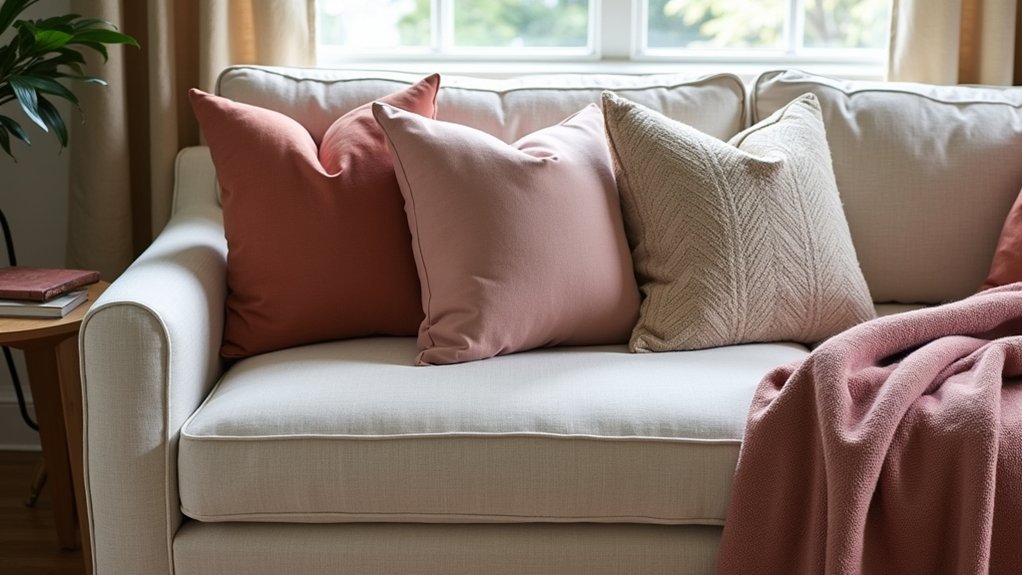
A styled cushion stack and a neatly draped throw can still fall flat if a few common missteps creep in. Don’t buy on looks alone: check Fabric durability, especially with pets, kids, or sunny windows where fading and pilling show fast. Skip flimsy poly inserts that collapse by week two; you’ll end up replacing them, not “refreshing” the room.
Watch scale and stuffing. If cushions are too small for your sofa depth, they read cheap and won’t support you. Prioritise Cushion ergonomics: firmer inserts for lumbar support, softer fronts for lounging.
Avoid mismatched textures that fight—limit to two hero fabrics plus one subtle weave. Finally, don’t ignore care labels; choose washable covers or hides wear with clever patterns.
Frequently Asked Questions
How Often Should Cushions and Throws Be Replaced for Hygiene and Comfort?
You should replace cushions every 2–5 years, throws every 1–3 years, or sooner with odors, stains, or flattening. Prioritize Cushion cleaning monthly and Throw maintenance weekly to extend lifespan and protect comfort, value.
What’s the Best Way to Remove Pilling From Cushion Covers and Throws?
You’ll obliterate pilling in seconds with a fabric shaver or sweater comb, working gently on a flat surface. For fabric maintenance and pilling prevention, wash inside-out, use cold cycles, skip high heat, air-dry.
Are Designer Cushion Inserts Worth the Cost Compared to Standard Fillers?
Yes—if you want loft, longevity, and a tailored look, designer inserts can justify the cost. You’ll get luxury materials and custom sizing, so cushions sit fuller, recover faster, and reduce replacing cheap fillers.
How Do I Store Seasonal Textiles to Prevent Musty Odors and Creases?
Nearly 70% of closet odors come from trapped moisture—so you should wash and fully dry textiles, fold with acid-free tissue, then use breathable cotton bags for Seasonal storage. Add cedar, avoid plastic, and store flat for Textile preservation.
Which Cushion and Throw Choices Help Improve a Room’s Acoustics?
You’ll improve acoustics by choosing dense, textured cushions (velvet, boucle, wool) and chunky knit or felted throws for Sound absorption. Use decorative layering—multiple sizes, feather/down inserts, double throws—to cut echo affordably.