 Andrew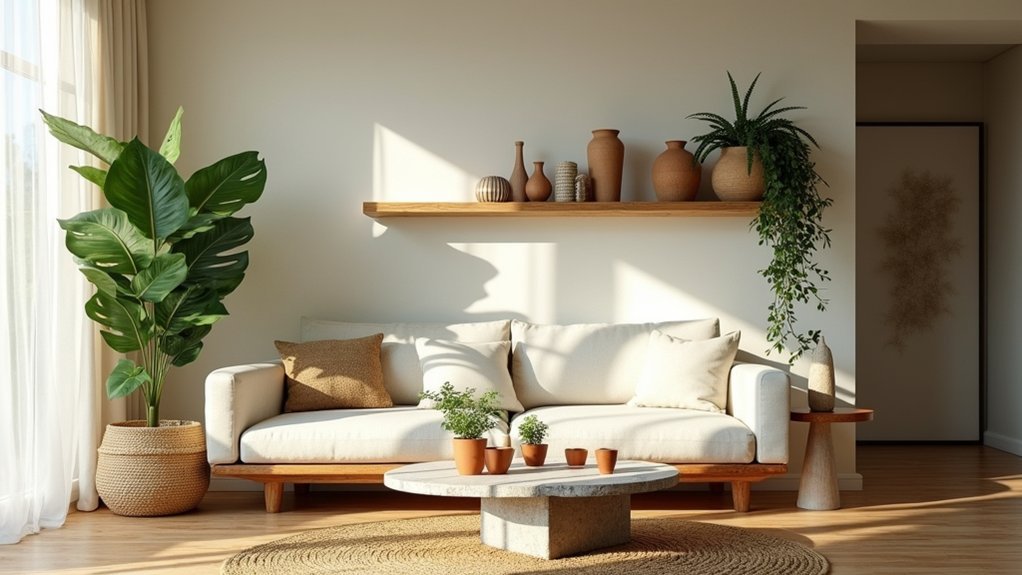
If your space feels sharp or overly polished, you can soften it fast with plants and natural elements that add curve, grain, and quiet color. Use tall greenery to interrupt hard corners, then layer smaller pots to create that relaxed, boutique-hotel rhythm. Balance the green with matte wood, woven fibers, and a touch of stone or clay for grounded contrast. The placement matters more than the plant itself—and that’s where most rooms miss.
Soften Interior Spaces With the Right Plants
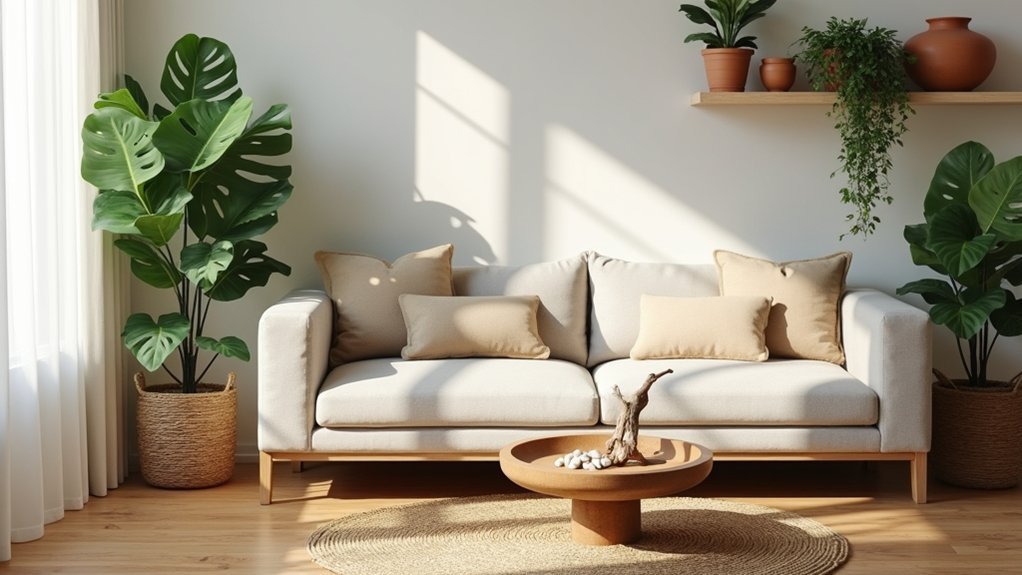
While clean lines and hard finishes keep a space looking polished, they can also make it feel cold—so bring in the right plants to instantly soften the edges. Choose sculptural, low-maintenance varieties that match today’s biophilic trend: snake plant for upright structure, pothos for relaxed movement, and ZZ plant for glossy depth. You’ll also boost indoor air quality, a selling point buyers notice in listings and tours.
Treat plants like finishes: coordinate leaf color with your palette, and scale pots to the room so they look intentional, not cluttered. Follow simple plant care tips—water on a schedule, use well-draining soil, and rotate weekly for even growth. Add a discreet grow bulb if daylight’s limited.
Place Plants to Break Up Hard Lines
You can instantly soften crisp architectural lines by positioning plants at corners where walls, cabinetry, or built-ins meet.
Layer greenery along edges—console tables, window ledges, and shelving—to create a clean, on-trend visual gradient that guides the eye.
This placement strategy makes hard angles feel intentional and elevated without changing your layout or finishes.
Position Plants At Corners
Ever notice how sharp room corners can make even a well-styled space feel boxed in? Use corner placement to soften those hard angles and guide the eye through the room. A tall, upright plant in a slim planter instantly adds vertical lift, while a rounded canopy visually “erases” the corner’s edge.
For space optimization, choose footprints that match traffic flow: narrow cylinders for tight passes, wider bowls for unused nooks. Keep the plant height just above nearby furniture so it reads intentional, not accidental.
Trend-forward picks like rubber trees, dracaenas, or bird of paradise deliver sculptural impact without clutter. Add a textured basket or matte stone pot to echo today’s natural, quiet-luxury finishes. Rotate weekly to keep growth balanced.
Layer Greenery Along Edges
Because long, clean edges can read stark in modern interiors, layer greenery along baseboards, window runs, and open shelving to break up those hard lines and add depth. Use edge planting to guide the eye: trail pothos from a shelf lip, tuck slim snake plants at the end of a credenza, or line a sill with compact peperomia.
Keep heights staggered—low, medium, trailing—so your border greenery feels intentional, not cluttered. Match vessels to finishes (matte ceramic, ribbed glass, black metal) for a curated, retail-ready look.
In tight zones, go vertical with wall rails, mini ledges, or magnetic planters on steel shelving. Maintain clean negative space by repeating one plant type per run. Add grow lights under shelves for consistent color and fullness year-round.
Mix Plant Sizes for a Relaxed, Layered Look
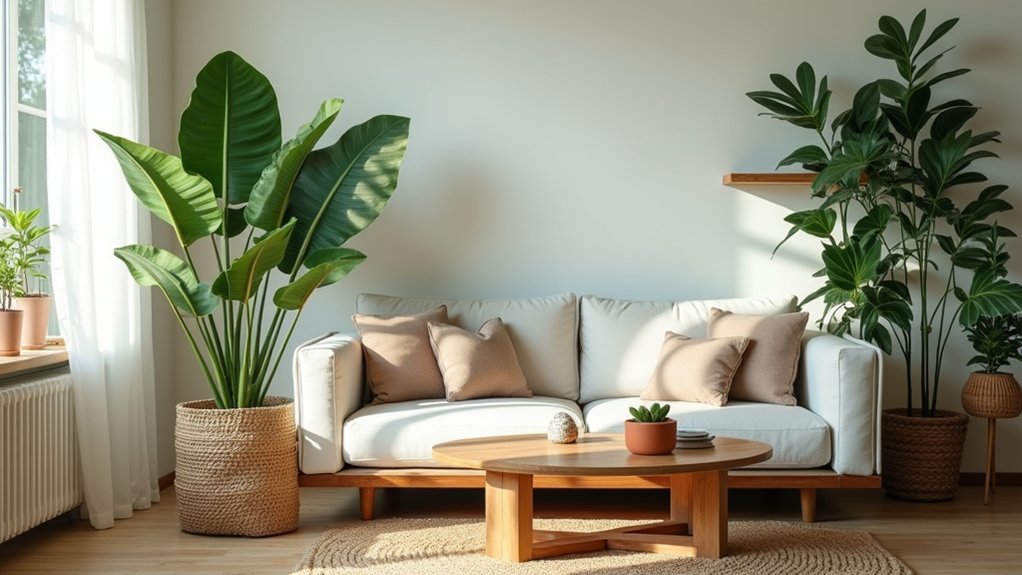
To get that relaxed, layered look buyers love right now, you’ll want to mix heights—pair a tall floor plant with a low, sculptural tabletop pick.
Then layer medium-scale greenery in between to create a smooth visual gradient that feels styled, not staged.
Finish by balancing pot and planter sizes and materials so the composition reads intentional across the whole room.
Pair Tall And Short
While a single statement plant can look polished, pairing tall and short greenery gives your space a more relaxed, layered finish that feels intentionally styled. Use height contrast to guide the eye from floor to tabletop, creating instant visual hierarchy without adding furniture.
Anchor a slim, upright plant beside a low, wide option to balance vertical lines with a grounded silhouette. Place the taller piece near natural light or in a bare corner to add architecture, then tuck the shorter plant on a side table or bench to soften edges and fill negative space.
Keep finishes cohesive—matching planters, similar tones, or shared textures—so the look reads curated, not cluttered. This mix photographs well, elevates listings, and makes everyday rooms feel designed.
Layer Medium-Scale Greenery
After you’ve set the high-low contrast, layer in medium-scale greenery to bridge the gap and make the styling feel effortless rather than staged. Choose plants that sit visually between floor trees and tabletop accents—think 18–30 inch profiles with strong leaf geometry.
Place them near seating, along console runs, or at the edge of a rug to soften hard lines and guide sightlines through the room.
Prioritize varieties that read as Indoor air purifiers in marketing and perform well in medium light, so your look stays consistent without constant swaps.
Mix textures—glossy, matte, feathery—to reinforce Botanical aesthetics that feel curated, not cluttered.
Repeat one leaf shape in two zones to create cohesion, then offset it with a contrasting silhouette for modern, layered depth.
Balance Pots And Planters
Medium-scale greenery sets the rhythm; balanced pots and planters make it look intentional. For a relaxed, layered look, mix heights and diameters: pair one statement floor planter with two smaller tabletop pots, then repeat that trio across the room to create cohesion without matching sets.
Let your pot selection support the plant’s scale and your palette. Matte ceramics and ribbed stoneware feel current for calm interiors; warm terracotta softens modern lines; slim metal cylinders sharpen corners in minimalist spaces. Keep one unifying detail—color family, finish, or silhouette—while varying planter styles for depth.
Aim for visual weight balance: heavier textures low, lighter pieces up, and leave breathing room between groupings. You’ll get a curated look that still feels effortless.
Pair Plants With Natural Materials Like Wood
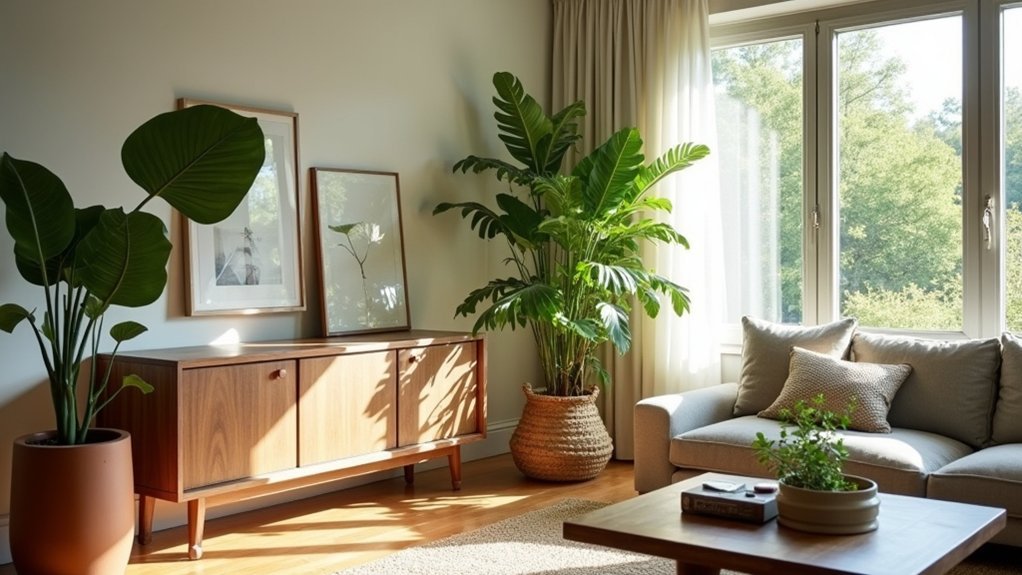
Because natural materials carry their own warmth and texture, pairing plants with wood instantly makes an interior feel more cohesive and current—think oak shelves framing trailing pothos, a walnut console topped with a sculptural rubber plant, or a bamboo side table that echoes a cluster of succulents.
You’ll get the best results when you match undertones: cool ash with silvery eucalyptus, honey oak with glossy philodendron, or deep espresso stains with fiddle-leaf fig. Keep grains visible and finishes matte to align with today’s biophilic, low-sheen trend.
For kitchens, lean into Indoor herb gardening on a simple maple rail so greenery feels intentional, not cluttered.
Want a subtle color story? Use natural plant dyes on linen runners or wall art to echo leaf tones without competing with the wood.
Use Woven Fibers to Add Warmth and Texture
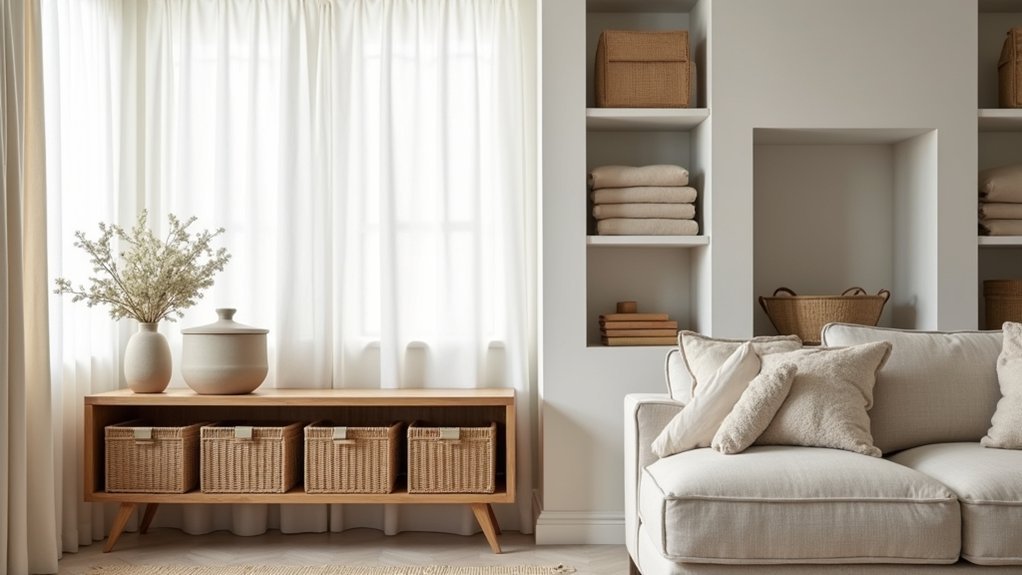
When you layer woven fibers like rattan, jute, seagrass, and cane around your plants, the room instantly reads warmer, softer, and more intentional. Use baskets as cachepots to hide nursery pots and elevate styling, then repeat the material in a tray or pendant to create cohesion.
Lean into tactile textures: a jute runner under a plant stand, a cane-front cabinet behind a tall palm, or a rattan side table beside a trailing pothos. You’ll balance glossy leaves with matte weaves, which feels current in biophilic, organic-modern spaces.
Keep tones natural for a calm, premium look, or choose black-stained rattan for a sharper, boutique vibe. Mix tight and open weaves to vary depth without visual clutter.
Add Stone and Clay for Grounded Contrast
Although airy greenery lightens a space, stone and clay bring the grounded contrast that makes your plant styling feel elevated and intentional. Pair glossy leaves with matte terracotta, travertine, or river-stone vessels to introduce grounding textures that read modern, not rustic.
Use earthy tones—sand, taupe, iron, and warm gray—to anchor bright greens and prevent your corners from feeling too floaty. Swap lightweight trays for a stone plinth under a floor plant, or add a clay catchall on a console to visually “land” trailing vines.
For a trend-forward look, mix one sculptural ceramic pot with one raw stone object, keeping shapes clean and oversized. You’ll get depth, weight, and a calmer, boutique-hotel finish.
Style Dried Botanicals for Low-Fuss Softness
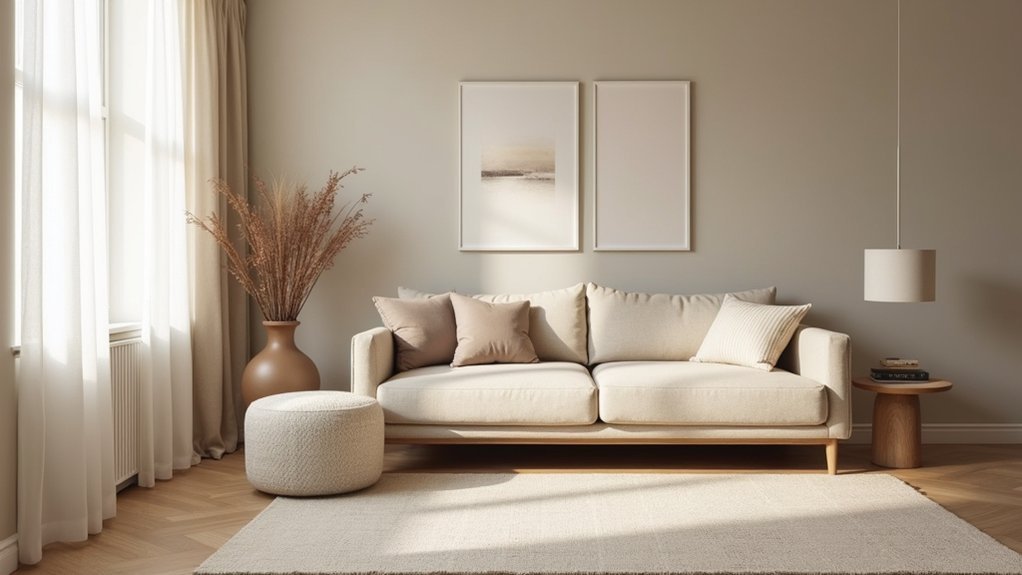
While fresh plants add movement and gloss, dried botanicals bring an effortless softness you won’t have to water, rotate, or rescue from low light. Use pampas, bunny tails, lunaria, or preserved eucalyptus to blur hard edges on shelves, consoles, and nightstands without adding maintenance to your routine.
For a modern look, keep dried botanical arrangements airy and asymmetrical, and choose a matte vessel in ceramic, smoked glass, or travertine tones. Limit your palette to one stem type or two neutrals so it reads intentional, not dusty.
If you love Minimalist greenery displays, cluster three bud vases with single stems, then echo the hue in textiles or art. Place away from humidity and direct sun, and hit them with a cool hairdryer to de-dust.
Frequently Asked Questions
What Are the Best Low-Light Plants for Softening a Room?
You’ll get the best low-light softness from snake plants, ZZ plants, pothos, and peace lilies. Nail plant placement near windows or corners, and follow lighting considerations: avoid harsh sun, rotate weekly, and water sparingly.
How Can I Prevent Indoor Plants From Attracting Pests?
Test the theory: pests follow moisture and decay—picture gnats orbiting soggy soil. You’ll prevent them by watering less, quarantining newcomers, wiping leaves, using sticky traps, and adding pest repellent plants, natural pest barriers.
What’s the Safest Way to Decorate With Plants Around Pets?
Choose Pet safe plant varieties and Non toxic plant options, then place them on high shelves or in hanging planters. You’ll avoid chew access, use sealed soil toppers, skip toxic fertilizers, and opt for stylish, stable pots.
How Often Should I Water Plants in Heated or Air-Conditioned Rooms?
Water less, check more—your watering schedule should follow soil dryness, not the calendar. In heated or air-conditioned rooms, aim weekly, adjust biweekly, and add humidity control with trays or a humidifier.
Which Planters and Trays Best Protect Floors and Furniture From Moisture?
Choose sealed ceramic or fiberglass planters with built-in drainage systems and waterproof liners, plus deep, nonporous trays with raised feet. You’ll protect floors and furniture by smart plant placement, using mats and moisture sensors.