 Andrew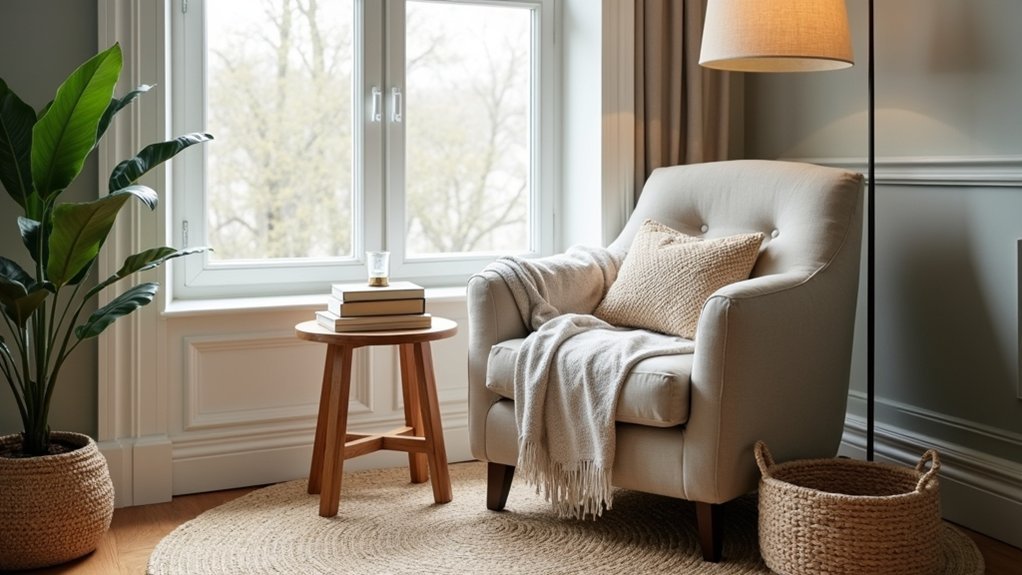
You can turn an unused corner into a calm nook by choosing the right spot, then building comfort through lighting, seating, and touchable layers. Start with warm, dimmable light placed slightly behind and to the side, so pages stay bright without glare. Pair it with a supportive chair that fits the space and add textured throws and cushions for instant softness. The next step is what makes it feel finished…
Pick the Best Spot for Your Reading Nook
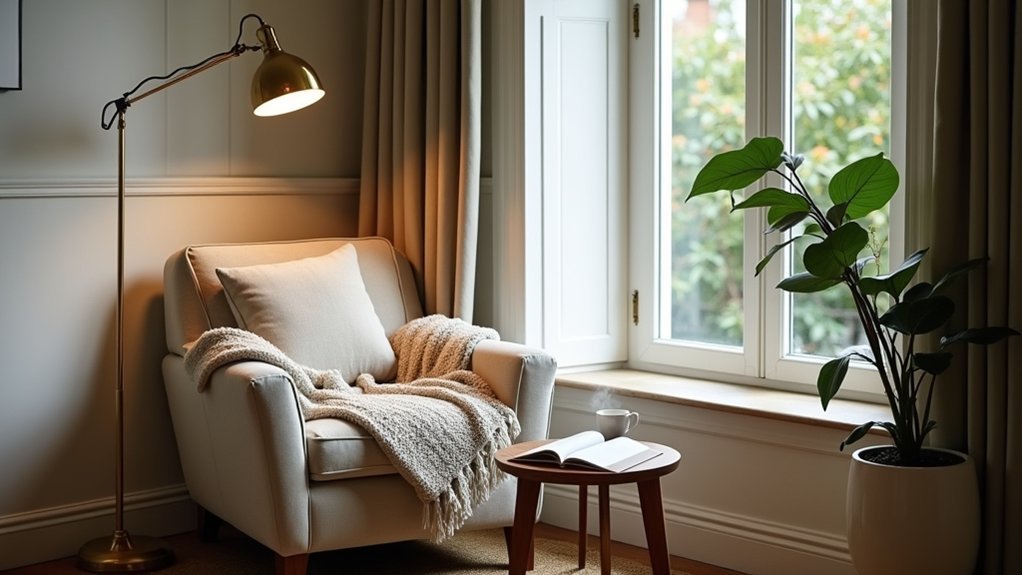
Where should you set up a reading nook so it actually gets used? Choose a location you already pass daily, so it becomes a habit, not a project. Target a corner near a window for Natural light, but avoid glare on pages by sitting perpendicular to the glass.
Check traffic flow: you shouldn’t get bumped, and you shouldn’t block a walkway. Measure the footprint for your chair plus a small table, then confirm the door swing and nearby outlets won’t interfere.
If you live with others, build in Privacy barriers—think a tall plant, a slim bookcase, or a curtain panel—to reduce visual noise without closing the space.
Finally, keep it close to storage for books and a throw, so upkeep stays effortless daily.
Layer Reading Nook Lighting for Day and Night
Layer your reading nook lighting so it performs from bright afternoons to late-night chapters by pairing ambient light with a focused task lamp at seat level.
Add adjustable accent lights—like a dimmable sconce or swivel picture light—to highlight shelves and reduce harsh shadows.
For evenings, switch to warm, low-output bulbs or a dimmer setting to keep the space cozy without straining your eyes.
Combine Ambient And Task
Although a reading nook can look inviting with one pretty lamp, you’ll get far better comfort and control by combining ambient and task lighting for day and night. Start with ambient lighting that fills the corner evenly, so your eyes don’t strain when you glance up from the page. A warm, diffused source near the nook (or reflected off a wall) reduces harsh shadows and makes the space feel finished.
Then add task lighting aimed at your book or e-reader. Place it slightly behind and to the side of your shoulder to minimize glare and keep your hands from casting shadows. Choose a bulb with good color accuracy and a comfortable brightness, so text stays crisp after sunset.
When you layer both, you can read longer, relax faster, and keep the nook usable from morning through evening.
Add Adjustable Accent Lights
Once you’ve nailed your ambient and task lighting, add adjustable accent lights to fine-tune mood and depth without sacrificing readability. Use a dimmable picture light to highlight a bookshelf, or aim a small spotlight at art to create a focal point that keeps the nook feeling intentional.
Choose fixtures with swivel heads, adjustable arms, or plug-in cords so you can reposition them as your seating layout changes. If you’re tight on space, mount a slim wall sconce to free up tabletop real estate. For renters, try clamp lights on a shelf edge.
Look for high-CRI LEDs so colors stay true and pages don’t look dingy. These versatile lighting options let you balance brightness across the corner and reduce harsh shadows on your book.
Use Warm Nighttime Glow
After you’ve added adjustable accents to shape focal points, switch the nook into evening mode with a warm nighttime glow that relaxes your eyes without turning the corner murky. Choose lamps or bulbs in warm hues (around 2200K–2700K) to soften contrast and keep pages readable.
Aim the light at the book, not your face, and use a shade that diffuses glare across nearby walls.
Layer a low-output table lamp with a dimmable floor lamp, then add a tiny plug-in nightlight behind the chair for safe walkways. Put everything on a smart plug or inline dimmer so you’ll dial down brightness as the night deepens.
This mix creates a cozy ambiance while protecting sleep-ready rhythms.
Choose a Reading Nook Lamp That Won’t Glare
When you’re settling in with a book, the wrong lamp can bounce harsh light off glossy pages and strain your eyes. For glare prevention, pick a shaded task lamp or adjustable sconce that aims light at your lap, not your line of sight.
Prioritize matte finishes on shades and interiors; glossy metals can create hotspots. Choose a warm LED bulb (2700K–3000K) with high CRI so text looks crisp without icy brightness.
Use a dimmer or 3-way bulb to fine-tune intensity as daylight fades. Nail lamp placement by setting the light slightly behind and to the side of your shoulder, reducing page reflection.
If you read on tablets, angle the beam downward and keep it off the screen.
Select Reading Nook Seating You Can Sink Into
Good lighting keeps your eyes comfortable, but the seat determines whether you’ll actually stay put long enough to finish a chapter. Start by sizing seating to your space: a slim lounge chair fits corners, while cozy armchairs anchor larger nooks.
Check seat depth and height so your feet rest flat and your back stays supported; aim for firm-but-giving foam rather than overstuffed filling that collapses fast. Prioritize a supportive back with a slight recline and stable arms for page-turning comfort.
Add reading nook cushions only where you need extra lumbar or elbow support, not as a fix for a poor frame. If you share the nook, consider a loveseat or two matching chairs to keep sightlines open.
Add Texture With Throws, Pillows, and Upholstery
Once you’ve chosen seating you can sink into, you’ll make the nook feel finished by layering throws and blankets in contrasting weights—think chunky knit over smooth cotton for instant depth.
Add tactile pillows in a tight palette, mixing sizes and textures like velvet, bouclé, or linen to boost comfort and visual interest without clutter.
If your chair or bench upholstery feels flat, upgrade with a textured fabric or a slipcover so every touch point reads cozy and premium.
Layered Throws And Blankets
Although your lighting and seating set the foundation, layered throws and blankets create the comfort you actually feel. Start with one substantial knit or wool throw that drapes cleanly over the arm for instant reach.
Add a second, lighter layer in linen or brushed cotton to control warmth and add visual depth without clutter. Choose a tight, durable weave if you expect daily use, and reserve looser, plush textures for occasional lounging.
Shop by performance: machine-washable fibers for kids or pets, and natural blends for breathability.
Keep your palette tight—two solids plus one subtle pattern—so your nook reads curated. Fold extra cozy blankets into a basket beside the chair, and rotate seasonally to keep the look fresh.
Tactile Pillows And Upholstery
When you want your reading nook to feel finished—not just styled—use tactile pillows and upholstery to add texture where your body actually rests. Start with two 20–22″ tactile pillows in a nubby bouclé or linen blend for structure, then add a smaller velvet or corduroy lumbar to soften the line of your back. Keep inserts full (down-alternative, 90/10 fill) so the pillows hold shape instead of collapsing after a week.
Next, upgrade the chair or bench with plush upholstery like brushed microfiber, performance velvet, or chenille; these read richer and feel warmer during long sessions. If durability matters, choose stain-resistant, high-rub fabrics and a darker solid or subtle heather.
Finish with a textured seat cushion for extra comfort and visual depth.
Ground the Reading Nook With Rugs and Curtains
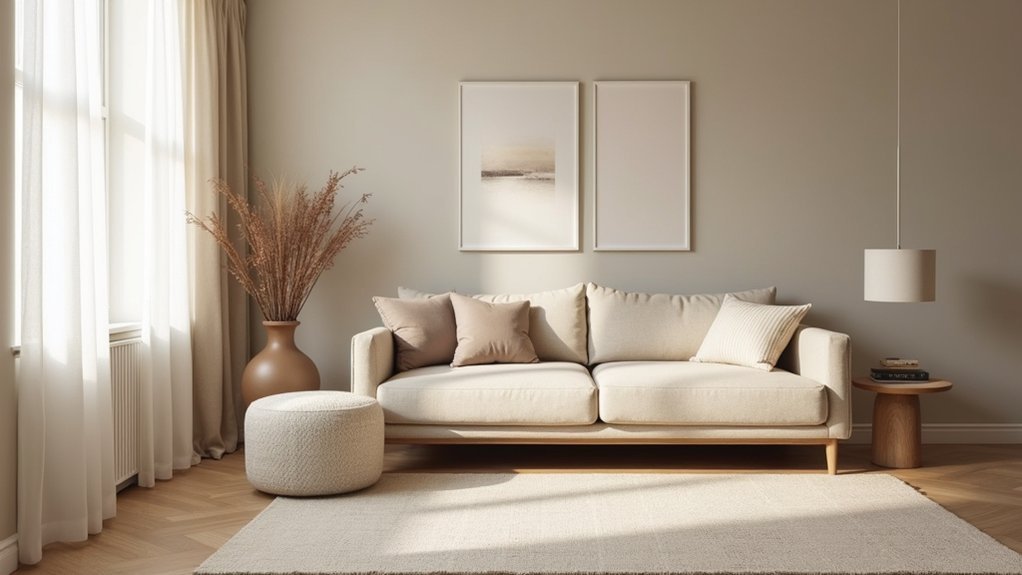
If your reading nook feels like it’s floating in the room, anchor it with a rug and well-placed curtains that define the zone and soften sound.
Choose a rug large enough to catch the front legs of your chair and any side table, so the setup reads as intentional. For durability, go low-pile wool or a performance flatweave; add a rug pad to prevent slip and boost comfort.
Use color coordination to pull tones from your upholstery and pillows, then repeat one accent in the border or pattern for a custom look.
Finish with window treatments that control glare: lined panels for blackout, sheers for filtered light, or a layered combo for flexibility.
Hang curtains high and wide to visually expand the nook.
Finish Your Reading Nook With Shelves and Styling
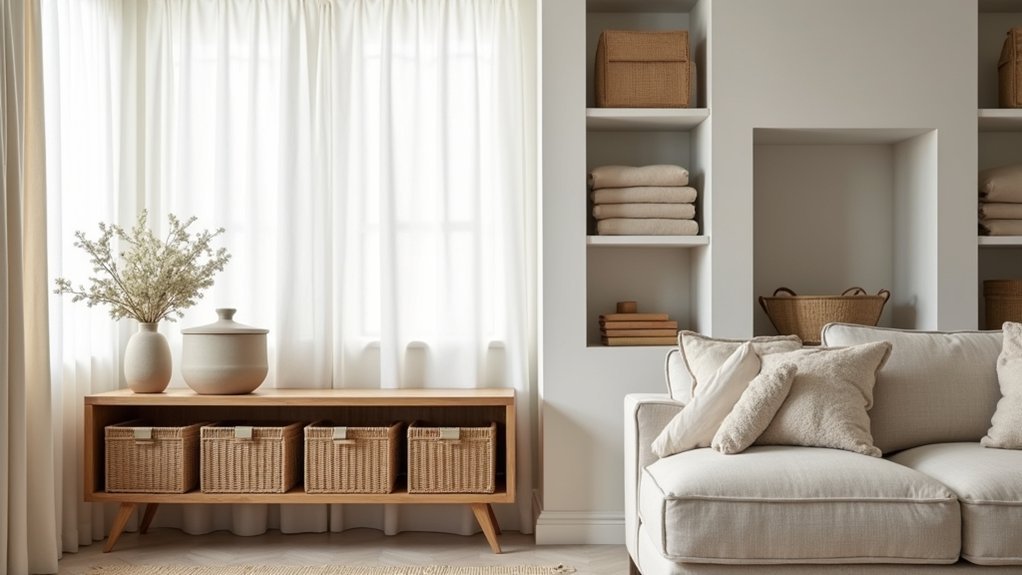
Once your rug and curtains define the zone, shelves and styling turn the reading nook into a finished, functional destination. Choose a slim bookcase or floating shelves to use vertical space without crowding your seat. Keep your most-read titles at arm’s reach, and reserve higher shelves for display pieces.
For Shelf styling, work in simple ratios: stack books horizontally, then anchor each stack with one sculptural object or framed photo. Mix matte and glossy finishes to add depth, but limit your palette to two metals or one wood tone so it looks curated.
Add decorative accents that also work hard—lidded boxes for remotes, a small tray for bookmarks, and a plant to soften edges. Leave 20% empty space to keep it calm.
Frequently Asked Questions
How Do I Keep a Reading Nook Quiet in a Busy Household?
You’ll keep your reading nook quiet by using soundproofing techniques: a door sweep, thick curtains, rugs, and acoustic panels. Add white noise and set household “quiet hours.” Choose calming color schemes to reinforce a hush.
What’s the Ideal Reading Nook Size for Small Apartments?
You’ll do best with a 3×4 to 4×5 ft footprint in a compact space, creating a cozy corner for chair, side table, and lamp. Keep 24–30 in clearance for access. Add slim shelving.
How Can I Make a Reading Nook Kid- and Pet-Friendly?
Make your reading nook kid- and pet-friendly by choosing washable fabrics, rounded furniture, and secured shelves—soft yet durable. Add playful decor and cozy accessories, use lidded storage, anchor rugs, and keep cords, plants, and breakables out.
What Are Budget-Friendly Ways to Style a Reading Nook?
Shop thrift and online marketplaces for affordable decor, then layer a washable throw, pillows, and a rug. Add DIY lighting with plug-in sconces or LED strips. Repurpose crates as shelves and protect corners for kids/pets.
How Do I Prevent Eye Strain During Long Reading Sessions?
You prevent eye strain by treating your eyes like a camera lens: keep Eye comfort with 20-20-20 breaks, blink often, adjust font size, and follow lighting tips—soft, even, glare-free light behind you.