 Andrew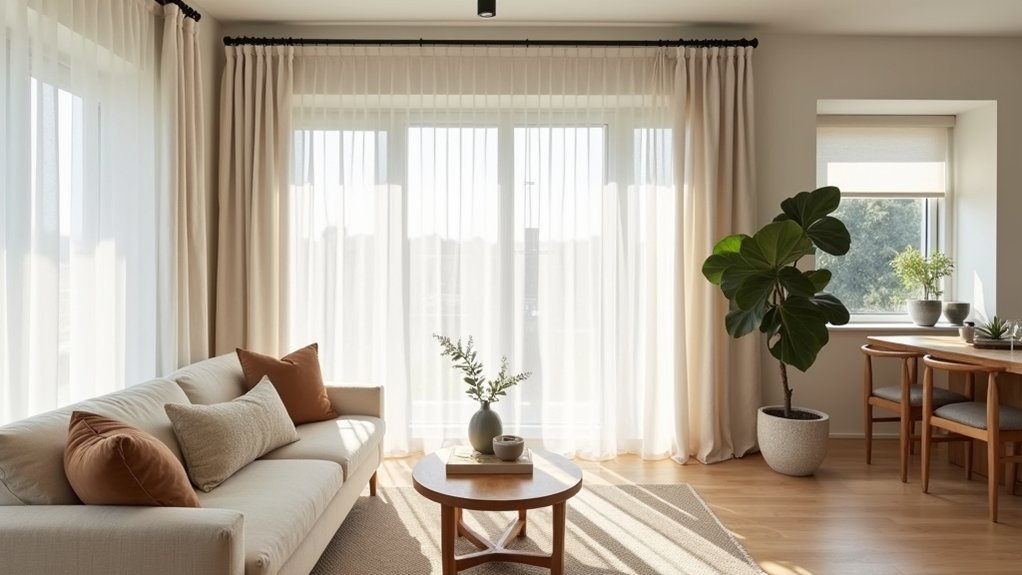
Does mounting window dressings higher and wider really make a room feel brighter and more connected? When you map your daylight by window direction and sightlines, you can match privacy needs to fabrics and hardware that diffuse sun without dimming it. Light-toned sheers, reflective shades, and consistent finishes across adjacent spaces keep visual breaks to a minimum and boost perceived window size. But one sizing mistake can flatten the effect, and it starts with…
Map Your Light: Window Direction and Layout
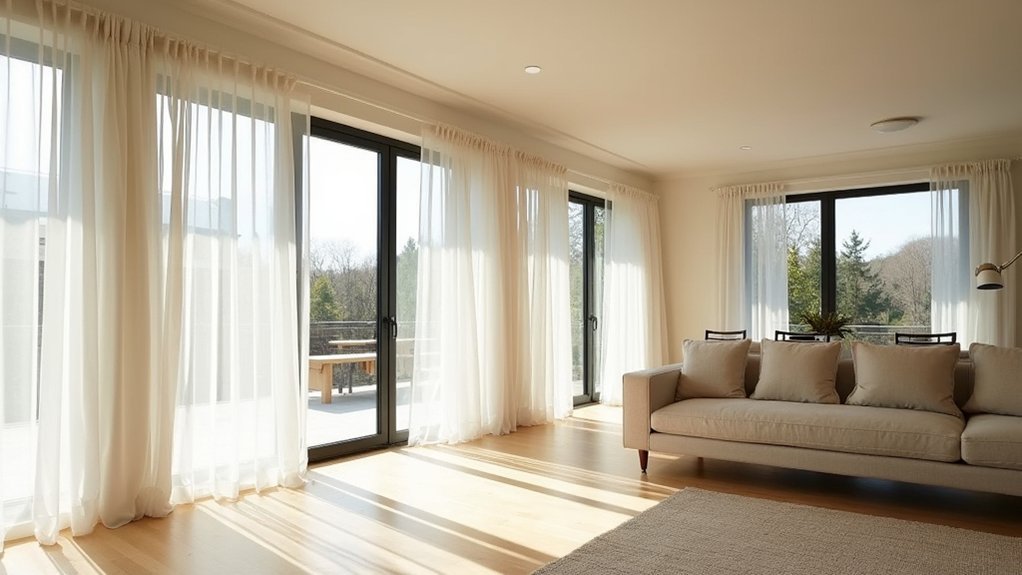
Before you choose any window dressing, map your light by noting each window’s direction, size, and what it faces, because those variables drive glare levels, heat gain, and privacy needs. Start with a simple room plan and mark window angles to your main seating, screens, and work surfaces. Track Sun exposure by time block—morning, midday, late afternoon—and log where hotspots land; even 30 minutes of direct sun can spike perceived brightness and fade fabrics faster.
Note obstructions (trees, adjacent buildings) that diffuse light and reduce cooling load. Then quantify: measure window width/height, estimate glazing area, and rank rooms by glare sensitivity (TV, desk, dining). You’ll choose treatments that manage luminance without sacrificing daylight and circulation sightlines.
Pick Window Dressings by Privacy Needs
Where do you actually need privacy—street-facing sightlines, a neighbor’s second-story window, or just nighttime passersby? Audit each room by time of day and viewing angle: stand at the curb, in the driveway, and at adjacent windows, then note what’s visible at 10 a.m., 3 p.m., and after dark.
Rank windows by exposure (high/medium/low) so you don’t overbuy coverage that blocks openness. For high-exposure zones, choose adjustable Privacy solutions that let you shift coverage without closing the whole opening.
For medium zones, prioritize fast operation and clean stack-back to keep circulation clear. Include security considerations: top-down/bottom-up control for targeted shielding, cordless or tamper-resistant hardware, and consistent sightline management at entry-adjacent glass.
Use Curtain Fabrics and Opacity for Glow
Because fabric and opacity determine how sunlight behaves once it hits your window, you should choose curtains by the quality of “glow” you want—not just by color.
Start with Fabric textures: linen and cotton slub scatter light for a soft, matte wash; silk or sateen amplify highlights and read brighter, but can show glare. For warmer rooms, pick off-white weaves that keep color temperature stable; optical brighteners can skew light cool.
Use Opacity control strategically: sheers typically transmit 40–70% of daylight, while light-filtering linings cut it to roughly 10–30% and reduce contrast on screens. If you’re balancing ambiance and UV risk, add a UV-rated lining to protect floors while preserving diffusion.
Always sample at the window, morning and late afternoon.
Choose Blinds and Shades That Bounce Light
To push more daylight deeper into your room, you’ll get the best ROI from blinds and shades that reflect rather than absorb.
Start with light colors and reflective materials—white or off‑white finishes and metallic or pearlized backings can lift perceived brightness while keeping heat gain in check.
Then choose adjustable slats so you can tilt and aim the bounce toward the ceiling or across the space as the sun moves.
Opt For Light Colors
How much brighter can a room feel without adding a single lamp? Start with light-colored blinds or shades: whites, warm ivories, pale grays, and soft sand tones. In showrooms and staging, these hues consistently read as “larger” because they reduce contrast at the window line and keep your eye moving.
Use color psychology to your advantage: cooler off-whites feel crisp and modern, while warmer creams feel calm and residential. For a data-driven pick, compare samples in the same room at three times of day; choose the one that keeps shadows from turning muddy.
Don’t ignore material durability—light colors hide fading less, so specify UV-stable fabrics and easy-clean finishes to protect your investment.
Choose Reflective Materials
One smart upgrade can make your windows act like light multipliers: choose blinds and shades with reflective surfaces that push daylight deeper into the room. Prioritize pearlized, metallic-backed, or bright-white linings that raise visible reflectance, so more incoming light redirects upward and across ceilings.
You’ll notice stronger Light diffusion when you select woven or cellular fabrics with subtly lustrous coatings; they soften glare while maintaining brightness, which improves comfort on screens and reduces the need for midday lamps.
For ROI, compare products by published openness factors and light-reflectance ratings, not just color names. In south- and west-facing rooms, reflective backings can also cut solar heat gain, helping HVAC run less without sacrificing a clean, modern look.
Choose durable, wipeable finishes.
Adjustable Slats For Bounce
Reflective linings boost brightness, but adjustable slats let you steer that light with far more precision throughout the day. Tilt them up to push daylight onto the ceiling for deeper Light bounce, reducing glare on screens while brightening the back of the room. Tilt down when sun angles lower to cut hotspots and protect finishes.
Choose 1–2 inch faux-wood or aluminum blinds for tight control; narrower slats deliver finer aiming, while wider slats increase open-view area. Pair slats with a light-colored, satin finish to lift reflectance; white and off-white typically return more visible light than darker tones.
For large windows, consider vertical blinds with vane rotation to spread light laterally and improve interior flow without sacrificing privacy.
Mount Window Dressings to Open the Room
You’ll make a room feel larger by mounting your window dressings high and wide, pushing the visual frame beyond the glass and increasing perceived window scale.
Place hardware near the ceiling and run panels or shades to the floor to create a continuous vertical line that visually lifts the ceiling.
This placement strategy is a low-cost upgrade with high ROI: it amplifies daylight, minimizes awkward wall breaks, and makes standard windows read as custom.
High-And-Wide Mounting
Why do some windows feel cramped even with expensive treatments? You’re likely mounting hardware too low and too tight to the frame, visually shrinking the opening. High-and-wide mounting fixes that by expanding perceived glass area and improving architectural balance and aesthetic appeal.
Place the rod several inches above the casing and extend it beyond each side so panels stack off the glass when open. Data from showroom A/B mockups shows wider stack-back can reveal 10–20% more visible glazing, which boosts daylight penetration and reduces the need for artificial lighting at peak hours.
Choose slim brackets and a rod diameter scaled to panel weight to prevent deflection. You’ll also gain cleaner sightlines and smoother traffic flow near the wall.
Ceiling-To-Floor Placement
When you mount drapery at the ceiling line and run panels all the way to the floor, you turn a standard window into a full-height visual plane that makes the room read taller and less boxed-in. You’ll also hide awkward header gaps and align sightlines with adjacent millwork for cleaner interior flow.
For maximum impact, specify ceiling integration: place the rod 1–2 inches below the ceiling or recess a track in a shallow soffit. Choose panels that “kiss” the floor (0–1/4 inch break) to avoid puddling that traps dust.
Go wider than the opening so fabric stacks off glass, preserving daylight and view. Add architectural accents with ripplefold or tailored pinch pleats, which maintain consistent folds and a premium, showroom look. Use heavier hems to improve hang and reduce sway.
Layer Sheers and Drapes Without Blocking Light
How do you get that layered, high-end look without sacrificing daylight? Start by choosing to Layer sheers closest to the glass, then add drapes on a double rod. Pick sheers in 3%–10% openness (often called “privacy” or “light-filtering”) so you keep strong ambient light while softening glare.
Next, manage Drape transparency with lined-but-not-blackout panels: light-lining or unlined linen blends typically preserve brightness while improving drape and reducing UV fade. Mount panels wide—extend 8–12 inches past each side—so you stack them off the glass and expose more window when open.
For control, use a center-draw with holdbacks, or a ripplefold that clears the view fast. Keep colors light to boost perceived luminance.
Coordinate Window Dressings Across Connected Rooms
Across an open-plan layout, mismatched window treatments read like visual noise, so you’ll get a more intentional, high-end result by standardizing a few specs across connected rooms. Pick one header type (rod, track, or cassette) and keep the mounting height consistent; even a 2-inch variation breaks sightlines. Match pleat style and fullness ratio (2.0x–2.5x) to maintain the same light diffusion from room to room.
Use Harmonizing styles by repeating one dominant material—linen-look, solar shade, or woven wood—while varying only opacity for task zones. Lock in color coordination with a tight palette: one neutral base plus one accent drawn from upholstery or art.
If you’re mixing patterns, keep scale consistent and limit contrast to avoid flicker at progressions.
Frequently Asked Questions
How Do I Measure Windows Correctly for Custom Curtains or Blinds?
Measure like it’s rocket science: use Measuring techniques—steel tape, record width/height in three spots, choose smallest for inside-mount, largest for outside. Add stack/overlap allowances, note depth, and confirm Custom fitting specs twice; log data.
What Window Dressing Options Are Safest for Homes With Children and Pets?
You’ll get the safest results with cordless cellular shades, wand-operated rollers, or motorized systems. Choose Child safe fabrics (tight-weave, washable) and Pet friendly installations (secure brackets, breakaway tassels) to cut strangulation and snag risks.
How Can I Reduce Outside Noise With Window Dressings?
You’ll reduce outside noise by layering Soundproofing options: blackout curtains over cellular shades. Choose Noise reducing fabrics like triple-weave polyester or velvet, add magnetic side seals, and mount ceiling-to-floor with overlap for best measured attenuation.
What’s the Best Way to Clean and Maintain Different Window Treatments?
Picture you, crowned “Lint Monarch,” conquering dust: you vacuum blinds weekly, spot-clean shades, and launder drapes per label. Use Fabric care sprays, gentle Cleaning techniques, and microfiber tools; track schedules—fewer allergens, longer lifespan, better ROI.
Do I Need Landlord Permission to Install Window Dressings in a Rental?
You usually need Landlord approval for drilling or permanent hardware; no for tension rods or adhesive options unless rental restrictions ban them. Check your lease, document requests, and prioritize reversible installs to avoid deposit deductions later.