 Andrew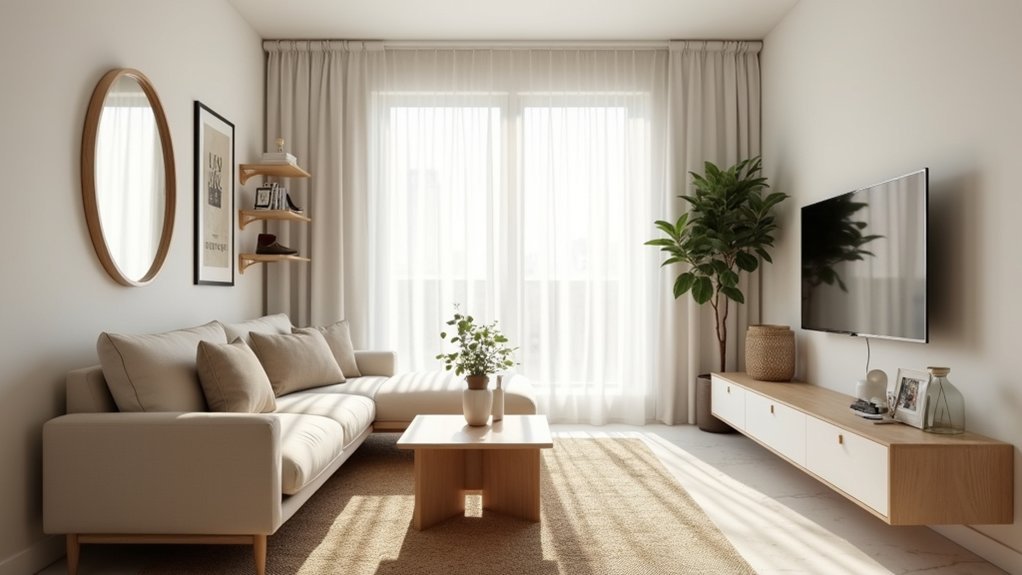
Like a well-edited studio set, your small living space can feel expansive when every piece earns its keep. You start by measuring tight zones and setting clear goals, then choose smart décor—storage ottomans, slim consoles, and matte ceramics—that looks intentional and works hard. You keep finishes light with pale oak and linen to lift daylight, and you use mirrors to stretch depth. Next, you’ll map the layout and style surfaces so nothing feels crowded…
Measure Your Small Space and Set Goals
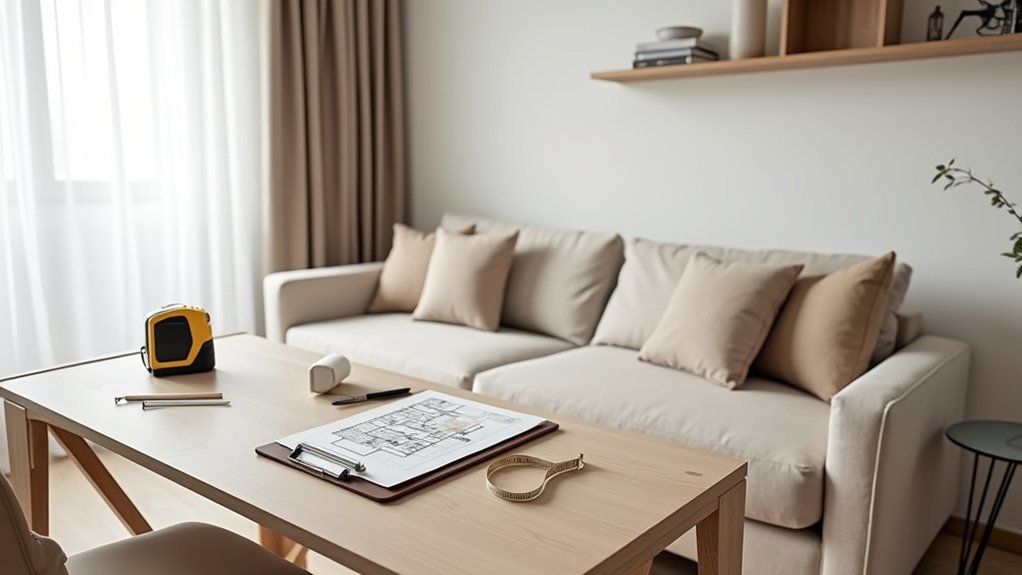
Before you buy a single piece of furniture, measure your living space like a pro and decide what “better” actually means for you. Grab a tape measure, sketch a quick floor plan, and log wall lengths, ceiling height, window placement, outlets, and door swings. This space measurement step prevents costly returns and helps you shop faster in today’s tight inventory cycle.
Next, set three priority zones—lounging, work, and storage—then rank them by daily use. Your goal setting should specify outcomes: a clear 30-inch walkway, seating for two, or a desk that fits under the window.
Create a “must-fit” list with max dimensions and a budget range, and you’ll filter listings with confidence.
Choose Smart Décor That Does Double Duty
You’ll get more function per square foot when you pick décor that works overtime, starting with storage furniture that hides clutter in clean-lined, on-trend silhouettes. Swap in convertible seating—like a sleeper sofa or nesting ottomans—so you can host, lounge, and stash essentials without adding bulk.
Finish with wall-mounted space savers such as floating shelves, sconces, and fold-down desks to free floor space and keep sightlines sleek.
Multi-Use Storage Furniture
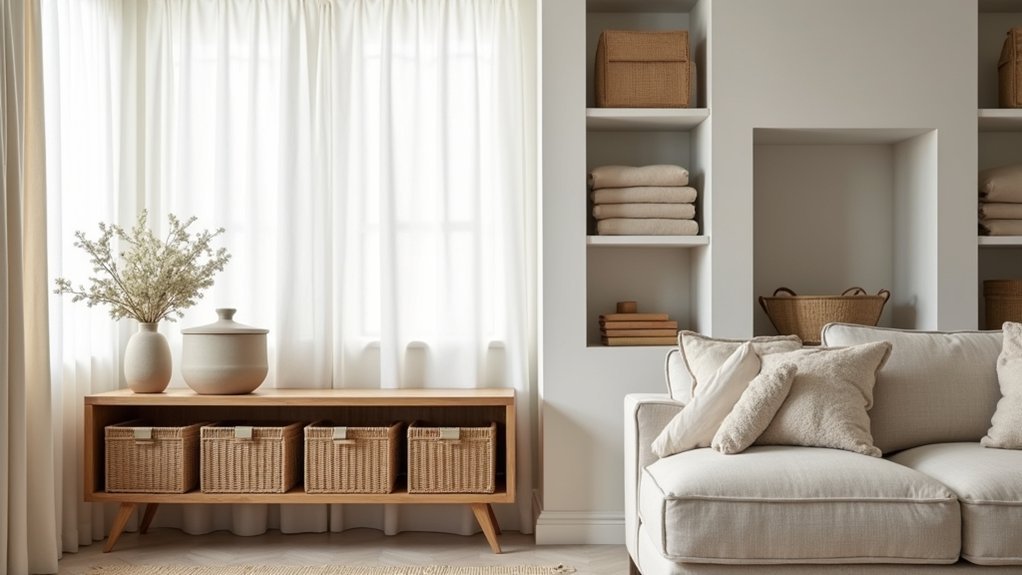
When every square foot has to earn its keep, multi-use storage furniture gives you a polished look while quietly solving clutter. Start with a slim console that stashes mail, chargers, and remotes in Hidden compartments, keeping surfaces photo-ready for guests and listings.
Add nesting side tables with lift-top storage for throws and game nights, then tuck them back to open your walkway.
In entry zones, Multi purpose benches anchor the space and create a landing pad for shoes, bags, and pet gear without adding bulky cabinets. Choose light oak, cane, or matte black frames to match today’s airy, Scandinavian-leaning trends.
Prioritize soft-close hardware, easy-clean upholstery, and modular inserts so you can reconfigure as seasons—and storage needs—change.
Convertible Seating Solutions
How do you add seating without shrinking your living area? You shop for convertible furniture that earns its footprint. Start with a sleeper sofa in performance linen: it looks tailored by day, then hosts guests at night.
Choose armless modular pieces you can reconfigure into a chaise, loveseat, or two singles when you entertain. Consider storage ottomans that flip to a tray or extra perch, and nesting stools that tuck under a console until needed.
For everyday flow, prioritize slim silhouettes, raised legs, and light-toned upholstery that visually recedes. Add adaptable seating with removable covers and movable back cushions so you can refresh the look seasonally and handle wear.
You’ll gain flexibility without crowding your floor plan.
Wall-Mounted Space Savers
Convertible seating keeps your layout flexible, but wall-mounted pieces free up even more floor space while adding function. Start with a floating media console that hides cords and creates a clean sightline—buyers love that “built-in” look without renovation costs.
Add fold-down desks or dining ledges to support hybrid work and quick meals, then tuck them away in seconds. Use shallow picture ledges to display books and plants without bulky shelves, and mount swing-arm sconces so you don’t sacrifice surfaces to lamps.
For storage, install rail systems with hooks and baskets near entry zones to corral bags and keys. Finish strong: pair concealed cabinetry with artistic murals or textured wall panels to add depth while keeping everything streamlined and light visually.
Pick Light Materials to Keep Things Airy
Even if you love a bold look, light materials keep a small living space feeling open, modern, and premium. Start with pale oak, ash, or bamboo surfaces that reflect daylight and read “designer” without the weight of dark finishes.
Choose lightweight materials like linen, cotton, or performance sheers for curtains; they soften glare while keeping sightlines clean for an airy design.
Layer glass, acrylic, or thin-gauge metal accents to add shine and visual depth without crowding the room.
Stick to warm whites, sand, and soft greige so your art and color pops feel intentional, not busy.
Finish with matte ceramics and subtle texture to deliver a high-end, trend-forward calm.
Use Small-Space Furniture With Slim Profiles
Because every inch needs to earn its keep, you’ll get a more spacious, elevated look by choosing small-space furniture with slim profiles. Prioritize sofas with narrow arms, raised legs, and tight backs so the frame feels lighter while seating stays comfortable.
Lean into Compact designs that multitask without visual bulk: nesting tables, ottomans with hidden storage, and wall-hugging console desks that double as media units.
Choose armless accent chairs or low-profile swivels to keep sightlines open, and pick round café tables that soften corners and feel contemporary.
In finishes, pair light oak, pale boucle, or powder-coated metal with thin silhouettes for a high-end, “gallery” effect.
Before you buy, measure depth and seat height, then select pieces scaled to your room so everything reads intentional, not cramped.
Plan a Layout That Opens Up Walkways
Where do you keep getting bottlenecked—at the sofa corner, the coffee table, or the path to the kitchen? Map those pinch points first, then shift pieces to create Open walkway pathways that feel intentional, not accidental. Aim for 30–36 inches of clearance on main routes, and keep secondary routes at least 24 inches so you’re not sidestepping daily.
Float the sofa a few inches off the wall only if it improves Clear traffic flow; otherwise, hug it to the perimeter and angle one accent chair toward the conversation zone. Center your rug to define seating, but leave a visible border of floor to visually widen routes. Use a slim console behind seating to guide movement, and stop furniture legs from crossing walk lines.
Add Space-Saving Storage Without Visual Clutter
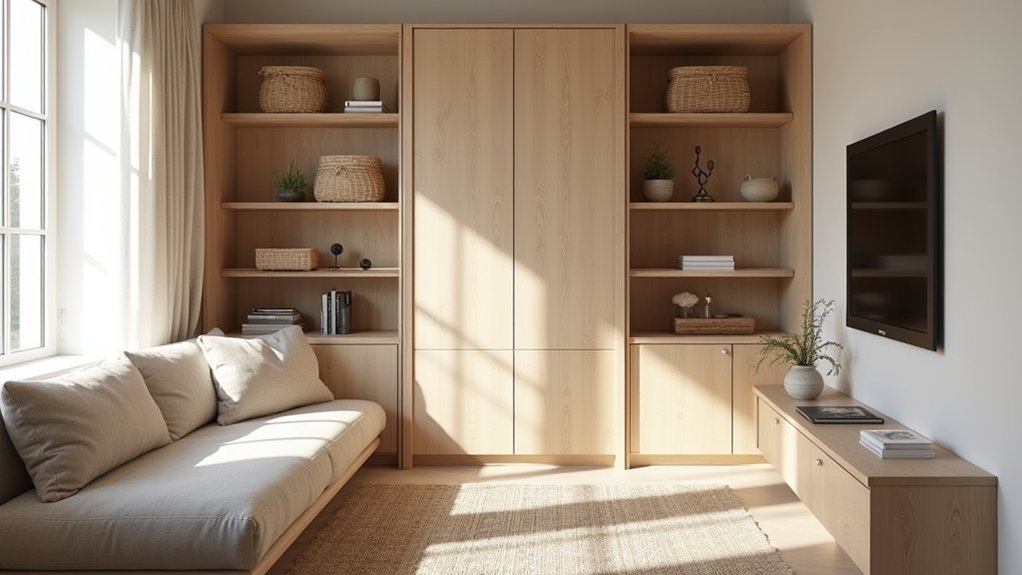
You’ll keep a small living space looking clean and current when storage works hard without stealing attention. Choose hidden-storage furniture like lift-top coffee tables and ottomans. Then add vertical wall-mounted shelving to pull essentials off the floor and spotlight curated decor. Finish with modular closet organizers that flex with your wardrobe and maximize every inch behind closed doors.
Hidden Storage Furniture
Even if your square footage can’t grow, your storage can—when it’s built into pieces that pull double duty. Choose a streamlined storage ottoman that hides blankets and chargers, or a lift-top coffee table that flips up for laptop work while keeping remotes out of sight. Look for clean silhouettes and light finishes so the room stays airy, not busy.
In tight layouts, prioritize furniture with hidden drawers and concealed compartments to maintain that curated, boutique-hotel look buyers love right now. A platform bed with underframe storage replaces a bulky dresser, while a bench with a hinged seat corrals shoes by the entry.
Pick hardware-free fronts or push-latch systems for a modern, seamless line, and you’ll add capacity without adding visual weight.
Vertical Wall-Mounted Shelving
How do you add serious storage without crowding your floor plan? Go vertical with wall-mounted shelving that lifts everyday essentials off tables and consoles. Install floating shelves in a tight grid above a sofa, desk, or entry bench to create a clean, gallery-like display line.
Keep depth slim—8 to 10 inches—so the room reads airy, not bulky.
Choose finishes that match today’s light-material trend: pale oak, ash, or matte white. Mix in decorative brackets when you want a crafted, boutique look; pick thin metal or tonal wood so hardware feels intentional, not heavy.
Stage shelves like retail: stack books horizontally, add one sculptural vase, then leave negative space. Anchor height around eye level and align with door frames for a built-in feel.
Modular Closet Organizers
When your closet has to function like a micro-warehouse, modular organizers let you add capacity fast without turning the room into visual noise. Start with stackable cubes or adjustable shelves so you can reconfigure as your wardrobe shifts seasonally.
Add pull-out drawers for tees and accessories, and slim hanging dividers to keep shirts spaced and crease-free. For clothing organization that looks premium, match finishes to your door hardware and choose light-toned materials that reflect light.
Use labeled bins in identical shapes to maintain a clean grid and reduce decision fatigue. Don’t skip closet lighting: motion-sensor LED bars under shelves prevent dark corners and make colors read true.
Choose no-drill tension systems if you rent; you’ll gain storage without damage.
Layer Texture in a Small Living Space Lightly
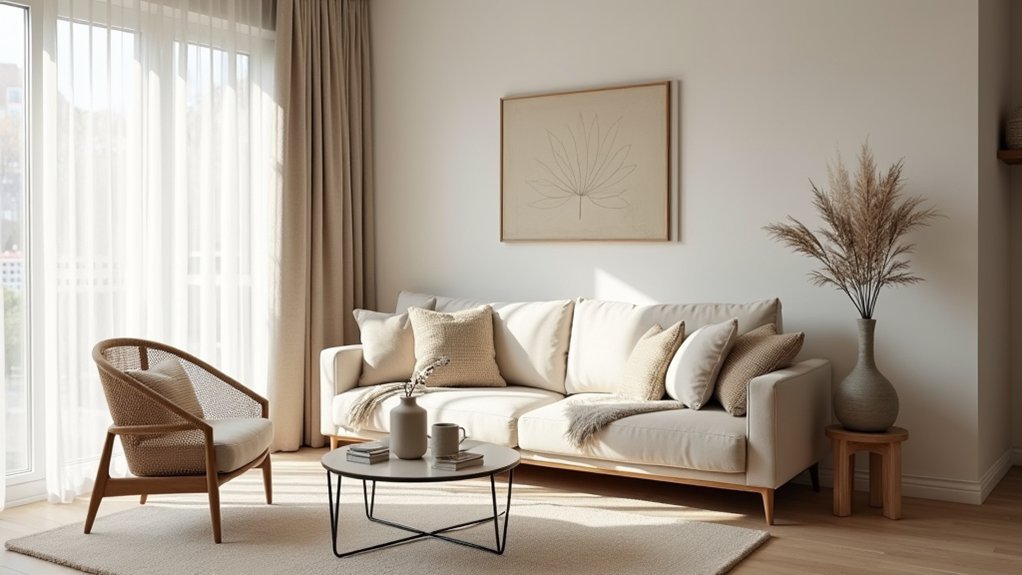
Although texture can instantly elevate a compact living room, you’ll get the most polished, on-trend look by layering it lightly and with intention. Start with one hero fabric, like a nubby boucle pillow or a linen slipcover, then add two supporting pieces that differ in weave, not bulk. That controlled textural contrast keeps the room feeling airy while still styled.
Choose layered textiles with a clear job: a thin flatweave rug to define the seating zone, a lightweight throw to soften hard lines, and one patterned cushion for depth. Keep pile heights low so pathways stay open and furniture reads streamlined.
Finish with tactile, space-smart accents—ribbed ceramic, fluted glass, or a cane tray—so you get boutique texture without visual clutter.
Use Color to Make a Small Space Feel Bigger
You can make a small living space feel instantly larger by committing to a light, neutral palette that bounces natural light and keeps visual noise low.
You’ll get a sleek, trend-forward look when you layer closely related shades in a monochromatic scheme across walls, textiles, and décor to blur edges and extend sightlines.
Then you’ll place one or two accent colors with intention—think a single bold art print or cushion—to create focal points without shrinking the room.
Light Neutral Color Palette
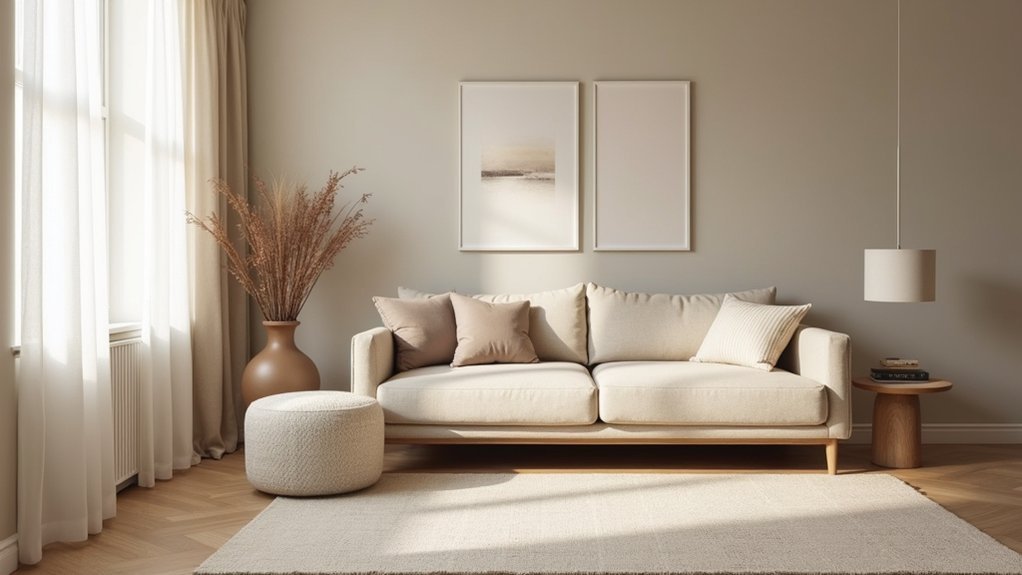
In a small living space, a light neutral color palette makes the room feel instantly larger by bouncing natural and artificial light around the space. Choose warm whites, soft greige, and pale sand to keep sightlines open and reduce visual breaks.
These neutral tones photograph well for listings, look premium with minimal styling, and stay on-trend with Scandinavian and Japandi influences.
Use calming hues like muted oat, blush-beige, or foggy taupe for accent pillows, throws, or a single chair so the space feels inviting, not sterile.
Keep trim, ceiling, and doors a shade lighter to lift the height perception, and pick low-sheen paint to avoid harsh glare.
Finish with light wood, linen, and brushed brass for quiet contrast that reads spacious and intentional.
Monochromatic Layering Tricks
When every surface sits within the same color family, the eye glides instead of stopping at hard contrasts, so the room reads wider and calmer. Pick one base tone—warm greige, sandy beige, or soft clay—and repeat it across walls, trim, and key upholstery for a seamless envelope.
Then build depth with layered shades: go two steps lighter for curtains and rugs, one step deeper for a sofa, and add texture through bouclé, linen, and matte ceramics. You’ll get monochromatic contrast from finish changes, not competing colors.
Keep patterns micro-scale (pinstripes, tight checks) so they read as texture at a distance. Use tonal artwork with similar values, and match wood stains within a tight range to avoid visual breaks. This approach feels current, upscale, and space-expanding.
Strategic Accent Color Placement
Where should an accent color go so a small room feels larger, not busier? Put it where your eye naturally lands, then let the rest stay light and quiet. A single Accent wall behind the sofa or bed adds depth and pulls the perimeter outward—especially in deep teal, clay, or inky blue, today’s high-demand tones.
Keep adjacent walls warm white so contrast reads intentional, not chopped up.
Echo that color in two to three bold accessories only: a lumbar pillow, a ceramic lamp base, a framed print. Choose slim silhouettes and glossy or woven textures to bounce light.
If your room lacks windows, use the accent on a vertical element—curtains, bookcase backing, or a tall mirror frame—to lift the ceiling visually.
Bounce Light With Mirrors and Reflective Décor
Although square footage stays the same, mirrors and reflective décor can make your living space feel brighter, taller, and more expensive by amplifying every available light source. Prioritize intentional mirror placement: hang a large mirror opposite a window to double daylight, or angle it toward a lamp to boost evening glow without adding fixtures.
Choose thin-framed, wall-leaning styles for a high-end, rental-friendly look. Let furniture reflection do the heavy lifting—position mirrors to catch a sofa’s clean lines or a light-toned coffee table, creating depth like a showroom vignette.
Add subtle reflectors, such as brushed-metal trays, glass-front cabinets, or glossy ceramic lamps, to lift highlights and sharpen contrast. Keep finishes consistent so the sparkle reads curated, not chaotic.
Style Surfaces With Small Décor, Not Clutter
If you treat every tabletop and shelf like prime real estate, you’ll style your small space with intention instead of letting it collect visual noise. Edit surfaces the way retailers stage vignettes: three pieces max, varied height, and one “hero” item that signals your vibe.
Choose Decorative accents that earn their footprint—stacked art books, a small ceramic vessel, a matte tray, or a sculptural candle. Corral daily essentials in lidded boxes or slim catchalls to keep clutter control tight and the look premium.
Repeat finishes (brass, black, travertine) to create cohesion, and leave breathing room so light reads clean. Rotate seasonal minis instead of buying more, and you’ll keep your space feeling curated, not crowded.
Frequently Asked Questions
How Do I Make a Rental-Friendly Accent Wall Without Damaging Paint?
Like a revitalizing gust, you’ll create a rental-friendly accent wall by applying removable wallpaper or adhesive decals to clean, smooth paint, smoothing bubbles, and removing slowly with heat so you don’t peel.
What Window Treatments Maximize Privacy Without Blocking Natural Light?
Choose layered sheer curtains with a privacy liner, and add frosted films to lower panes; you’ll keep daylight while blurring sightlines. Opt for neutral, textured weaves and matte adhesives—they’re trending, renter-safe, and budget-smart.
Which Houseplants Thrive in Low-Light Small Apartments?
You’ll succeed with snake plant, pothos, ZZ plant, and cast-iron plant; for accents, choose succulent varieties near a window and shade loving ferns in corners—like a quiet forest shop—boosting air, style, and resale appeal.
How Can I Reduce Echo and Improve Acoustics in a Tiny Living Room?
You’ll cut echo by adding rugs, curtains, and upholstered seating, then layering soundproofing solutions like bookcases and door seals. Choose acoustic panel options—felt tiles or art panels—placed at reflection points for crisp sound.
What’s the Best Way to Hide TV and Cable Wires in a Small Space?
Run concealed wiring through in-wall rated kits or slim surface raceways, then bundle everything with cable management sleeves. Mount a power strip behind the TV, use adhesive clips, and hide slack inside a media console.