 Andrew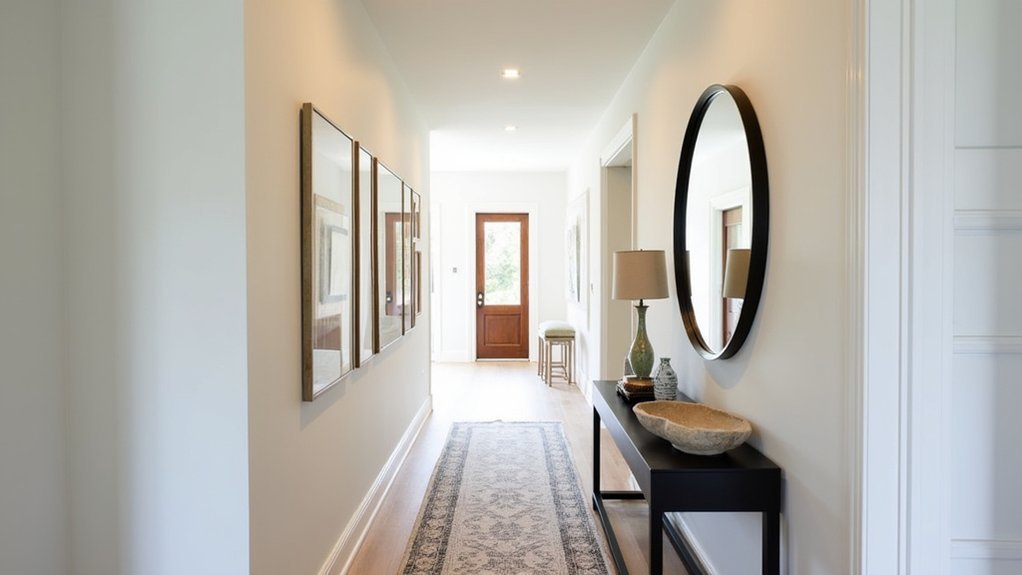
You’ve got to measure, you’ve got to edit, and you’ve got to light with intent. In a narrow hallway, every inch affects how spacious it feels and how smoothly you move through it. You can’t rely on decor alone; you need slim furniture that won’t catch shoulders, mirrors that widen sightlines, layered lighting that erases shadows, and storage that keeps the floor clear. The key is choosing what earns its place—starting with what you measure first.
Measure Your Narrow Hallway and Set Clear Goals
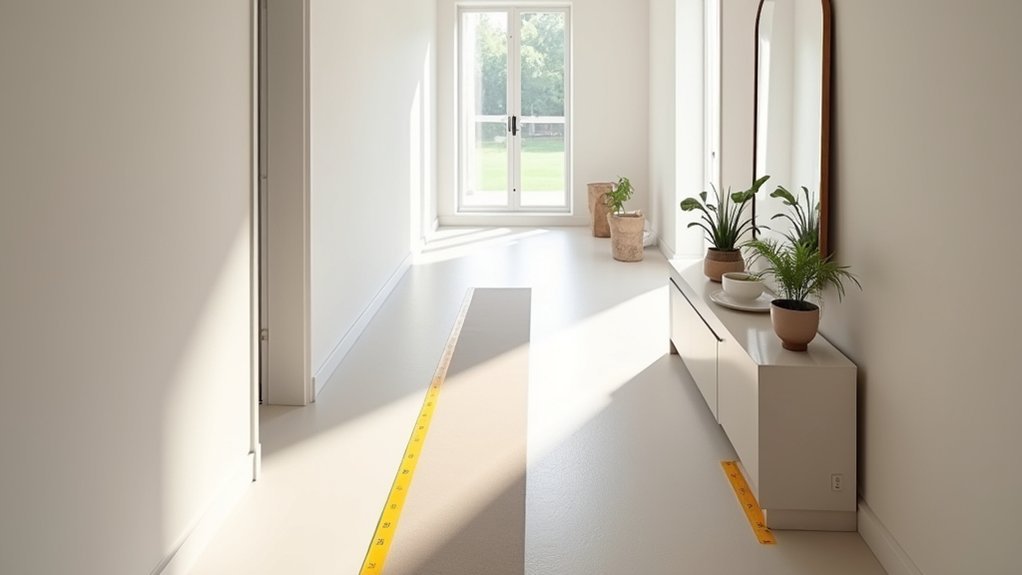
A narrow hallway only looks tricky until you measure it and decide what you need it to do. Grab a tape measure and record length, width, ceiling height, and baseboard depth. Note door swings, trim projections, vents, and outlets, plus where light falls at different times. Mark the minimum clear walking path you must preserve.
Then set goals you can test: better lighting, faster drop-zone access, or a calmer progression between rooms. Your goals guide Color schemes: light, low-contrast tones widen perception; higher contrast can define zones if you control clutter. They also guide Material choices: durable paint where shoulders brush, washable finishes near entries, and slip-resistant flooring if shoes track in water. Write your targets down and design to them.
Choose Slim Hallway Furniture That Won’t Snag
Because narrow hallways punish anything that sticks out, choose furniture by depth first, then function. Aim for pieces under 10–12 inches deep so shoulders, bags, and vacuum heads pass cleanly.
Prioritize wall-mounted consoles, floating shelves, and slim shoe cabinets with drop-down fronts; they store more than open racks without catching sleeves. If you need a bench, pick one with tapered legs and a hard edge tucked tight to the wall.
Keep sightlines clean by matching finishes to your color schemes: light oak, painted white, or matte black read flatter and less bulky.
Coordinate artwork placement above the furniture’s centerline, not its top, so frames don’t hover or collide with hooks.
Add closed storage to cut visual clutter and maintain flow.
Use Mirrors to Make a Narrow Hallway Feel Wider
Even if your hallway can’t gain an inch, a well-placed mirror can make it read wider by bouncing light and extending sightlines. Mount a large mirror on the long wall to visually double the corridor, or position it opposite a focal point to pull the eye across.
Choose a frame that works as one of your Decorative wall accents, not an afterthought; thin profiles keep edges crisp and uncluttered. Hang it at eye level and center it between door casings to maintain clean geometry.
If you use multiple mirrors, keep shapes consistent to avoid visual noise. Pair mirrors with strategic color choices: a lighter wall behind the glass and a slightly deeper tone on trim sharpens contrast and amplifies depth without crowding.
Layer Hallway Lighting to Brighten a Narrow Space
While a narrow hallway may look boxed in under a single overhead fixture, layered lighting reshapes it by controlling shadows and directing attention. Start with a ceiling or semi-flush fixture on a dimmer to establish an even ambient glow without glare.
Next, add wall sconces spaced consistently to wash the walls and visually push them outward; choose opaque shades or diffusers to soften hotspots. Then use accent lighting—picture lights, small directional spots, or LED strips above a ledge—to highlight art and create depth cues.
Keep color temperature consistent (2700–3000K) so the space reads cohesive, not patchy. Finally, place lighting switches at both ends, or use smart bulbs, so you’re never walking into a dark tunnel.
Add a Hallway Runner to Guide the Eye
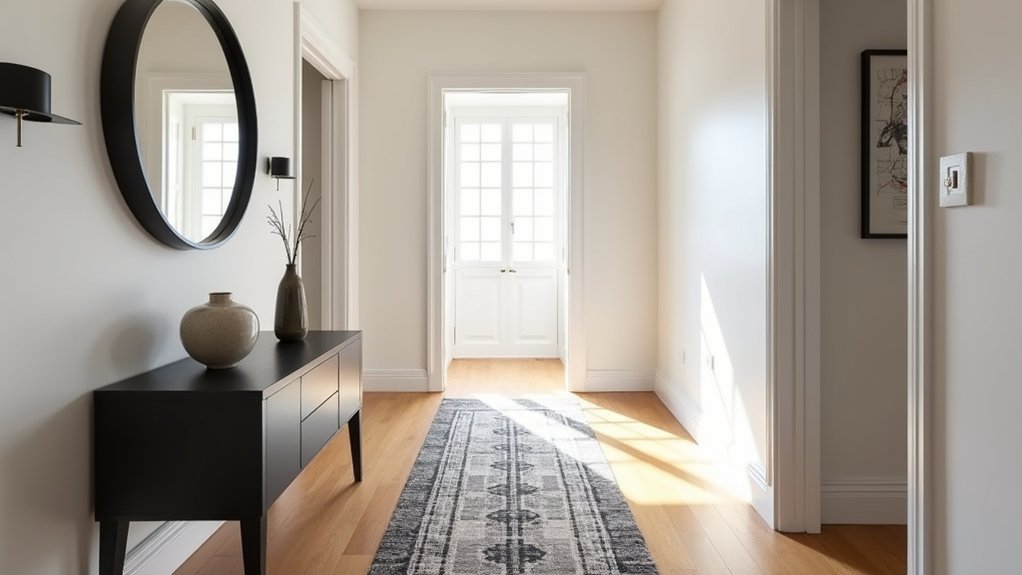
When you lay down a runner, you create a clear visual path that makes a narrow hallway feel longer and more intentional. Choose a length that leaves 4–6 inches of floor showing on both sides, so the space reads wider, not cramped.
Use color schemes strategically: a light ground color brightens, while a subtle stripe or repeating motif pulls the eye forward. If your walls are busy, pick a low-contrast pattern; if your hallway is plain, use stronger contrast to add structure.
Prioritize low-pile, durable fibers that won’t snag and that reduce slip; add a quality rug pad for traction and sound control.
Tie the runner to decorative accents—art frames, a mirror, or hardware—by repeating one tone for cohesion.
Build Clutter-Free Hallway Storage That Still Looks Good
In a narrow hallway, you can’t afford storage that eats floor space, so you’ll rely on slim vertical solutions that use height instead of width.
You’ll keep the look clean by choosing pieces with tight footprints and clear sightlines, like tall cabinets, ladder shelves, or stacked cubbies.
To eliminate visual clutter, you’ll add hidden wall-mounted organization—flush hooks, concealed rails, and closed compartments that hold daily essentials without advertising them.
Slim Vertical Storage Solutions
Because narrow hallways punish bulky furniture, you’ll get the most impact from slim vertical storage that captures height without stealing walking space. Choose vertical shelving with a shallow depth (6–10 inches) so shoulders and bags don’t clip edges as you pass.
Anchor it visually by aligning shelf tops with door trim or a nearby console height, then keep the bottom clear to preserve a clean sightline.
Use narrow baskets on lower shelves to corral gloves, dog leashes, and mail while preventing visual noise. Reserve upper shelves for infrequently used items and display a single repeated element—matching boxes or identical bins—for order.
Cap the setup with a small tray for keys at chest height, and you’ll streamline daily drop zones without narrowing the corridor.
Hidden Wall-Mounted Organization
Although open shelves can solve storage fast, they also advertise every stray item, so hidden wall-mounted organization gives you the same function without the visual clutter. Choose shallow cabinets, picture-ledges with flip fronts, or recessed medicine-style boxes between studs to keep depth under control.
Mount units at shoulder height so you access keys, mail, and dog gear without blocking circulation. Use push-latch or touch-to-open hardware to eliminate protruding knobs that snag bags.
Group items by frequency: daily essentials in the center, occasional items higher, and kids’ stuff lower. Finish fronts to match wall color or trim for a built-in look.
With Concealed storage options, you’ll reduce visual noise while improving retrieval speed. Hidden wall mounted organization also protects fragile decor from accidental bumps.
Frequently Asked Questions
What Paint Finishes Resist Scuffs Best in High-Traffic Hallways?
You can’t go wrong with semi-gloss or satin; they resist scuffs best in high-traffic hallways. For paint durability, choose quality acrylic enamel. Among finish options, avoid flat/matte, which marks easily and cleans poorly.
How Do I Style a Narrow Hallway With Kids and Pets?
You’ll style it by keeping pathways clear, adding washable runners, and mounting hooks low for gear. Choose Kids’ decor that’s durable, and Pet friendly materials like wipeable paint and scratch-resistant surfaces. Use wall lighting.
Which Wall Art Sizes Work Best for Very Tight Hallways?
In my client’s 30-inch hallway, you’ll get best results with 8×10–11×14 frames or a 10×20 vertical piece. Keep depth under 1.5 inches, add gallery lighting, and enforce tight color coordination.
What Are Renter-Friendly Ways to Upgrade a Narrow Hallway?
You can upgrade a narrow hallway by adding Temporary wallpaper on one focal wall, using Removable decals for accents, swapping in brighter bulbs, laying a slim runner, and hanging hooks with Command strips.
How Can I Reduce Echo and Noise in a Long, Narrow Hallway?
You’ll cut hallway echo by breaking up hard surfaces; the theory holds because reflections shrink when you add absorption. Mount Acoustic panels, hang Soundproof curtains, lay a runner, and add wall art.