 Andrew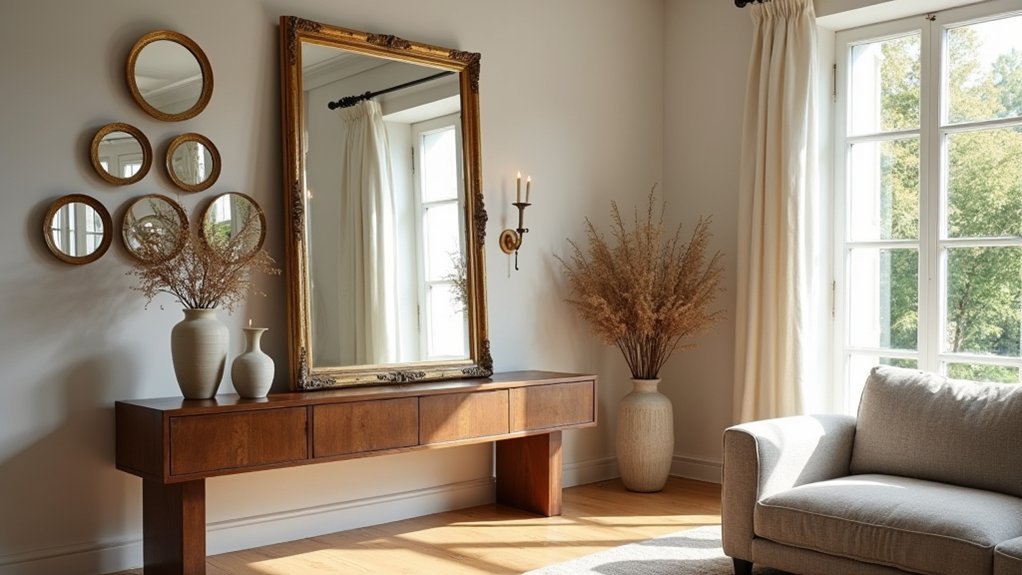
You probably don’t know that a mirror can brighten a room more by reflecting the sky than by reflecting the window itself. If you place it near a light source and aim it to catch the widest, cleanest angle, you’ll get a noticeable lift without changing fixtures. Then you can use size, shape, and frame style to build depth and personality instead of just adding shine—but most people miss one setup detail that changes everything.
Place Mirrors to Bounce Natural Light
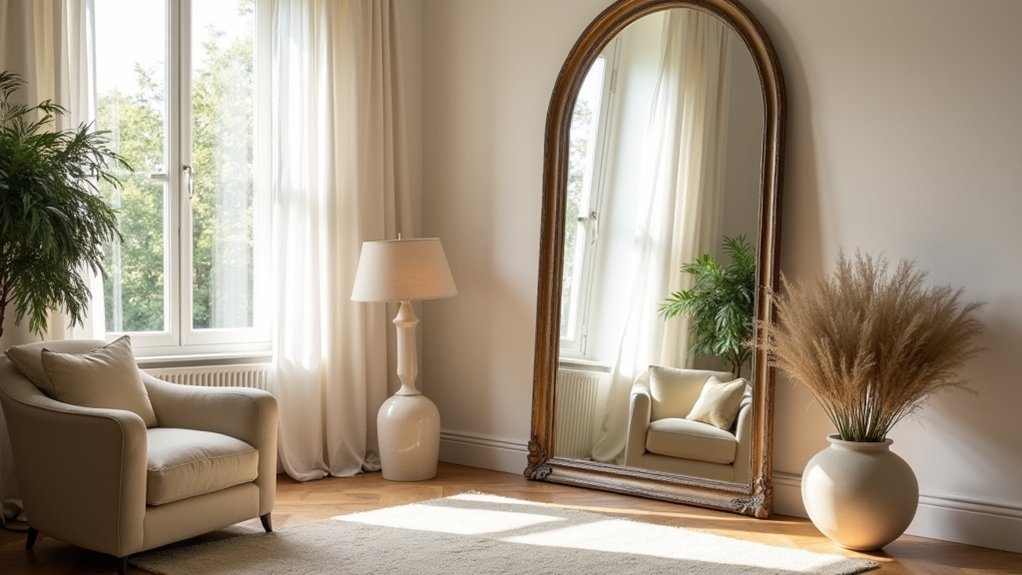
If your room gets decent daylight but still feels dim, you can often fix it faster with mirror placement than with new fixtures. Start by mapping where sun enters and where it dies off; you’re aiming to redirect, not multiply, light.
Use mirror placement techniques like positioning a mirror perpendicular to the window to spread brightness across adjacent walls, or opposite the window to push light deeper without creating glare. Place it near doorways to catch spill light from brighter rooms.
Choose size based on window scale: bigger mirrors produce smoother, more even bounce. Keep decorative frame styles slim and reflective (brass, pale wood) to avoid “eating” light.
Prioritize clean glass and angle checks from seated and standing views.
Use Mirrors to Make Rooms Feel Bigger
Although mirrors don’t add square footage, they can change how you read a room’s boundaries by doubling sightlines and extending key visual axes. To amplify that effect, treat Mirror placement like layout planning: position a large mirror where it captures the longest diagonal view, not a blank wall.
In narrow rooms, hang it on the long wall to widen proportions; in tight entries, angle it to reveal the adjacent space and reduce “dead-end” perception. Keep the mirror’s centerline near eye level so the reflected horizon feels continuous.
You’ll also get more payoff by reflecting open shelving or a doorway than clutter. Decorative frames can help define the mirror as a deliberate architectural element, but keep margins tight so the reflective area stays dominant.
Choose Mirror Shapes and Frames With Character
Because the mirror’s outline and frame act like visual punctuation, you should choose them as deliberately as you’d choose a light fixture. Start by matching geometry to the room’s dominant lines: crisp rectangles reinforce modern millwork, while rounds soften boxy layouts and busy corners.
If you want a focal point without new construction, lean into unconventional mirror shapes—arched, pill, or asymmetrical forms read like custom pieces and can lift a standard wall into a “designed” moment.
Then treat the frame as a material decision, not decoration. Thin metal keeps the look airy and price-efficient; warm wood adds residential comfort; lacquered color signals trend-forward intent.
Ornamental frame styles work best when you limit competing details, so they sell as statement, not clutter.
Hang Mirrors at the Right Height and Angle
A strong shape and frame get attention, but placement determines whether the mirror actually boosts light. Hang it where it “sees” your brightest source—usually a window or a light-toned wall—not a dark hallway.
For most rooms, center the glass around eye level (about 57–60 inches) so reflections feel natural and buyers read the space as balanced.
Angle matters as much as height. Tilt slightly downward if you’re capturing high window light; tilt upward only when you need to lift sightlines in a low room.
Use simple placement techniques: stand where you’ll view it most, then adjust until the reflected hotspot lands where you need illumination.
During mirror installation, anchor into studs or rated anchors, and level precisely to avoid a drifting, cheap look.
Create Depth With Layered Mirror Groupings
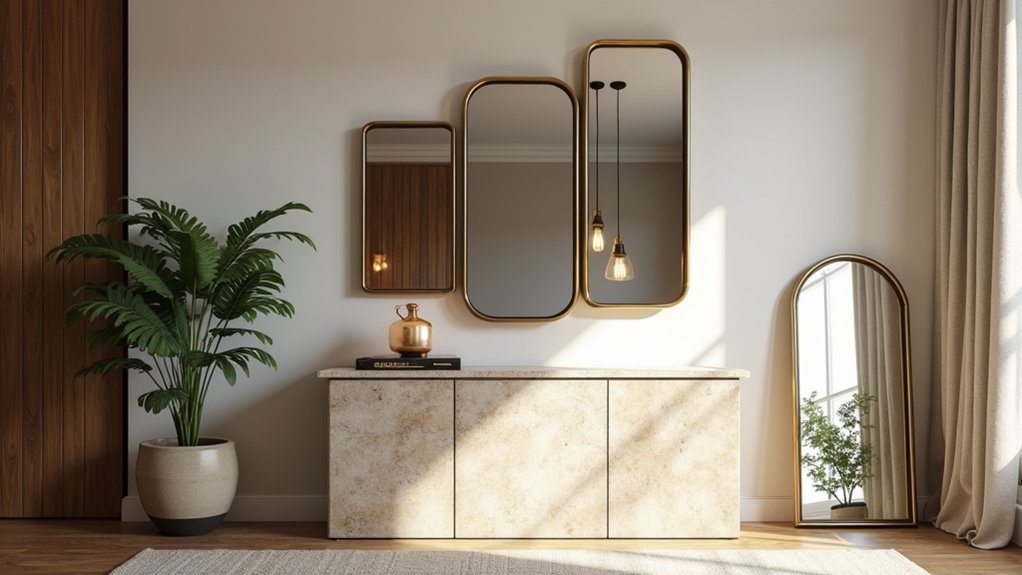
When you layer mirrors as a curated grouping rather than a single statement piece, you don’t just add sparkle—you create perceived square footage and better light distribution. Treat the arrangement like a portfolio: each mirror plays a role in bounce, scale, and focal hierarchy.
Start with one “anchor” mirror, then add smaller pieces that echo its geometry. Mix mirror textures—clear, antiqued, smoked, or lightly speckled—to control glare and add depth without adding clutter. Vary frame styles to signal intentionality: pair a thin metal frame with a warm wood or matte lacquer to bridge modern and traditional finishes.
Keep spacing consistent so the grouping reads as one asset, not scattered inventory. You’ll get a richer reflection field, stronger daylight reach, and a more premium, designed look overall.
Avoid Common Mirror Placement Mistakes
If you don’t plan sightlines first, your mirror won’t bounce light where you need it and may amplify glare or dead zones.
You also can’t ignore what it reflects—aiming at cluttered views makes the room feel messier, not brighter.
Finally, get height and scale right, because a mirror hung too high or sized wrong reads cheap and wastes your lighting investment.
Skipping Sightline Planning
Although mirrors can double the light in a room, they’ll just as easily double the wrong view if you skip sightline planning. Before you hang one, stand at the entry, seating, and bed positions and trace what the mirror will capture. You want clean visual flow: the reflection should pull your eye toward a window, artwork, or a balanced vignette, not into a hallway or another room.
Check angles at typical eye level and while seated, since a few inches can change the story. Factor in privacy concerns, especially opposite doorways, bathrooms, or street-facing windows where nighttime reflections reveal interiors.
Treat mirrors like sightline tools, not just decor, and you’ll get brightness without unintended exposure or awkward perspectives.
Reflecting Cluttered Views
Sightline planning tells you *what* a mirror will capture; the next step is making sure that view isn’t clutter. A mirror doubles whatever’s in front of it, so a messy console, tangled cords, or an overstuffed shelf becomes a permanent “feature” that drags perceived value down.
Before you hang anything, do a quick audit: clear surfaces, route cables, and group small items into one tray so the reflection reads intentional, not busy.
Use Clutter concealment tactics that buyers notice—lidded baskets, closed cabinetry, and uniform storage boxes—then reserve the mirror’s spotlight for Decorative accents like a plant, art, or a sculptural lamp.
If the room can’t be edited, pivot the mirror to reflect a window or calm negative space instead.
Wrong Height And Scale
When a mirror sits too high, too low, or wildly out of proportion to the wall, it stops boosting light and starts reading like a staging mistake. Buyers notice instantly because your sightlines feel “off,” and the room photographs poorly.
Set height to human scale: aim the mirror’s center around 57–60 inches from the floor, or align it with nearby art and door heads. Over a console, keep the bottom 6–10 inches above the surface so it relates to the furniture, not the ceiling.
Control Mirror proportions by matching width to what it hangs above—about two-thirds to three-quarters of a mantel or vanity works. In tight rooms, go taller rather than wider to add depth without crowding.
Prioritize scale harmony, and the space reads intentional, brighter, and more valuable.
Frequently Asked Questions
What’s the Safest Way to Mount a Heavy Mirror on Drywall?
You’ll mount it safest by hitting studs with a French cleat; if you can’t, use rated toggle anchors. Test the theory that “any anchor works” and you’ll regret drywall repair. Prioritize certified mirror mounting hardware.
How Do You Clean Mirrors Without Streaks or Damaging the Frame?
For mirror cleaning, you’ll mist distilled water plus a drop of dish soap on microfiber, not the glass, then wipe in S-strokes and buff dry for streak free polishing. You’ll tape frames, avoid ammonia, and dry edges.
Do Mirrors Need Special Placement in Humid Bathrooms to Prevent Corrosion?
Yes, you should place mirrors away from direct shower spray and guarantee ventilation; it addresses humidity concerns. Choose sealed-back, moisture-rated glass, caulk edges, and avoid bare metal fasteners for corrosion prevention and longer service life.
Can Mirrors Improve Artificial Lighting, Not Just Natural Daylight?
Yes—you can sweeten artificial lighting with smart mirror placement: face mirrors toward lamps or sconces to bounce lumens, widen coverage, and reduce hotspots. You’ll get brighter rooms with fewer fixtures, improving efficiency and perceived value.
What Mirror Types Offer the Best Safety for Homes With Children or Pets?
You’ll get the best safety with acrylic or polycarbonate mirrors, or tempered, safety-backed glass. Choose rounded edges and sturdy mounts. Decorative frame styles can hide edges; follow mirror placement tips to keep them out of reach.