 Andrew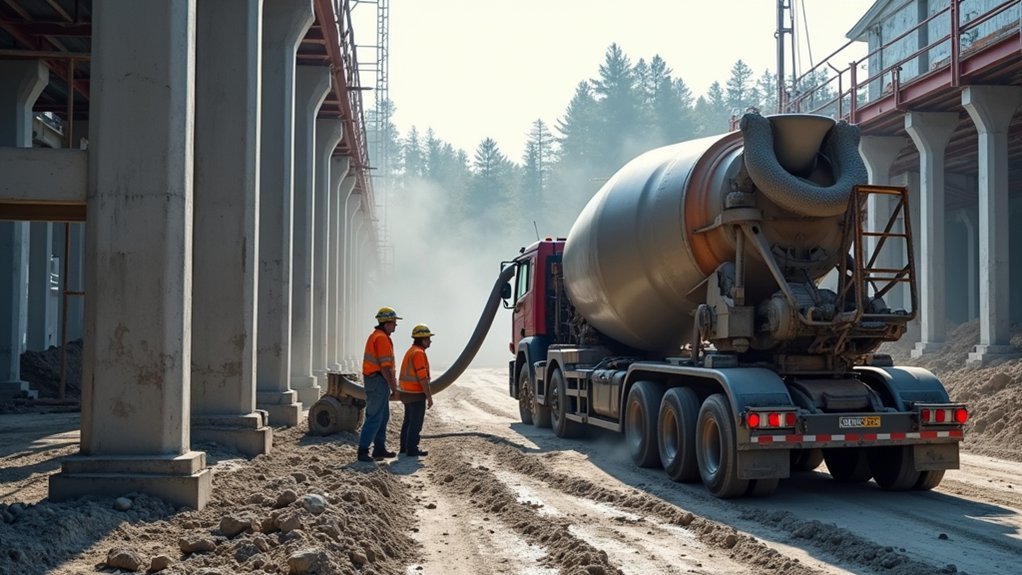
You can’t see a concrete mixer’s work once the slab cures, yet you’ll pay for it if it’s wrong. You rely on it to control water-cement ratio, keep aggregates evenly distributed, and limit segregation that creates weak spots. You also need to match mixer type and capacity to pour size, schedule, and placement logistics while staying inside safety rules and spec limits. Miss maintenance or calibration, and the risks stack up—starting with…
How Concrete Mixers Protect Structural Concrete Quality
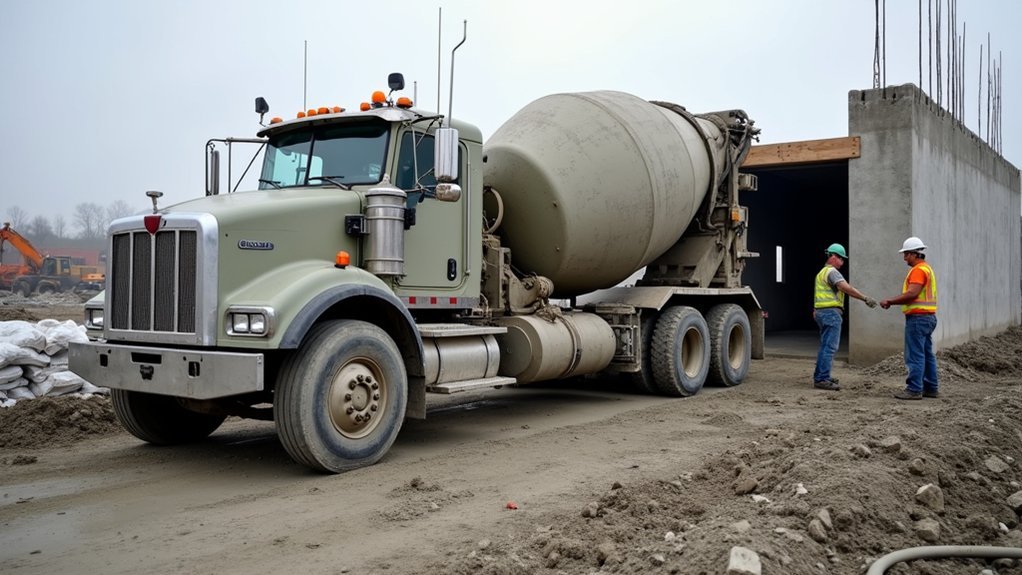
Although concrete looks forgiving once it’s placed, structural performance depends on the mixer keeping every batch consistent from first revolution to final discharge. You protect strength, durability, and finish by controlling water-cement ratio, mixing energy, and uniform distribution of cementitious fines and aggregates.
You also reduce segregation and air-void variability, which lowers cracking and permeability risk.
You stay regulation-aware by verifying batch records, time limits, and admixture dosing so your mix meets specified slump, temperature, and ASTM/ACI requirements. With automation technology, you monitor moisture probes, drum speed, and weigh systems to catch drift before it becomes nonconforming concrete.
You can integrate Eco friendly materials like SCMs or recycled aggregates, but you must validate dispersion and workability to avoid hidden performance loss and costly rework later.
Concrete Mixer Types Used in Structural Construction
Once you’ve set controls for water-cement ratio, mixing energy, and admixture dosing, the mixer type you choose becomes a direct risk decision because it determines how reliably you can hit ASTM/ACI targets batch after batch.
You’ll typically specify drum mixers for general structural placements where uniformity and slump control must remain verifiable.
You’ll use pan/planetary mixers when you need higher shear for SCC, UHPC, or tight aggregate gradations, reducing segregation risk and improving test consistency.
You’ll select twin-shaft mixers to maximize dispersion speed and repeatability, protecting compressive-strength margins and schedule value.
These choices reflect historical innovations that moved mixing from “good enough” to auditable performance.
If you’re pursuing Eco friendly alternatives, prioritize mixers that cut rework, enable SCM blending, and support wash-water recovery protocols.
When to Choose Truck-Mix vs Central-Mix
Because your mixer choice sets the baseline, you should treat the truck-mix vs central-mix decision as a control strategy for uniformity, timing, and test risk—not a logistics preference.
Choose truck-mix when you need flexibility across scattered pours, variable access, or rapid schedule shifts; you’ll reduce rejected loads by adjusting delivery sequencing and keeping batches moving.
Pick central-mix when you need tight consistency for high-spec structural placements and you want fewer field variables during inspections and cylinder breaks.
For regulation-aware planning, align your choice with plant QC documentation, ticket traceability, and local noise and idling limits.
Your cost analysis should price in standby time, rework exposure, and crew utilization.
Factor Environmental impact too: central-mix can cut drum revolutions and fuel per yard.
What a Concrete Mixer Does to Water-Cement Ratio
When you run a concrete mixer correctly, you get more uniform water distribution, which protects strength and durability targets you’re accountable for. You also keep tighter control of the water-cement ratio during mixing, supporting spec compliance and reducing the risk of rejected loads.
If you let mixing time, sequencing, or added water drift, you can unintentionally change the ratio and invite performance and quality issues.
Water Distribution Uniformity
How does a concrete mixer keep your designed water-cement ratio from drifting on site? It disperses water evenly through the cement and aggregates so you don’t get wet pockets or dry clumps that skew local strength and durability.
Uniform water distribution supports consistent hydration, helping you meet spec requirements and avoid nonconformance headaches during inspection and testing. When water is evenly spread, you reduce bleed pathways and capillary networks that invite Water penetration, which protects reinforcement and lowers long-term repair risk.
You also get a more predictable Surface finish because the paste isn’t over-rich in one area and starved in another. That consistency improves valuation: fewer rejected loads, less rework, tighter schedules, and documented performance that stands up to compliance reviews.
Ratio Control During Mixing
Although you might batch a perfect water–cement ratio on paper, a concrete mixer keeps it from drifting in the field by controlling how quickly and how completely water and paste coat every aggregate particle.
You get tighter slump control because the drum’s shear breaks cement balls, limits hidden dry pockets, and reduces the temptation to “chase workability” with extra water. That protects strength, shrinkage, and permeability—key drivers of valuation on structural work.
You also support compliance with project specs and ACI/ASTM expectations by documenting mixing time, revolutions, and any authorized water additions. Consistent mixing energy improves Color consistency, helping you spot overdosing or segregation early.
With proper maintenance and loading, you’ll also see noise reduction, which lowers site risk and supports stricter jobsite controls.
How Mixers Prevent Segregation and Weak Spots
You prevent segregation and weak spots when you run the mixer to keep uniform aggregate distribution, not letting coarse stone settle or paste separate.
You also control the water-cement ratio so the batch stays within spec and you don’t invite shrinkage, cracking, or strength loss.
You keep mixing time consistent to meet quality requirements and reduce compliance and structural risk from batch-to-batch variability.
Uniform Aggregate Distribution
Where uniform aggregate distribution slips, you’ll see it fast in segregation, honeycombing, and strength losses that can jeopardize spec compliance. You protect structural value by keeping coarse and fine fractions moving as one mass from charging through discharge, so every lift matches design assumptions and inspection expectations.
You curb Aggregate segregation by selecting the right drum or pan geometry, maintaining proper blade condition, and enforcing consistent mixing time and speed. With mixer calibration, you verify revolutions, blade angles, and batch size limits, then document settings to support QA/QC and audit trails.
You also control loading order and avoid overfilled batches that dead-zone aggregate and leave paste-rich pockets. When you standardize these steps, you reduce rework risk, limit costly cores and repairs, and deliver predictable placement performance across pours.
Controlled Water-Cement Ratio
How do you keep strength on-spec while avoiding paste-rich pockets and slumped aggregate? You control the water-cement ratio at the mixer, not in the chute. When you meter Water adjustment precisely, you protect design f’c, limit bleeding, and cut segregation that creates weak planes around rebar and at lift joints.
You also align with ASTM/ACI expectations and typical project specs that restrict added water after batching. Mixers help you maintain slump targets without overdiluting paste, so Cement hydration proceeds with the intended capillary structure, not porous, crack-prone paste.
That reduces permeability, shrinkage risk, and callbacks tied to cores that miss strength or show honeycombing. You gain predictable placement, safer load acceptance, and better long-term asset value for owners.
Consistent Mixing Time
Why does mixing time matter as much as mix design? Because you’re not buying concrete; you’re buying verified performance. If you cut time short, aggregates don’t coat evenly, paste pockets form, and segregation starts before placement.
If you overmix, you can change air content and slump, increasing variability and finishing risk. You protect value by locking in Mixing consistency with a documented, repeatable cycle tied to batch size, drum speed, and material moisture.
Regulation-wise, you should align your procedure with project specs and applicable standards, then prove compliance through batch tickets and QC checks.
Don’t ignore Equipment calibration: misread timers, worn blades, or inaccurate speed controls quietly create weak spots. Maintain, verify, and record—so your structure stays defensible.
Concrete Mixing Time, Speed, and Batch Consistency
Although a mixer can spin fast and still produce weak concrete, you only get reliable, spec-compliant performance when you control mixing time and drum speed to deliver consistent batches. Set target revolutions per batch and verify them against project specs and ASTM guidance, not habit.
If you change mixing equipment, you must revalidate time, speed, and slump-to-strength results, because different drum geometries shear materials differently.
Track environmental factors—heat, wind, and aggregate moisture—since they shift water demand and can mask under-mixing or over-mixing.
You reduce risk by logging batch sequence, admixture timing, and discharge uniformity, then rejecting loads that show segregation, balling, or abnormal air content.
When you standardize these controls, you protect structural capacity, durability, and inspection outcomes.
Planning Placement Logistics Around Concrete Mixers
You’ll protect schedule, quality, and compliance when you plan mixer access and routing before the first truck arrives, confirming clearances, axle-load limits, traffic control, and washout locations.
You’ll then lock in pour timing and sequencing so each load meets spec at placement, pumps and crews stay synchronized, and cold joints don’t creep in.
If you don’t control these logistics, you’ll invite safety exposure, rejected concrete, and costly rework.
Mixer Access And Routing
How efficiently can your crew place concrete if the mixer can’t reach the pour point without conflicts? You protect schedule value by verifying Mixer accessibility early: confirm gate widths, turning radii, overhead clearances, and ground bearing capacity, then document constraints in your site logistics plan.
You’ll also reduce rehandling costs by staging washout, chute swing space, and hose routes without blocking trades or emergency access.
Define Routing pathways that comply with traffic-control requirements, posted speed limits, and separation from pedestrians per your safety plan and local regulations. Use spotters, signage, and barricades where visibility drops, and keep backup routes for closures or softening subgrade.
Coordinate with utilities to avoid overhead lines and underground crossings. You’ll prevent strikes, tip-overs, and concrete spills.
Pour Timing And Sequencing
Before the first truck rolls, lock in pour timing and sequencing around mixer arrival windows so you don’t burn slump, crews, or schedule float. Build Timing strategies off plant capacity, haul time, and on-site discharge rate, then set hold points for inspections, embeds, and rebar sign-off to satisfy code and spec requirements. You’ll protect concrete value by preventing rejected loads, cold joints, and rework.
Define sequencing protocols by element: place columns, then beams, then slabs, or per engineered pour breaks, keeping pumps, vibrators, and finishers continuously fed. Stagger trucks to avoid queuing that triggers over-mixing and water additions that violate mix design limits.
Track temperature, slump, and tickets at the gate, and stop the line when tolerances drift. Document deviations for QA/QC and claims defense.
Concrete Mixer Capacity vs Pour Size and Schedule
Although a mixer’s drum size looks like the main constraint, capacity only delivers value when it matches your pour size and the day’s schedule without pushing code, safety, or quality limits. You’ll price value in reduced cold joints, fewer standby hours, and tighter labor utilization.
If your batch size exceeds placement rate, you risk slump loss and retempering violations; if it’s too small, you’ll add mobilizations and lengthen curing windows that specs may cap. Calibrate capacity to ticketed volume, allowable discharge time, and pump or chute throughput.
Choose mixing techniques that fit the mix design—high-SCC blends need gentler agitation than harsh dry packs. Don’t ignore mixer ergonomics; faster, repeatable loading and washdown keeps your pour rhythm predictable and compliant.
Concrete Mixer Safety Risks and Jobsite Controls
Matching mixer capacity to pour size protects schedule and quality, but it won’t pay off if unsafe operation shuts the site down or triggers a recordable incident.
You manage high-energy hazards: rotating drums, pinch points, reversing vehicles, pressurized washdown, and silica exposure. Lock in Safety protocols that align with OSHA/ANSI and your site plan—guard exclusion zones, control traffic with spotters, and enforce PPE, including eye/hand protection and respirators where dust can exceed limits.
You reduce struck-by risk by staging chutes, keeping hands out of hoppers, and banning loose clothing near moving parts. Don’t let unqualified labor “help”; require documented operator training, clear hand signals, and pre-task briefings.
You protect value by preventing downtime, citations, and rework from contaminated or delayed batches.
Mixer Maintenance Checks That Prevent Failures

When you treat mixer maintenance checks as production controls—not a “nice to have”—you prevent mid-pour breakdowns, out-of-spec concrete, and the OSHA-triggering hazards that follow rushed repairs.
Start each shift with documented Maintenance protocols: inspect guards, emergency stops, and lockout/tagout points; check hydraulic leaks, belts, bearings, and drum liners; verify water meters and admixture dosing.
Calibrate scales and speed controls so your Mixing technology delivers repeatable slump, air, and temperature within spec.
Test the discharge gate and chute alignment to avoid spills and struck-by risks.
Grease per OEM intervals, and replace worn paddles before you lose mixing efficiency and invite segregation.
Close out with washdown checks that don’t overload electricals, and log corrective actions so audits show control, not excuses.
Frequently Asked Questions
How Do Concrete Mixers Affect a Project’s Overall Carbon Footprint?
Concrete mixers shape your project’s carbon footprint by controlling waste, idle time, and fuel use. On one job, a 12% cut came from tighter batching—Eco friendly practices and emissions reduction lower compliance risk and protect valuation.
What Permits or Inspections Are Required for Operating Mixers on Public Roads?
You’ll need commercial vehicle licensing requirements, DOT registration, and oversize/weight permits if applicable. You’ll face safety regulations checks: brake, lights, drum guards, and load securement inspections. Expect roadside enforcement and insurance verification.
Can Concrete Mixers Handle Colored, Stamped, or Architectural Concrete Mixes?
Yes, your concrete mixer can handle colored, stamped, and architectural mixes if you control batching, admixtures, and timing. Prioritize Color customization and protect Texture stamping by avoiding overmixing. Verify supplier specs, and meet local washout, transport, slump rules.
How Does Mixer Noise Impact Urban Construction Site Compliance?
Mixer noise affects compliance because you must meet decibel limits, permitted hours, and monitoring rules, or you’ll face fines and stoppages. You’ll use noise mitigation to reduce community impact, document controls, and lower complaints.
What Are Typical Rental Costs and Contract Terms for Concrete Mixer Services?
Like a town crier, you’ll pay rental costs of $200–$1,500/day or $50–$150/hr plus delivery. You’ll negotiate contract terms covering insurance, permits, noise limits, overtime, damage, cancellation, and liability to control risk.