 Andrew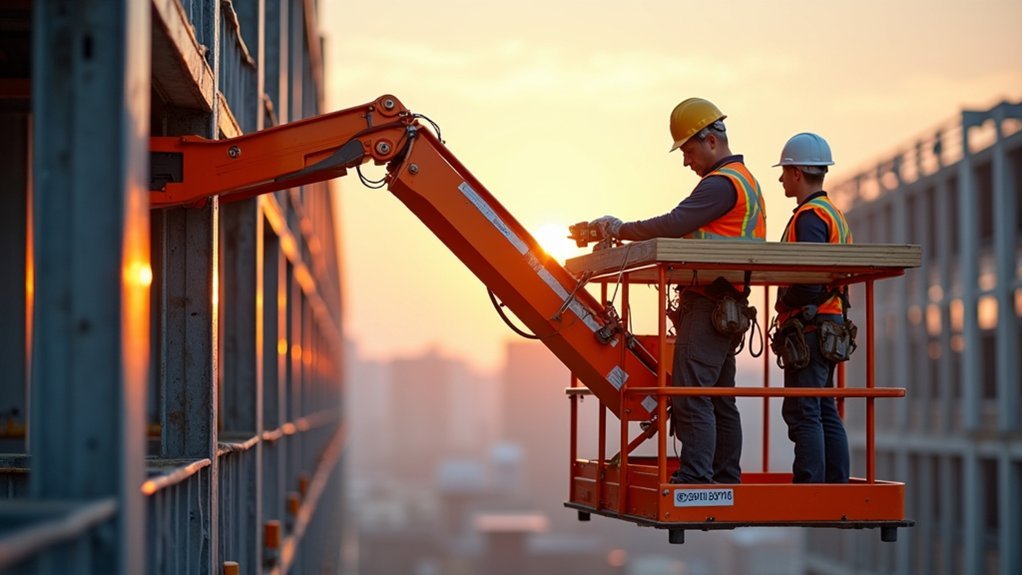
Like Icarus learned the hard way, height work punishes shortcuts. You cut fall risk when you choose a powered access platform with engineered guardrails, controlled travel, and a stable chassis that holds position. You also gain speed through standardized setup, quick repositioning, and a work envelope that keeps both hands on the task. But those benefits only hold if you inspect, train, and verify the safety systems that most crews overlook…
How Powered Access Platforms Cut Fall Risk
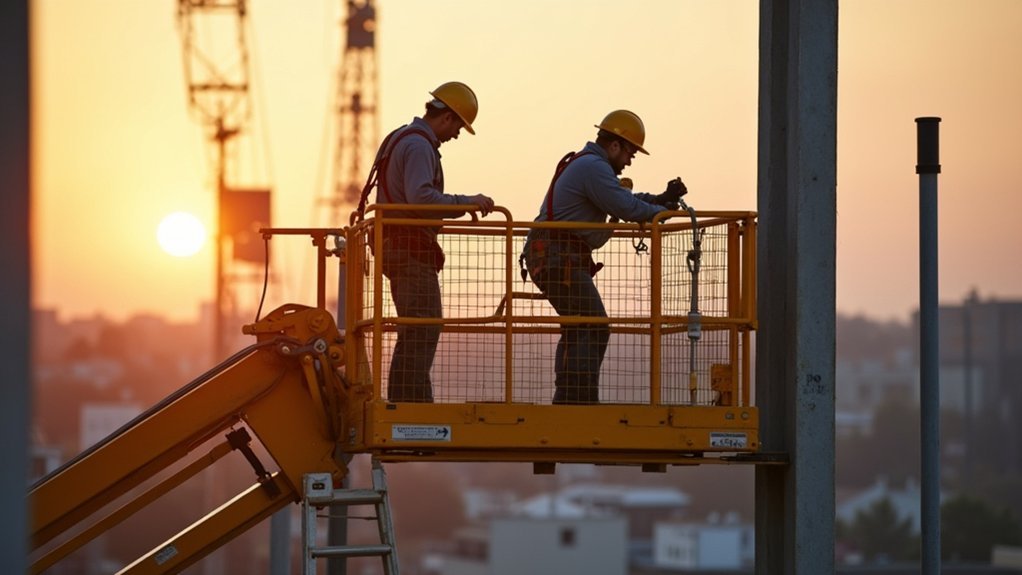
When you replace ladders or improvised scaffolds with a powered access platform, you reduce fall exposure by keeping you inside a guarded work envelope from ascent through task completion. You’re supported by engineered guardrails, controlled travel speeds, and stable base geometry, which strengthens Fall prevention versus climbing and repositioning.
You also reduce changeover points, so you’re not stepping on rungs or hopping between levels. For compliance, you can enforce pre-use inspections, function tests, and documented operator authorization, then verify that platform gates latch and interlocks operate.
Maintenance-savvy practices—battery checks, hydraulic leak sweeps, tire condition review, and emergency lowering verification—keep predictable performance and limit sudden instability. When you follow manufacturer load charts and site-specific Safety measures, you keep the platform level and the operator protected.
Choose the Right Powered Access Platform Type
Three factors drive the right powered access platform choice: working height and reach, ground and access conditions, and the load you’ll carry (people, tools, and materials).
Match reach demands to the machine: scissor lifts for vertical access and higher deck capacity, boom lifts for outreach and obstacle clearance, and mast lifts for tight indoor aisles.
Confirm you’re within rated capacity, wind limits, and slope/grade specs, and guarantee required guardrails, toe boards, and harness anchorage meet site rules.
Evaluate platform versatility by checking attachment compatibility, deck extensions, and non-marking tires for mixed environments.
Prioritize energy efficiency with electric or hybrid units where duty cycles and ventilation constraints apply.
Protect uptime: verify battery health, hydraulics condition, and inspection records before mobilizing.
Get Faster Setup and Smoother Repositioning
Although you can’t shortcut site controls, you can cut setup and move time by standardizing your pre-use checks, staging, and travel path before the platform leaves the trailer. Verify ground bearing capacity, overhead obstructions, and exclusion zones, then stage mats, cones, and power sources where they’ll be used.
Run documented function tests, confirm emergency lowering works, and log defects to protect compliance and uptime.
For smoother repositioning, pre-plan turning radii, door widths, and floor load limits, and set a one-way travel route that avoids pinch points and mixed traffic.
Keep equipment maintenance tight: correct tire pressure, charged batteries, clean sensors, and calibrated outriggers reduce nuisance faults.
Reinforce operator training on creep speed, spotter signals, and stow procedures so you don’t waste minutes resetting alarms.
Use Powered Access Platforms to Work Hands-Free
Because the platform supports your position inside a guarded basket, you can keep both hands on the task instead of splitting attention between tools and fall prevention. You’ll achieve hands free operation for precision work like fastening, sealing, or cable management while maintaining compliant access.
The work envelope stays stable, so you can apply torque or pull force without overreaching or bracing against structure. Guardrails and toe boards help control dropped-object risk, and integrated tool trays keep consumables within reach.
With ergonomic design, you reduce shoulder elevation, wrist deviation, and sustained grip, which lowers fatigue and improves repeatability across a shift. You can also align the basket to the workface, maintain three-point contact with controls, and keep your focus on quality-critical steps.
Train and Inspect to Keep Lifts Safe Daily
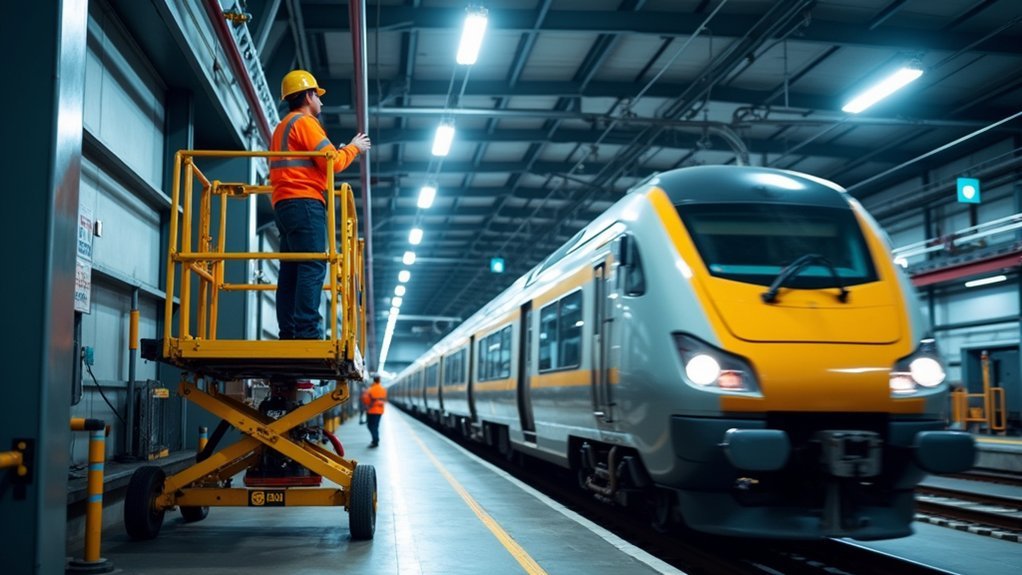
Hands-free work only stays productive when the lift is operated and maintained within spec, so you need disciplined training and daily inspections to keep risk low. You should complete Safety training for the specific MEWP class, controls, and rescue procedures, then document competence per site policy.
Before each shift, run Inspection routines: verify decals and load chart, check guardrails, gates, and harness anchor points, confirm emergency stop and descent functions, and test tilt and overload alarms.
Walk the chassis to spot leaks, damaged hoses, tire cuts, and loose fasteners. Confirm batteries or fuel levels, charger status, and that stabilizers deploy evenly.
Record defects, tag out, and notify maintenance immediately. You’ll avoid unplanned downtime and keep your compliance evidence ready for audits and incident reviews.
Frequently Asked Questions
What Permits or Regulations Apply to Using Powered Access Platforms On-Site?
You’ll follow Permitting requirements and safety regulations set by OSHA/ANSI (US) or local equivalents: operator certification, site-specific lift plans, inspections, fall protection, and traffic control. You must also document maintenance, defect tagging, and authorization.
How Do Weather Conditions Affect Safe Operation of Access Platforms?
Weather hazards like wind, rain, ice, and lightning reduce stability, traction, and visibility, so you must follow manufacturer wind limits, stop in storms, and address seasonal challenges via inspections, de-icing, load adjustments, and planned maintenance.
What Power Sources Are Available: Electric, Diesel, Hybrid, or Battery?
You can choose electric, diesel, hybrid, or battery-powered platforms. You’ll optimize Battery efficiency with proper charging and load management, and you’ll schedule Power source maintenance—filters, fluids, cables, and diagnostics—to meet site compliance and OEM requirements.
How Much Weight Can the Platform Carry, Including Tools and Materials?
You’ll typically carry 200–450 kg, including tools and materials, but you must verify the rated weight capacity on the data plate. Respect load charts for platform stability, and inspect decking, guardrails, and hydraulics.
What Are Typical Rental Costs and Minimum Hire Periods for Access Platforms?
Rental pricing typically runs $150–$400/day, $500–$1,200/week, or $1,500–$3,000/month, depending on type and reach. Minimum hire is often 1 day or 1 week. Verify inspections, certifications, and maintenance logs.