 Andrew
Like the skyline feats you’ve seen in dense urban cores, you rely on tower cranes to turn vertical ambition into controlled, repeatable lifts. You’re not just moving steel and concrete; you’re sequencing trades, protecting margins, and reducing rework through precise placement at height and radius. When you plan crane type, tie-in points, and climbing steps, you stabilize logistics and pace. But wind limits, swing zones, and coordination can quietly decide whether you stay on schedule…
What Tower Cranes Do on High-Rise Sites
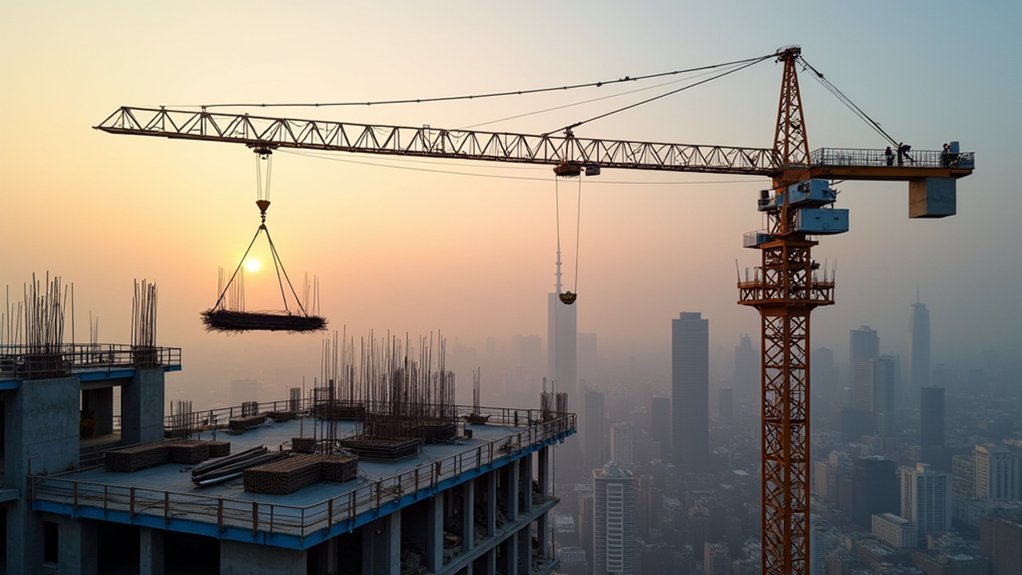
While a high-rise site looks like a blur of trades and deliveries, the tower crane functions as the project’s primary vertical logistics system, lifting and placing the materials that keep the schedule moving. You use it to sequence steel, formwork, rebar, façade panels, MEP racks, and tools to the right deck, reducing double-handling and elevator congestion.
It lets you pre-plan pick windows, support just-in-time deliveries, and shrink on-slab Material storage that competes with work zones and safety buffers. You also rely on it to consolidate laydown areas, feed multiple crews, and smooth peak-demand periods when the Construction workforce spikes.
How Tower Cranes Lift and Place Heavy Loads
Before you commit a pick, you match the load’s weight, radius, and center of gravity to the crane’s load chart so the machine stays inside its rated moment capacity. You verify rigging angles, hook block clearance, and tag-line control, then stage the lift path to avoid rework and downtime.
During hoist, you coordinate operator and signalperson, keeping accelerations smooth so swing and trolley motion don’t spike dynamic forces beyond load capacity. You land the piece with controlled drift, aligning to embeds or bolt patterns, then de-tension slings only after the receiving crew confirms stability.
You protect uptime with disciplined crane maintenance: lubrication, wire-rope inspections, brake checks, and limit-switch testing. That reliability reduces schedule risk and insurance exposure.
Tower Crane Types for Tall and Wide Builds
Clean picks and controlled landings only happen when the crane’s geometry fits the job, so your next decision is selecting a tower crane type that matches both height and footprint.
For tall cores, you’ll often favor a top-slewing hammerhead or luffing-jib model; both scale Crane height efficiently, but luffers win when air rights and tight swing zones limit radius.
For wide podiums and long laydown areas, a flat-top gives clean hook paths and fast trolley travel, helping you maintain cycle time across a broad footprint.
When your lifts skew heavy—steel megacolumns, large rebar cages—you’ll prioritize Load capacity at radius, not just max chart numbers.
You’ll also weigh jib length, counter-jib limits, and transport modularity against schedule and rental rates.
Planning Tower Crane Placement and Climbing
Because crane performance lives or dies on radius, you should lock placement and a climbing plan early, then validate both against the building’s growth sequence.
Start with Ground preparation: confirm bearing capacity, mat size, anchor geometry, and access for initial erection.
Model picks by floor to see where radius, hook height, and interference will pinch, then place the base to protect schedule-critical lifts.
Choose internal or external climbing based on core cycle, façade lead times, and tie-in elevations, and budget for jump frequency so you don’t stall steel or formwork.
Pre-negotiate tie hardware, collars, and embedded plates with structural to avoid rework.
Finally, plan crane dismantling with the same rigor, reserving roof pick points, swing clearances, and a removal crane path.
Tower Crane Safety, Wind, and Site Logistics
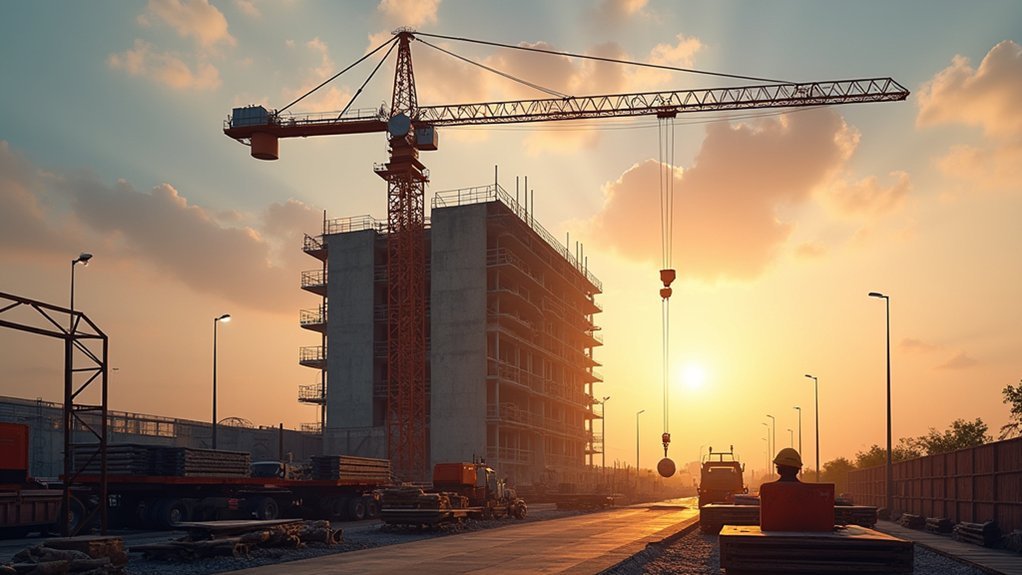
Although placement and climbing drive capacity, safety and logistics decide whether you can actually use that capacity day after day. You manage wind by setting lift limits by radius, load type, and gust thresholds, then enforcing stop-work triggers with real-time anemometers and clear authority lines.
You plan slewing zones, exclusion areas, and pick paths so trades don’t stack under the hook, and you coordinate deliveries to protect laydown space and avoid boom conflicts.
Operator training reduces blind-lift risk, improves signaling discipline, and tightens response to weather shifts.
You also schedule maintenance procedures around utilization: daily inspections, wire-rope checks, slew ring lubrication, and documented torque audits.
When you treat safety as uptime, your crane stays productive, insurable, and on schedule.
Frequently Asked Questions
How Long Does It Take to Assemble and Dismantle a Tower Crane?
You’ll typically assemble a tower crane in 1–3 days and dismantle it in 1–2 days, depending on height and logistics. You’ll follow Safety protocols and align schedules with Maintenance routines to reduce downtime.
What Permits and Inspections Are Required Before Operating a Tower Crane?
On a 20-story build, you’ll need local building/road occupancy permits, a crane erection permit, and operator certification before operating. You’ll follow Safety regulations and Inspection procedures: pre-erection, load test, daily checks, and periodic third-party inspections.
How Much Does It Cost to Rent or Purchase a Tower Crane?
You’ll typically pay $15,000–$60,000/month to rent, or $500,000–$2.5M+ to buy, plus transport/erection. Budget Crane maintenance and safety protocols, as they materially shift total cost and utilization.
What Certifications and Training Must Tower Crane Operators Have?
Like threading a needle in the wind, you’ll need accredited operator training, documented seat time, and third-party exams. Meet Certification requirements (NCCCO or equivalent), OSHA compliance, and site orientation, keeping operator safety front and center.
How Are Tower Cranes Transported to and From Construction Sites?
You transport tower cranes by dismantling them into sections, hauling them on flatbeds, and coordinating escorts for oversized loads. You rely on logistical planning, permits, and site safety checks, then reverse the process during demobilization.