 Andrew
If you’re restoring a cast iron Victorian fireplace, begin by evaluating every original component before removing anything. Document the grate, tiles, fixings, finishes, and areas of corrosion so you can preserve the historic arrangement. Clean soot, rust, and old paint with controlled, non-abrasive methods, then stabilize the iron and repair loose tiles using reversible materials. Treat the grate and apply suitable heat-resistant blacking—but the most critical decisions come during reassembly.
Key Takeaways
- We documented the fireplace, original grate, tiles, mantel, dimensions, marks, and condition before carefully removing any components.
- We cleaned soot and rust gently with soft brushes, wooden tools, and controlled treatments, preserving aged surfaces and original tool marks.
- We repaired cast-iron defects conservatively, consulting specialists for fractures and using discreet, heat-resistant, reversible repairs.
- We retained and restored original tiles by stabilizing loose pieces, matching losses, and preserving variations in glaze, profile, and spacing.
- We reassembled everything in sequence, inspected the chimney, and established seasonal maintenance to protect the restored Victorian fireplace.
Assess the Fireplace Before Restoration
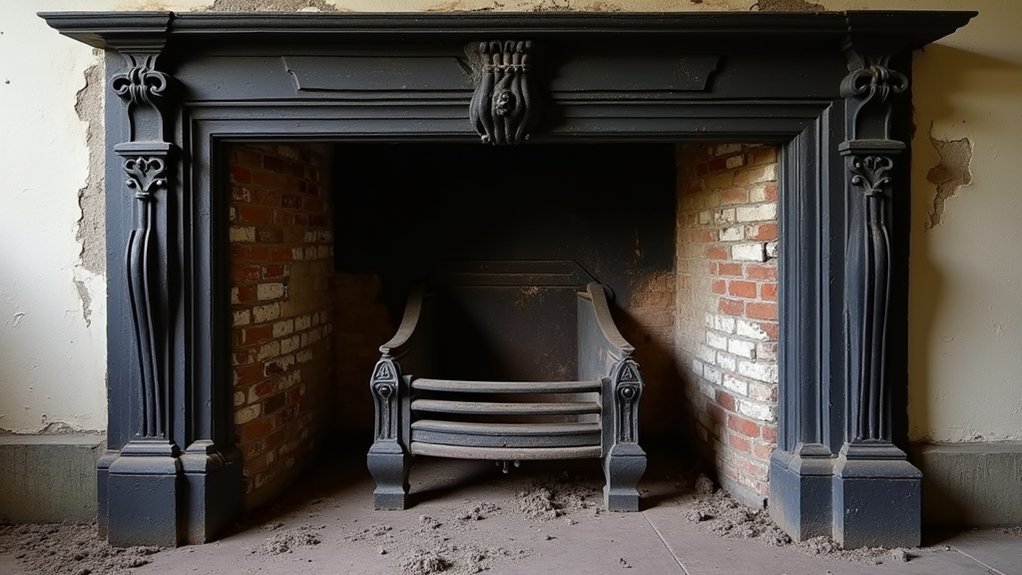
Before restoring a Victorian fireplace or even Georgian Fireplaces, inspect its structure, materials, and alterations to establish a safe, historically appropriate scope of work. Photograph every elevation, joint, fixing, and surviving decorative element before disturbing anything.
Confirm whether the cast-iron insert, grate, tiles, mantel, and hearth belong to the same period and design scheme. Record dimensions, maker’s marks, tile patterns, fireback condition, and evidence of previous repairs.
Check the chimney breast, opening, lintel, hearth projection, and surrounding masonry for movement, moisture, or heat damage; consult a qualified professional where structural concerns arise.
Research the property’s history and comparable examples to define its Historical significance and guide decisions about retention.
Assemble suitable Restoration tools, including a soft brush, inspection light, camera, calipers, and condition-recording forms.
Don’t remove components until you’ve mapped their positions and documented fixings.
Remove Soot, Rust, and Old Paint
With the fireplace documented and each component mapped, remove surface deposits in stages so you don’t obscure evidence or damage original finishes.
Begin the Cleaning process with a soft natural-bristle brush and a vacuum fitted with a HEPA filter, lifting loose soot without forcing grit into joints or decorative relief.
Use wooden tools to dislodge compacted deposits; avoid steel scrapers and abrasive pads.
For rust, brush lightly with a fine non-woven abrasive, stopping when you reach stable metal and preserving tool marks.
Test any paint-removal method in an inconspicuous area.
Apply a heritage-approved poultice or solvent sparingly, following the manufacturer’s dwell time, then collect softened residue rather than spreading it.
Your Safety precautions should include gloves, eye protection, respiratory protection, ventilation, and fire isolation.
Don’t use water on porous tiles or unprotected cast iron.
Repair the Cast Iron and Original Tiles
Once the cast iron and tiles are clean and fully dry, assess each defect against the documented condition before attempting repairs. Mark cracks, missing sections, distortion, and unstable joints, then photograph them for reference.
For cast iron, consult a specialist before addressing fractures; controlled metal stitching or compatible repair methods may preserve the original component without introducing excessive heat. Don’t weld thin, brittle sections casually.
Stabilise loose decorative detailing with reversible, heat-resistant materials, keeping repairs discreet.
For tiles, retain sound originals wherever possible. Re-seat lifted tiles on a suitable conservation-grade adhesive, and fill only narrow losses with a carefully colour-matched repair compound.
Don’t over-clean, flatten, or replace irregular pieces that convey manufacture and age. Match glaze, profile, spacing, and surface variation to support historical accuracy, while recording every intervention for future conservation.
Restore the Grate and Victorian Finish
How can you restore the grate without losing its Victorian character? Begin grate restoration by removing loose soot, ash, and corrosion with a soft brass brush and a vacuum fitted with a fine filter. Don’t use aggressive abrasives: they can erase casting marks and surviving surface detail.
Treat active rust with a suitable phosphoric-acid gel, following the manufacturer’s safety instructions. Then neutralise and dry the iron completely.
Repair only structural defects, using compatible ironwork techniques; avoid modern fillers where they’d obscure original profiles. Apply a thin, heat-resistant blacking or stove polish, working it into recesses and buffing raised ornament lightly.
Preserve traces of aged finish rather than forcing uniformity. Finally, inspect the grate’s decorative geometry and metal integrity. This measured finish protects the iron while retaining its Victorian elegance.
Reassemble and Maintain the Fireplace
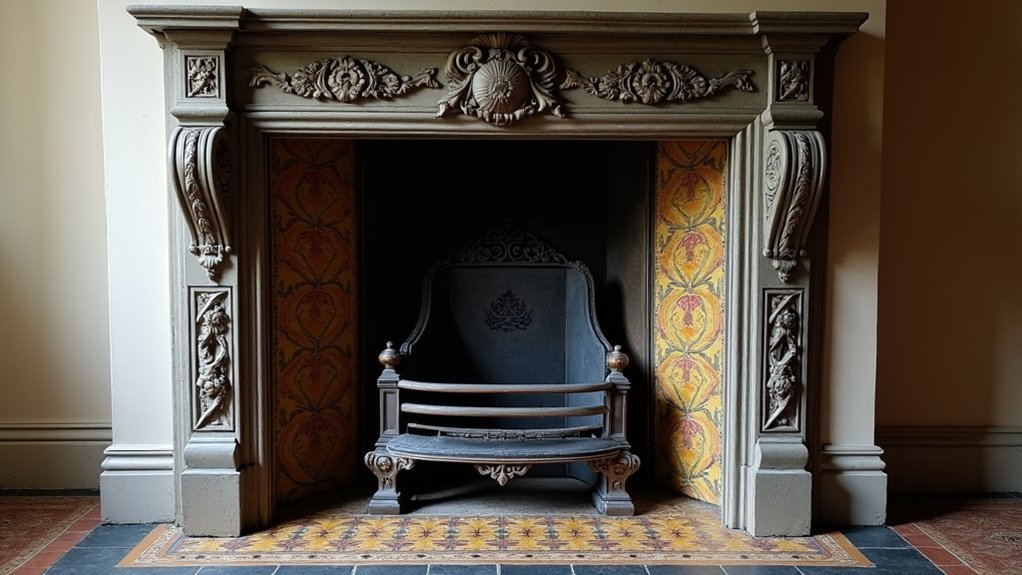
After every component has dried fully, reassemble the fireplace in its original sequence, checking that each joint, fixing, and decorative element sits securely without forcing the aged ironwork.
Refit the grate, tiles, and ashpan, then tighten fasteners evenly so you don’t distort brittle castings.
Secure the Decorative mantel to sound masonry, using compatible fixings and avoiding modern adhesives that could trap moisture.
Before lighting a fire, arrange a qualified chimney inspection to confirm sound flue liners, adequate ventilation, and safe clearance from combustible materials.
Test the damper and verify that smoke draws correctly outdoors.
During maintenance, remove ash only when completely cold, brush surfaces gently, and inspect for rust, cracks, loose tiles, or failed joints each season.
Apply a breathable, heat-rated protective finish sparingly; never seal damp metal or block ventilation openings.
Frequently Asked Questions
Can a Restored Victorian Fireplace Be Safely Used With Modern Heating Systems?
Yes, you can use a restored Victorian fireplace alongside modern heating systems, provided you preserve Historical authenticity, meet current Safety standards, inspect flues, install suitable liners, and use qualified professionals for commissioning and maintenance.
What Insurance Considerations Apply When Restoring a Period Fireplace?
Check your insurer’s requirements before work begins: disclose structural alterations, obtain specialist heritage advice, and confirm Restoration coverage. Document contractors, materials, compliance certificates, and photographs, ensuring Insurance claims won’t be jeopardized by unapproved modifications or concealed defects.
How Much Does Professional Victorian Fireplace Restoration Typically Cost?
Professional Victorian fireplace restoration typically costs £2,000–£8,000 today, though extensive structural work exceeds £10,000. You’ll pay for surveys, dismantling, cleaning, repairs, reinstatement, fireplace maintenance, and historically accurate finishes; prioritize historical accuracy and obtain itemized quotes.
Where Can Replacement Tiles Be Sourced if Original Tiles Are Missing?
You can source replacement tiles through specialist architectural salvage yards, heritage reproduction manufacturers, antique dealers, and fireplace restorers. Request tile matching using dimensions, glaze, pattern, and clay body; undertake supplier sourcing before purchasing.
Are Planning Permissions Required for Restoring a Historic Fireplace?
You’ll usually need planning permission only if your fireplace forms part of a listed building or conservation area controls apply. Check Heritage conservation requirements; Building regulations may govern structural alterations, ventilation, and safety.
Conclusion
By restoring the fireplace methodically, you’ve preserved more than iron and tile—you’ve returned its Victorian character to the room. Careful cleaning revealed the grate’s structure, while reversible repairs stabilized fragile cast iron and original tiles without disguising their history. Rust treatment and heat-resistant blacking now give the grate a quiet, ember-dark sheen. Reassembled in its authentic configuration, the fireplace stands like an architectural time capsule. Maintain it gently, and its renewed warmth will endure.
There’s nothing nicer than seeing a well modernised character property still retain the original charm and features.