 Andrew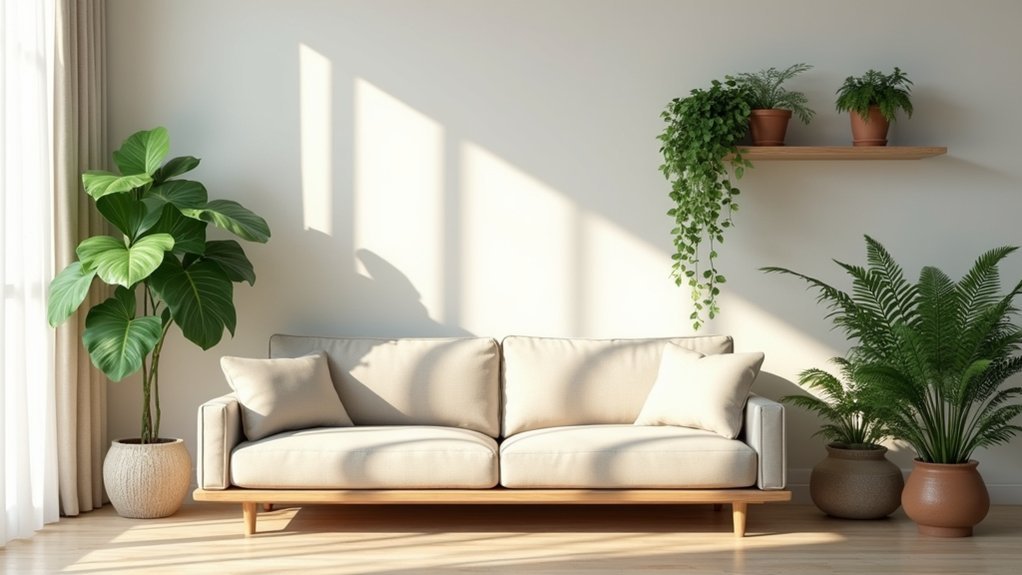
Your room can look like a sterile showroom in minutes if you don’t balance all those straight lines and hard surfaces. You can use greenery to blur edges, add depth, and make the space feel lived-in without adding clutter. The trick is choosing plants that match your light and your routine, then placing them where they do the most visual work—corners, ledges, and sightlines. But most people start with the wrong plant in the wrong spot, and that’s where it gets interesting…
Match Your Plants to Light and Routine
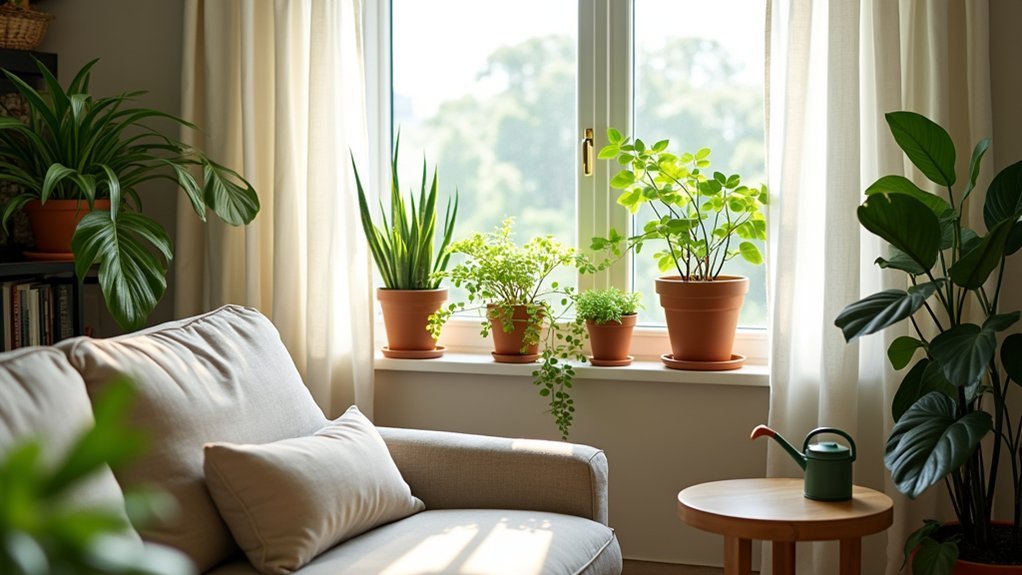
Although it’s tempting to buy plants based on looks, you’ll get better results when you match them to your light levels and your day-to-day routine. Start by mapping Natural light: note which windows get direct sun, bright indirect light, or low light, and for how many hours. Then choose plants that tolerate those conditions instead of forcing upgrades like grow lights or constant rotating.
Next, design Plant placement around your habits. If you travel or forget watering, pick drought-tolerant options and use self-watering pots; if you’re hands-on, you can manage thirstier plants. Keep high-maintenance plants where you’ll see them daily, not tucked on a shelf.
This approach lowers replacement costs, protects your time, and delivers steadier, healthier greenery year-round.
Pick Indoor Plants That Soften Hard Lines
To soften sharp built-ins and boxy furniture, you’ll get the fastest visual payoff by choosing plants based on how they interrupt lines.
Use trailing plants on shelves, cabinets, and ledges so foliage drapes over edges and breaks up hard horizontals.
Then place rounded-leaf plants near corners to blur right angles and make the space read calmer and more current.
Trailing Plants For Edges
When you want to make shelving, ledges, and countertop runs feel less rigid, trailing plants give you a practical way to break up hard edges without adding bulky décor. Choose fast, forgiving growers like pothos, heartleaf philodendron, or spider plant so you get visible drape quickly and predictable upkeep.
Place pots at the ends of shelves to “pull” the line downward and create a softer silhouette. If you’re short on surface area, use hanging baskets to introduce the same cascade without cluttering work zones.
For tighter layouts, install wall mounted greenery above runs so stems fall in front of tile, stone, or cabinet faces, visually reducing their hardness. Keep trailing growth tidy by rotating weekly and trimming to maintain length and density.
Rounded Foliage Near Corners
Even if your room uses clean-lined cabinetry and sharp architectural angles, you can make corners feel calmer by placing plants with rounded, full foliage right where lines converge. Rounded foliage breaks up harsh geometry, visually “buffering” the junction and pulling attention from hard edges to softer mass.
Choose compact, spherical growers—peperomia obtusifolia, baby rubber plant, pilea, or a small rubber tree—and size them to sit just below countertop or shelf height for balanced corner accents. Use a round pot to reinforce the curve, and leave 2–4 inches of clearance from walls to prevent trapped moisture and leaf damage.
In tight layouts, place one plant on a stand to lift the canopy into the sightline without eating floor space. Rotate weekly for even growth.
Use Greenery to Add Color and Texture
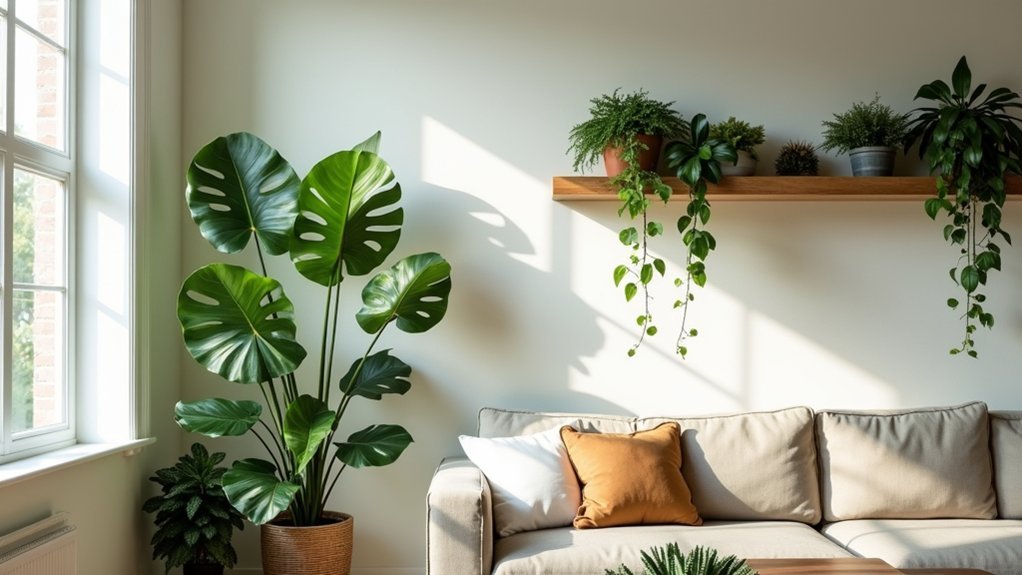
Because color and texture drive how a room feels at a glance, greenery gives you a high-impact way to shift the palette without repainting or replacing furniture.
Start with Plant arrangement: repeat one leaf tone in two or three spots so the room reads intentional, not random, and size plants to the visual weight of nearby pieces.
Then build foliage contrast to add depth—mix glossy leaves with matte ones, fine fronds with broad paddles, and variegated patterns with solid greens so surfaces don’t look flat.
If you’re working with trendy warm neutrals, lean into olive, deep green, or burgundy plants to keep the scheme current.
In cooler, minimalist rooms, silvery or blue-green foliage adds texture without visual noise.
Style Plants Like Décor, Not an Afterthought
To make plants read as intentional décor, you’ve got to treat the planter like any other finish and match it to your room’s palette and materials.
Then you layer heights and textures—floor, tabletop, and shelf placements—to create depth without visual clutter.
Finally, you group plants in curated clusters so they feel like a styled vignette, not scattered add-ons.
Match Planters To Palette
When you treat planters like part of your decor scheme—not a last-minute container—you create a cleaner, more intentional look. Start with color coordination: pull one dominant hue from your room (wall, rug, or art) and echo it in the planter, then use a neutral to keep it from feeling themed.
If your palette skews warm, choose terracotta, brass, or sand tones; if it’s cool, lean into concrete gray, black, or crisp white.
Next, align planter materials with the finishes you’ve already paid for. Matte ceramics complement modern paint and soft textiles, while glossy glazes read more luxe and pair well with metal accents.
Keep silhouettes consistent to avoid visual noise.
Layer Heights And Textures
Even if you’ve picked the right plants and planters, the arrangement can still look flat unless you build it like a vignette. Create Layer contrast by staggering heights: place a tall, upright plant behind or beside a mid-height form, then anchor the front with something low and spreading. This simple tiering reads intentional, like merchandising, and it directs the eye the way good shelving does.
Next, add Texture variation to keep the look from feeling generic. Pair bold, architectural leaves with fine fronds or small, dense foliage; mix glossy and matte surfaces to catch light differently.
If space is tight, use a stand, stool, or stacked books to lift one plant without changing the pot. You’ll get depth and polish, not clutter.
Create Intentional Plant Groupings
Although your plants can thrive on their own, they’ll look far more designed if you group them with the same intention you’d give candles or art. Treat each cluster as a vignette: anchor it with one statement plant, support it with two to three mid-size forms, then finish with a trailing edge to soften lines.
Start with function, not impulse buying. Match Sunlight preferences inside the grouping so you’re not rotating pots weekly. Do the same with watering schedules—pair drought-tolerant plants together and keep thirsty varieties in their own zone.
Use one consistent pot finish to create cohesion, then vary silhouettes for contrast. Place groups where sightlines pause—entry consoles, coffee tables, window corners—so greenery reads like intentional styling, not leftover floor clutter.
Place Plants to Freshen Each Room’s Air
Because air quality shifts from room to room based on light, humidity, and how you use the space, you’ll get better results by placing plants with purpose instead of scattering them randomly. Start with high-impact zones: bedrooms, bathrooms, kitchens, and your work area.
In bedrooms, choose reliable air purifying performers and keep foliage away from vents so airflow circulates.
In bathrooms, prioritize humidity control with plants that tolerate steam, then place them where they’ll dry between showers to curb mildew pressure.
In kitchens, add greens near cooking areas to buffer odors and temperature swings, but keep them clear of hot burners.
At your desk, put a medium plant within your sightline to reduce perceived stuffiness and prompt consistent care and watering.
Choose Planters That Fit Your Interior Style
When you match the planter to your room’s visual language, the plant reads as a deliberate design choice rather than clutter. Start by auditing your finishes: if you’ve got warm woods and linen, choose matte ceramics, terracotta, or woven baskets. If you lean modern, pick concrete, powder-coated metal, or glossy stoneware. Planter materials should echo existing textures, not compete with them.
Use plant placement to reinforce proportions. Large floor plants need low, weighty planters that visually anchor a corner. Tabletop plants look cleaner in slimmer profiles that don’t crowd surfaces. In tight budgets, standardize sizes and colors for a “set” effect, then vary height with stands. For eclectic rooms, keep shapes consistent while mixing finishes subtly.
Keep Indoor Plants Healthy With Simple Care
If you treat plant care like a simple maintenance schedule rather than a guessing game, you’ll keep most indoor greenery looking intentional and fresh.
Start with a weekly check: water only when the top inch of soil is dry, then drain saucers so roots don’t sit in runoff.
Use Indoor plant lighting like a planning tool—match bright, indirect light plants to windows and place low-light options deeper in the room; rotate pots monthly to keep growth even.
Feed lightly during active growth, not year-round, and wipe leaves so they photosynthesize efficiently.
Prune for shape, and reuse healthy cuttings for Plant propagation to scale your look without buying more.
Log dates in your phone so care stays consistent.
Consistency beats guesswork.
Fix Common Indoor Plant Problems Fast
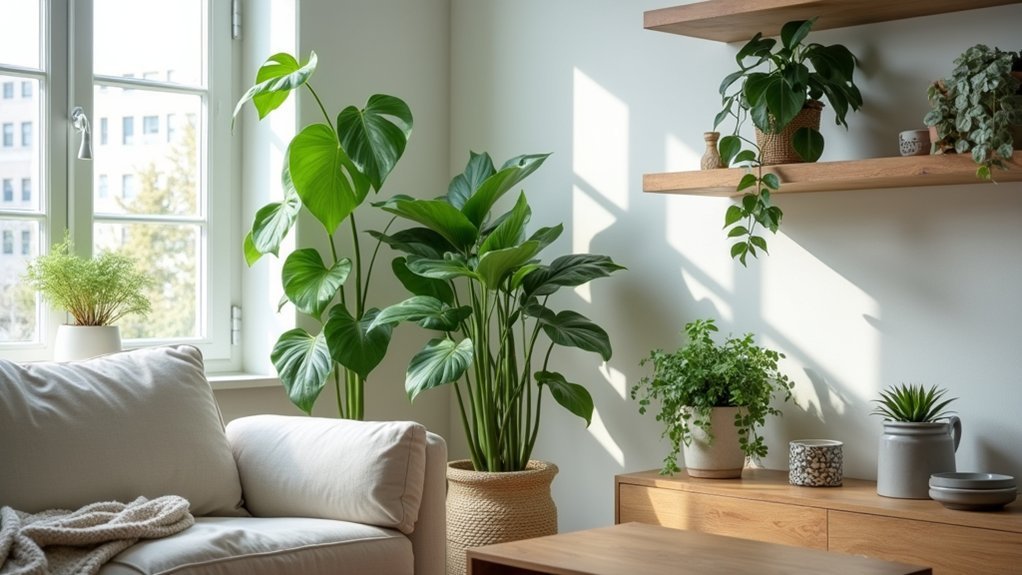
Even well-cared-for plants throw off warning signs, and you’ll save money and keep your space looking polished by diagnosing issues early instead of swapping plants out.
Yellow leaves usually mean overwatering; let soil dry, switch to a pot with drainage, and empty saucers.
Crispy edges signal underwatering or low humidity; water thoroughly, then maintain a schedule and group plants to buffer air.
Leggy growth points to weak light; move closer to a window or add an LED bar to match today’s design-forward market.
Pests? Isolate, rinse, then use insecticidal soap weekly.
Brown tips plus white crust indicate salt buildup; flush soil and cut fertilizer.
You’re not just preserving Botanical symbolism—you’re extending Indoor plant history into your home today.
Frequently Asked Questions
How Do I Prevent Indoor Plants From Attracting Insects and Pests?
You prevent pests by avoiding overwatering, improving airflow, and quarantining new plants. For Plant pest prevention and Indoor insect control, wipe leaves, remove debris, use sticky traps, and apply neem or soap only when needed.
Are Indoor Plants Safe for Cats, Dogs, and Small Children?
They can be safe—don’t let your home become a botanical minefield. You’ll choose Pet safe plants and Child friendly greenery, verify toxicity lists, avoid sap and thorns, elevate pots, and supervise curious nibblers.
What Are the Best Low-Allergen Plants for Sensitive Households?
You’ll get the best low-allergen options with plant selection like snake plant, ZZ plant, dracaena, and palm. For allergen reduction, prioritize low-pollen varieties, rinse leaves, avoid overwatering, and use quality potting mix.
How Can I Transport Large Houseplants Safely When Moving Homes?
You’ll transport large houseplants safely by watering lightly, pruning, and using plant wrapping to protect foliage. Place pots in secure containers, brace upright in the vehicle, avoid heat/cold, and unpack quickly to reduce shock.
Do Indoor Plants Increase Humidity Enough to Affect Mold Growth?
Usually no; most indoor plants don’t raise humidity enough alone to trigger mold. Like my hygrometer jumping only 3% after watering, you’ll see minor humidity regulation—still practice ventilation, spacing, and drying trays for mold prevention.